How TCM History Reflects Chinese Worldview
- 时间:
- 浏览:113
- 来源:TCM1st
If you've ever scratched your head wondering why Traditional Chinese Medicine (TCM) still thrives in a high-tech world, let me tell you—it’s not just about herbs and acupuncture. TCM is a mirror of the Chinese worldview, shaped over 2,000 years. As someone who’s spent a decade diving into holistic health systems, I can say: TCM isn’t just medicine—it’s philosophy in motion.
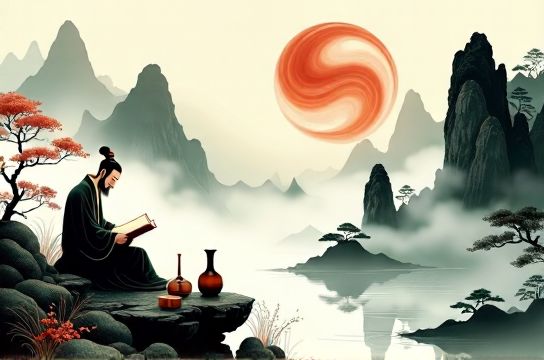
At its core, TCM reflects harmony, balance, and interconnectedness—values deeply rooted in Daoism, Confucianism, and ancient Chinese cosmology. Think of it like this: while Western medicine often targets symptoms, TCM looks at the whole system. It asks, ‘Why is this imbalance happening?’ rather than ‘What drug fixes this?’
Take the concept of Qi (vital energy). It’s not mystical hocus-pocus—it’s a framework for understanding how energy flows through the body via meridians. When Qi is blocked or imbalanced, illness follows. Sound familiar? Modern science now supports concepts like bioelectricity and fascial networks that eerily resemble meridian maps.
Let’s talk numbers. A 2022 WHO report found that over 1.5 billion people globally use some form of traditional medicine, with TCM being the most widespread. In China, TCM accounts for nearly 40% of total outpatient visits. That’s not nostalgia—that’s trust built on results.
Key Milestones in TCM History
| Period | Milestone | Philosophical Influence |
|---|---|---|
| Warring States (475–221 BCE) | Huangdi Neijing compiled | Daoist balance of Yin-Yang |
| Tang Dynasty (618–907 CE) | First medical school established | Confucian emphasis on order |
| Ming Dynasty (1368–1644) | Compendium of Materia Medica published | Natural observation & classification |
| 21st Century | TCM integrated into national healthcare | Harmony of tradition & modernity |
Notice a pattern? Each leap in TCM coincided with broader cultural values. The Huangdi Neijing, for example, doesn’t just list remedies—it frames health as alignment with nature. Winter calls for conservation (Yang energy); summer demands activity (Yin release). This cyclical thinking echoes in today’s circadian rhythm research.
Now, here’s where it gets spicy. Some critics dismiss TCM as unscientific. But consider artemisinin—an antimalarial drug derived from Artemisia annua, a herb mentioned in a 1,600-year-old TCM text. Tu Youyou won the Nobel Prize in 2015 for this discovery. That’s not coincidence. That’s centuries of empirical observation paying off.
So what does this mean for you? Whether you're exploring natural healing or just curious about Eastern thought, understanding TCM history opens a door to a different way of seeing the world—one where humans aren’t separate from nature, but part of its rhythm. And if you’re seeking long-term wellness over quick fixes, maybe it’s time to think like the ancients.
Want real change? Start by asking better questions. Instead of ‘What’s wrong with me?’ try ‘How am I out of balance?’ That shift? That’s the Chinese worldview in action.