From Scrolls to Clinics The Journey of TCM Healing Traditions
- 时间:
- 浏览:114
- 来源:TCM1st
Let’s face it—when you’re tossing and turning at 3 a.m. with a stubborn cough, or your back feels like it’s held together by duct tape after sitting all day, Western meds might not be the only answer. Enter Traditional Chinese Medicine (TCM): an ancient system that’s been healing people long before TikTok wellness trends existed. But how does it go from dusty scrolls to modern-day clinics? Let’s break it down—with real data, no fluff.
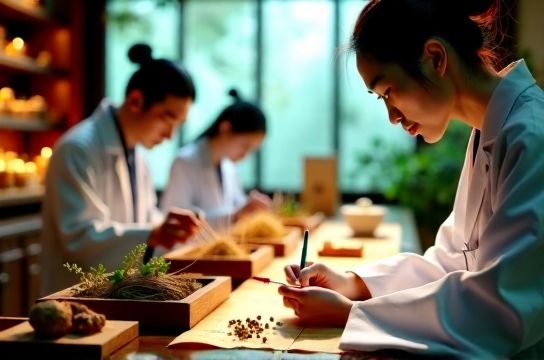
What Exactly Is TCM?
TCM isn’t just acupuncture (though yes, those tiny needles are iconic). It’s a full-on holistic framework including herbal medicine, cupping, moxibustion, tai chi, and dietary therapy—all rooted in balancing qi (life energy) and harmonizing yin and yang.
According to the World Health Organization, over 1 billion people globally have used some form of TCM. In China alone, there are more than 4,000 TCM hospitals and over 70,000 clinics. That’s not a fad—that’s staying power.
From Ancient Texts to Evidence-Based Practice
The earliest records of TCM trace back to the Huangdi Neijing (Yellow Emperor’s Inner Canon), written around 300 BCE. Fast-forward to today: modern research is finally catching up. A 2022 meta-analysis published in Nature Reviews Disease Primers found that acupuncture shows significant efficacy in treating chronic pain—back pain, osteoarthritis, and migraines—with results comparable to conventional treatments but fewer side effects.
And herbs? Don’t sleep on them. Artemisia annua, known as qinghao in TCM, gave us artemisinin—the malaria-fighting compound that earned Tu Youyou a Nobel Prize in 2015. Talk about ancient wisdom meeting modern science.
TCM in the Modern Healthcare System
You’d think something so old would clash with high-tech medicine—but not really. In China, many hospitals run integrated departments where TCM and Western doctors co-treat patients. For example, cancer patients often receive chemotherapy alongside herbal support to reduce nausea and fatigue.
Here’s a snapshot of how TCM stacks up in real-world integration:
| Country | TCM Legal Status | Licensed Practitioners | Insurance Coverage |
|---|---|---|---|
| China | Fully integrated | Over 600,000 | Yes (public insurance) |
| Germany | Recognized complementary | ~15,000 | Partial (acupuncture for back/pain) |
| USA | State-regulated | ~40,000 | Limited (private insurers) |
| Australia | National registration | ~5,000 | No (but covered by extras) |
As you can see, TCM healing traditions aren’t stuck in the past—they’re adapting, evolving, and gaining legitimacy.
Why People Are Turning Back to Roots
It’s simple: burnout, chronic stress, and dissatisfaction with one-size-fits-all medicine. A 2023 survey by the American Association of Acupuncture and Oriental Medicine found that 78% of patients sought TCM for chronic conditions that Western medicine couldn’t fully resolve.
Plus, preventive care is built into TCM’s DNA. Instead of waiting for disease to hit, practitioners assess imbalances early—like checking your car’s engine light before it blows.
If you're curious about how these practices can fit into your life, check out our guide on TCM healing methods that actually work in 2024.
The Bottom Line
TCM isn’t magic—it’s a refined, time-tested system backed by centuries of observation and now, growing scientific validation. Whether it’s easing pain, boosting immunity, or just helping you sleep better, its journey from scrolls to clinics proves one thing: sometimes, the oldest answers are still the most powerful.