Tracing the Timeline of TCM History From Ancient to Present
- 时间:
- 浏览:124
- 来源:TCM1st
If you're diving into the world of natural healing, you’ve probably heard about Traditional Chinese Medicine (TCM). But how did it evolve from ancient rituals to a globally recognized practice? Let’s walk through the fascinating timeline of TCM history — no boring textbooks, just real insights backed by data and centuries of practice.
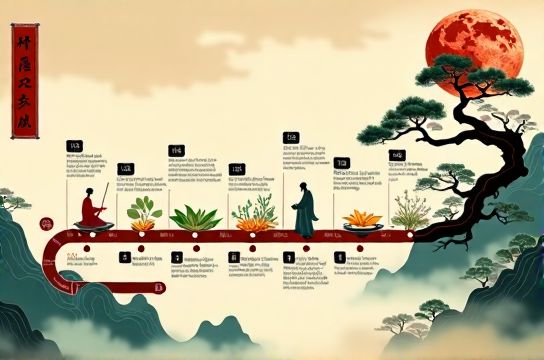
TCM isn’t just acupuncture and herbs (though those are big parts). It’s a full-body philosophy rooted in balance, energy flow (Qi), and harmony between humans and nature. And get this — its roots go back over 2,500 years.
Key Milestones in TCM History
Here’s a quick snapshot of how TCM evolved across dynasties:
| Dynasty | Time Period | Major Contributions |
|---|---|---|
| Zhou Dynasty | 1046–256 BCE | Early concepts of Yin-Yang and Five Elements |
| Han Dynasty | 206 BCE–220 CE | Huangdi Neijing compiled — foundational TCM text |
| Tang Dynasty | 618–907 CE | First official medical college; herbal compendiums expanded |
| Ming Dynasty | 1368–1644 CE | Compendium of Materia Medica by Li Shizhen — 1,892 substances documented |
| Modern Era | 1949–Present | TCM integrated into China’s national healthcare system |
That Huangdi Neijing? Still studied today. It laid down core ideas like Qi, meridians, and diagnosis through pulse and tongue reading — all still used by practitioners worldwide.
TCM Goes Global — By the Numbers
You might think TCM is only popular in China, but check these stats:
- Over 180 countries now practice some form of TCM (WHO, 2023)
- More than 600,000 TCM practitioners operate outside China
- Acupuncture is recognized by the World Health Organization for treating over 100 conditions
In the U.S. alone, around 14 million adults have tried acupuncture. And it’s not just for pain — people use TCM for fertility, stress, digestive issues, and even immune support.
Science Meets Tradition
Skeptical? Fair. But modern research is catching up. Studies show acupuncture can help with chronic pain (NIH, 2018), and herbs like astragalus and ginseng are being analyzed for immune modulation.
Still, caution is key. Not all herbs are safe for everyone — quality control varies, especially online. That’s why seeing a licensed practitioner matters. In China, TCM doctors undergo 5+ years of training — similar to Western med school.
What’s Next for TCM?
The future? Integration. We’re seeing “TCM-Western medicine” hospitals in China, where patients get both chemotherapy and herbal support. Clinical trials are increasing, and AI is even being used to analyze ancient texts for new treatments.
So whether you're curious about acupuncture or digging deep into herbal formulas, understanding the timeline of TCM history gives you context — and respect — for one of the oldest healing systems on Earth.