The Philosophical Foundations of Traditional Chinese Medicine
- 时间:
- 浏览:113
- 来源:TCM1st
If you've ever scratched your head wondering why Traditional Chinese Medicine (TCM) feels so different from Western medicine, you're not alone. It’s not just about herbs and acupuncture—it’s a whole worldview. TCM is built on ancient philosophical ideas that have shaped Chinese thought for thousands of years. Let’s break down the big three: Qi, Yin-Yang, and the Five Elements.
Qi: The Vital Force Behind Everything
At the heart of TCM is Qi (pronounced “chee”), the life force that flows through all living things. Think of it like electricity in a circuit—when it flows smoothly, your body runs well. When it’s blocked or weak? That’s when illness creeps in.
Unlike Western medicine, which focuses on measurable biology, TCM sees health as a balance of energy. Acupuncture, for example, aims to unblock Qi along meridians—energy pathways in the body. Studies show acupuncture can help with chronic pain, with the NIH reporting up to 50% improvement in some patients.
Yin and Yang: Balance Is Everything
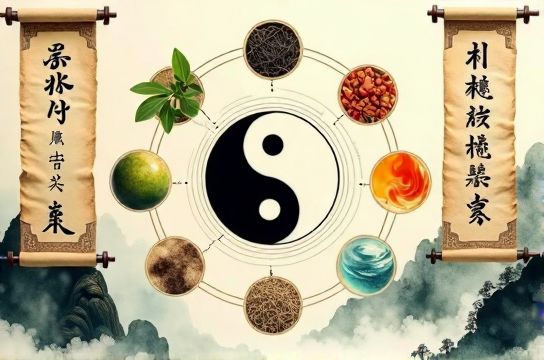
You’ve seen the symbol—a swirling black and white circle. But in TCM, Yin and Yang aren’t just cool tattoos; they represent opposite but complementary forces. Yin is cool, passive, and nourishing. Yang is warm, active, and energizing.
In your body, this could mean:
- Yin deficiency? You might feel hot, restless, or dry—think night sweats or insomnia.
- Yang deficiency? You’re likely cold, tired, and sluggish.
The goal in Traditional Chinese Medicine isn’t to eliminate one side—it’s to keep them in harmony.
The Five Elements: Nature’s Blueprint for Health
This is where TCM gets really interesting. The Five Elements—Wood, Fire, Earth, Metal, Water—aren’t just materials. They represent phases of change and are linked to organs, emotions, and seasons.
Here’s how they map out in the body:
| Element | Season | Organ (Yin) | Organ (Yang) | Emotion |
|---|---|---|---|---|
| Wood | Spring | Liver | Gallbladder | Anger |
| Fire | Summer | Heart | Small Intestine | Joy |
| Earth | Long Summer | Spleen | Stomach | Worry |
| Metal | Autumn | Lung | Large Intestine | Grief |
| Water | Winter | Kidney | Bladder | Fear |
Notice anything? Your emotions are tied to your organs. In TCM, long-term grief can weaken the Lungs. Chronic anger? That’s a Liver imbalance. This mind-body connection is way ahead of its time—and modern psychoneuroimmunology is starting to catch up.
Why This Still Matters Today
You don’t need to believe in Qi to benefit from TCM. Millions use herbal formulas and acupuncture because they work. According to WHO, over 8 million people receive TCM treatments annually worldwide—and that number’s growing.
The philosophy behind TCM teaches us to listen to our bodies, live in rhythm with nature, and treat root causes—not just symptoms. Whether you're into holistic health or just curious, understanding these foundations gives you a deeper lens on wellness.