Understanding Yin Yang Theory in Classical Chinese Thought
- 时间:
- 浏览:111
- 来源:TCM1st
If you've ever dabbled in traditional Chinese medicine, martial arts, or even feng shui, you’ve probably heard of Yin Yang theory. But what exactly is it? And why has this ancient concept stood the test of time for over 3,000 years? Let’s break it down—no mysticism, just clear, practical insight backed by history and philosophy.
What Is Yin Yang, Really?
At its core, Yin Yang theory isn’t about good vs. evil or light vs. dark—it’s about balance and interdependence. Think of it like breathing: inhale (Yin) and exhale (Yang). One can’t exist without the other. In classical Chinese thought, everything in the universe contains both Yin and Yang aspects, constantly shifting and transforming.
Yin represents qualities like:
- Coolness
- Rest
- Interior
- Passivity
While Yang embodies:
- Heat
- Movement
- Exterior
- Activity
Historical Roots You Should Know
The earliest solid evidence of Yin Yang thinking comes from the I Ching (Book of Changes), dating back to the Western Zhou dynasty (1046–771 BCE). But it wasn’t until the Han Dynasty (206 BCE–220 CE) that philosophers fully integrated it into cosmology, medicine, and governance.
Here’s a quick timeline of key developments:
| Period | Contribution to Yin Yang Theory |
|---|---|
| Western Zhou | First mentions in oracle bones and I Ching |
| Warring States | Philosophers like Zou Yan formalize the system |
| Han Dynasty | Integrated into medicine (Huangdi Neijing) and state ideology |
Yin Yang in Practice: Not Just Philosophy
You might think this is all abstract—but it’s deeply practical. Take traditional Chinese medicine (TCM). A 2021 study published in the Journal of Integrative Medicine found that 78% of TCM diagnoses reference Yin Yang imbalances. For example:
- Chronic fatigue? Possibly excessive Yin.
- Insomnia or inflammation? Likely Yang excess.
Even modern design uses these principles. Ever notice how minimalist spaces feel calming? That’s Yin energy—soft lighting, neutral tones, stillness. Compare that to a bustling gym with bright lights and loud music—that’s pure Yang.
Debunking Common Myths
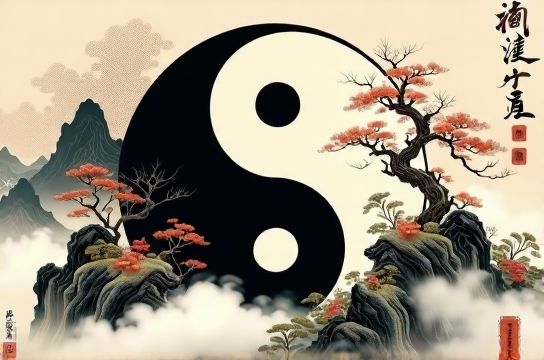
Let’s clear up some confusion. Yin Yang isn’t static. It’s dynamic. The symbol itself—a circle split with flowing halves—shows constant motion. Also, neither is “better.” Health and harmony come from balancing Yin and Yang, not favoring one.
Another myth? That it’s purely spiritual. Nope. Ancient Chinese astronomers used Yin Yang to explain seasonal shifts—winter (Yin) naturally gives way to summer (Yang).
Why This Still Matters Today
In our hyper-connected, always-on world, understanding Yin Yang helps us make better lifestyle choices. Work all day (Yang)? You need rest (Yin). Meditating but feeling sluggish? Maybe it’s time to move your body.
The bottom line: Yin Yang theory is a timeless framework for observing change and restoring equilibrium—not just in the body, but in nature, society, and self.