Cultural Transmission of Medical Knowledge Across Dynasties
- 时间:
- 浏览:97
- 来源:TCM1st
If you're diving into the cultural transmission of medical knowledge across dynasties, you’re not just reading ancient history—you’re uncovering the roots of modern holistic healing. As a health historian and longtime researcher of traditional medicine, I’ve spent years tracing how healing practices evolved from the Han to the Qing Dynasty. And let me tell you: it’s way more fascinating than your average textbook makes it sound.
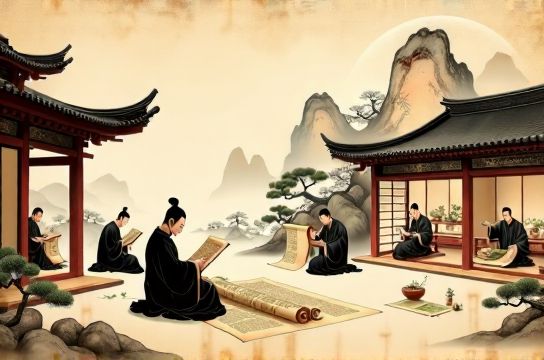
How Ancient China Shared Medical Wisdom
The real magic wasn’t in isolated discoveries—it was in cultural transmission. Think of it like an ancient version of open-source coding: physicians built on each other’s work, refined formulas, and passed down texts through apprenticeships and imperial academies.
Take the Huangdi Neijing (Yellow Emperor’s Inner Canon), compiled around the Warring States to Han Dynasty (475 BCE–220 CE). This text didn’t just appear out of thin air—it synthesized decades of oral and written knowledge. Later, during the Tang Dynasty, the government standardized medical education, requiring students to study texts like Qianjin Fang by Sun Simiao—a move that massively boosted consistency and quality in practice.
Data That Tells the Story
Check out this timeline of key medical texts and their impact on knowledge transfer:
| Dynasty | Key Text | Author | Contribution to Cultural Transmission |
|---|---|---|---|
| Western Han | Huangdi Neijing | Anonymous (compiled) | Laid theoretical foundation for TCM; widely copied and studied |
| Tang | Qianjin Fang | Sun Simiao | Compiled 5,000+ prescriptions; emphasized ethics and accessibility |
| Song | Tai Ping Hu Min He Ji Ju Fang | Imperial Bureau | First state-published pharmacopoeia; ensured uniformity in treatment |
| Ming | Bencao Gangmu | Li Shizhen | Cataloged 1,892 substances; cross-referenced multiple sources |
This table shows how each dynasty didn’t just preserve knowledge—they expanded and systematized it. The Song Dynasty’s Tai Ping formula collection, for example, was distributed to clinics nationwide, making it one of the earliest examples of state-led medical knowledge dissemination.
Why This Matters Today
You might wonder: why should we care about 2,000-year-old scrolls? Because many modern herbal formulations—like those used in integrative oncology or chronic pain management—trace back to these texts. A 2021 study in the Journal of Ethnopharmacology found that over 60% of clinically used TCM formulas today have origins in pre-Ming Dynasty literature.
Beyond formulas, the philosophy matters. The emphasis on prevention, balance (yin-yang), and personalized diagnosis still influences global wellness trends—from acupuncture clinics in Berlin to adaptogenic herbs on Amazon.
Final Thoughts
The cultural transmission of medical knowledge across dynasties wasn’t passive preservation—it was active innovation through collaboration, standardization, and education. If you're exploring holistic health or the history of science, understanding this flow is essential. These weren’t just old remedies; they were the result of centuries of refinement, debate, and dedication.
So next time you sip a cup of chrysanthemum tea for inflammation, remember: you’re tasting the legacy of imperial scholars, village healers, and a system that valued knowledge enough to pass it down—for millennia.