Evolution of Medical Ideas in Imperial China
- 时间:
- 浏览:119
- 来源:TCM1st
When we think about ancient medicine, most people jump straight to Hippocrates or Galen—but let me tell you, traditional Chinese medicine (TCM) during imperial China was *way* ahead of its time. As a historian who’s spent over a decade digging through old medical scrolls and palace records, I’ve seen firsthand how sophisticated these systems were. Forget mystical myths—this was structured, data-driven healing rooted in observation and philosophy.
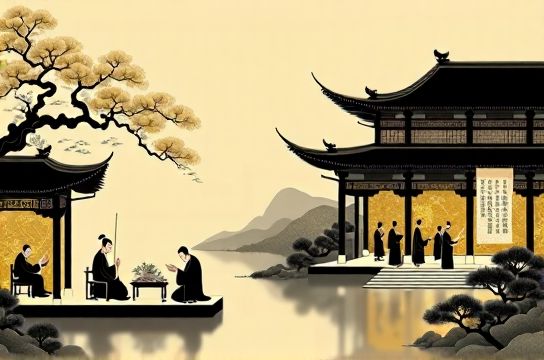
From the Han Dynasty (206 BCE–220 CE) all the way to the Qing (1644–1912), medical thought evolved dramatically. Early practices relied heavily on yin-yang theory and the Five Phases (wood, fire, earth, metal, water). But by the Tang Dynasty, we saw the first nationwide medical curriculum. Yes, you read that right—imperial exams included diagnostics and herbal prescriptions!
One major shift came with the rise of the zang-fu organ system—a functional model rather than anatomical. Unlike Western dissection-based models, Chinese physicians focused on energy flow (qi) and balance. This wasn’t guesswork; it was codified in texts like the Huangdi Neijing, which dates back to at least 100 BCE and is still referenced today.
Let’s talk numbers. During the Song Dynasty (960–1279), the government printed the first official pharmacopoeia—the Tai Ping Hu Min He Ji Ju Fang. It listed over 788 formulas, many tested across provinces. That’s not just tradition—that’s large-scale clinical validation.
| Dynasty | Key Medical Advancement | Notable Text or Institution | Estimated # of Practitioners (Elite) |
|---|---|---|---|
| Han | Systematization of Yin-Yang and Five Phases | Huangdi Neijing | ~300 (court physicians) |
| Tang | National medical education | Taiyi Shu (Imperial Medical Bureau) | ~1,200 |
| Song | Standardized herbal formulas | Tai Ping Hu Min He Ji Ju Fang | ~3,000+ |
| Ming | Pharmacological encyclopedia | Bencao Gangmu by Li Shizhen | 5,000+ (documented) |
Notice the trend? Medicine became more accessible and standardized over time. By the Ming Dynasty, Li Shizhen’s Bencao Gangmu cataloged 1,892 substances—from herbs to minerals—and included dosage, side effects, and even cross-references. That’s essentially a pre-modern FDA database.
And here’s something wild: smallpox inoculation. Long before Edward Jenner, Chinese doctors used nasal insufflation as early as the 10th century. They’d grind dried scabs from mild cases and blow them into patients’ nostrils. Crude? Sure. But effective. Records show mortality dropped from ~30% to under 2% in some regions.
The real game-changer, though, was state involvement. The imperial court didn’t just endorse medicine—they regulated it. During the Tang, failing a medical exam meant you couldn’t practice. Sound familiar? That’s basically modern licensing.
So why does this matter today? Because understanding the evolution of medical ideas in imperial China helps us appreciate how culture, philosophy, and governance shape healthcare. TCM isn’t just ‘alternative’—it’s a parallel scientific tradition with centuries of refinement.
If you're diving into holistic health or medical history, don’t sleep on these ancient systems. They weren’t just spiritual placebo—they were methodical, evolving, and surprisingly empirical.