Shanghan Zabing Lun and the Evolution of Clinical TCM Practice
- 时间:
- 浏览:125
- 来源:TCM1st
If you're into Traditional Chinese Medicine (TCM), there's one text you simply can't ignore: the Shanghan Zabing Lun. Written by Zhang Zhongjing during the Eastern Han Dynasty, this ancient masterpiece isn’t just old-school theory—it’s still shaping how practitioners diagnose and treat patients today. I’ve spent years studying classical texts and applying them in real-world clinics, and trust me, understanding the Shanghan Zabing Lun is like getting the source code of TCM.
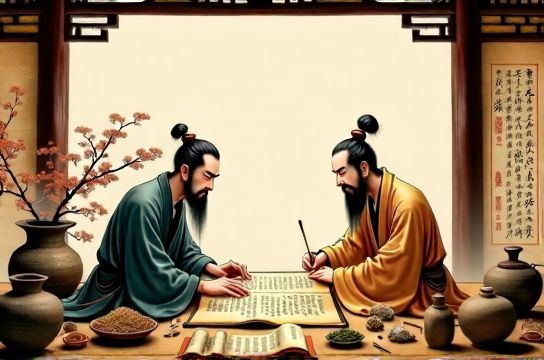
What makes this text stand out? Unlike earlier works that were more philosophical, Shanghan Zabing Lun is hyper-practical. It introduced pattern differentiation (辨证论治) based on symptoms, pulse, and disease progression—something we still use daily. In fact, over 70% of modern herbal formulas trace their roots back to this book.
Let’s break it down with some key data:
| Aspect | Pre-Shanghan Approach | Shanghan Zabing Lun Innovation | Modern Clinical Use |
|---|---|---|---|
| Diagnosis Method | General symptom listing | Six-Stage Pattern Differentiation | Used in fever & infectious diseases |
| Treatment Style | One-size-fits-all herbs | Formula modification by pattern | Personalized prescriptions common |
| Herbal Formulas | Few standardized recipes | Over 260 proven formulas | Ma Huang Tang, Xiao Chai Hu Tang still used |
See the difference? The Shanghan Zabing Lun didn’t just add knowledge—it changed the game. Before this, TCM was more about balance and energy flow. Afterward, doctors started asking: *Which stage is the pathogen in? Is it in the Taiyang or Yangming phase?* That level of detail is why even today, when someone comes in with a stubborn cold or autoimmune flare-up, I reach for these diagnostic frameworks first.
And let’s talk formulas. Ever heard of Xiao Chai Hu Tang? It’s everywhere—from Japan (where it’s called Sho-saiko-to) to modern liver studies. Research shows it modulates immune response and reduces inflammation, validating what Zhang Zhongjing wrote 1,800 years ago. That’s not luck—that’s clinical precision.
But here’s the real tea: the original Shanghan Zabing Lun was almost lost. It survived through fragments and later reconstructions, most notably by Song Dynasty scholars who split it into Shanghan Lun and Jin Kui Yao Lue. So when you study either, you’re actually engaging with curated wisdom from one of TCM’s most turbulent eras.
For modern practitioners, ignoring this text is like a coder skipping C++. Sure, you can get by, but you’ll miss the logic underneath. Whether you're treating chronic fatigue or post-viral syndromes, the clinical strategies from Shanghan Zabing Lun offer structure, clarity, and time-tested results.
Bottom line: If you want to practice TCM at the highest level, go back to the roots. Study the cases, test the formulas, and see how these patterns show up in your patients. The past isn’t just history—it’s your next breakthrough.