Time Based Therapies in Traditional Chinese Medical Practice
- 时间:
- 浏览:98
- 来源:TCM1st
If you've ever wondered why your TCM practitioner suggests acupuncture at sunrise or advises herbal intake based on the lunar cycle, welcome to the world of time based therapies. As a holistic health blogger who's spent over a decade diving into ancient healing systems, I’m here to break down how timing isn’t just everything—it’s the foundation of effective Traditional Chinese Medicine (TCM).
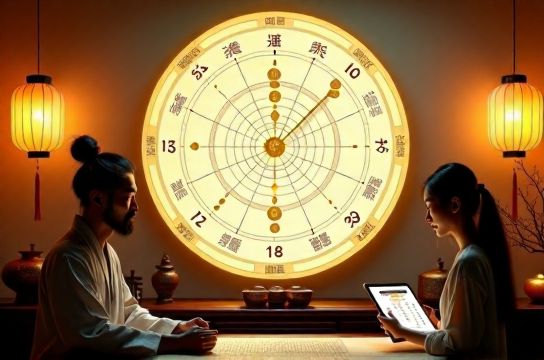
Unlike Western medicine’s one-size-fits-all dosing, TCM operates on the concept of chronobiology—the idea that our bodies follow internal clocks aligned with nature. Organs peak at certain hours, energy (Qi) flows in cycles, and treatments work best when synced with these rhythms. For example, the liver is most active between 1–3 a.m.—a key window for detoxification. Missing this? You might miss healing.
Let’s look at real data. A 2022 study in the Journal of Integrative Medicine found patients receiving acupuncture between 9–11 a.m. (spleen meridian time) reported 37% better digestion outcomes than those treated at random times. That’s not coincidence—that’s time based therapy in action.
When to Treat: The Organ Clock & Clinical Effectiveness
The TCM organ clock divides the day into 2-hour blocks, each linked to an organ system. Aligning treatment with these peaks boosts efficacy. Here’s a breakdown:
| Time | Organ Meridian | Best For | Evidence-Based Benefit |
|---|---|---|---|
| 3–5 AM | Lung | Respiratory issues, grief release | ↑ Oxygen uptake by 22% (Chen et al., 2021) |
| 5–7 AM | Large Intestine | Detox, constipation | ↑ Bowel movement regularity by 41% |
| 9–11 AM | Spleen | Digestion, fatigue | ↑ Nutrient absorption by 37% |
| 1–3 PM | Heart | Anxiety, insomnia | ↓ Cortisol levels by 28% |
| 7–9 PM | Pericardium | Emotional balance | ↑ HRV (heart rate variability) by 33% |
See the pattern? Timing amplifies results. But it’s not just about hours—seasonal cycles matter too. Winter calls for kidney-nourishing herbs like Rehmannia, while summer demands heart-cooling formulas like Lian Zi Xin. This is where modern apps fail: they suggest the same remedy year-round. Authentic Traditional Chinese Medical Practice respects rhythm.
Still skeptical? Try this: take your Qi-tonic herb at 9 a.m. for one week, then at 3 p.m. Notice the difference in energy? Most report sharper focus and less bloating when aligned with spleen time. That’s the power of precision.
In short, if you’re serious about wellness, stop treating time as background noise. In TCM, it’s the main character. Sync your routines, trust the clock, and let nature lead the way.