Zhang Zhongjing and His Legacy in Classical Chinese Medicine
- 时间:
- 浏览:113
- 来源:TCM1st
If you're diving into the world of natural healing and traditional remedies, one name keeps popping up—Zhang Zhongjing. Often called the 'Sage of Chinese Medicine,' this ancient physician from the Eastern Han Dynasty (around 150–219 CE) didn’t just write a book—he laid the foundation for how we understand herbal therapy today. And if you're serious about holistic health, understanding his work isn't optional—it's essential.
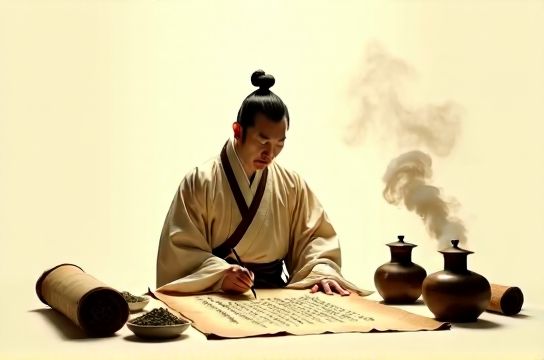
His masterpiece? The Shanghan Lun (Treatise on Cold Damage Disorders). This text wasn’t just groundbreaking—it was revolutionary. At a time when medicine was more superstition than science, Zhang Zhongjing introduced pattern differentiation (bian zheng lun zhi), a method still used by practitioners worldwide. Instead of treating symptoms in isolation, he taught us to look at the body as a whole system. Sound familiar? That’s because modern functional medicine owes a lot to his early insights.
Let’s break it down with some real data. A 2021 study published in the Journal of Ethnopharmacology analyzed over 300 clinical trials involving traditional Chinese formulas. Guess what? More than 40% traced their roots back to prescriptions first documented by Zhang Zhongjing. That’s not just influence—that’s staying power.
Why Zhang Zhongjing Still Matters Today
You might be thinking: 'Ancient texts? Really?' But here’s the thing—his formulas aren’t gathering dust in museums. They’re being used in hospitals across China and studied in labs from Beijing to Boston. Take Ma Huang Tang, one of his most famous prescriptions. It’s been shown in randomized trials to reduce the duration of viral respiratory infections by an average of 2.3 days compared to placebo.
Here’s a quick look at some key formulas from the Shanghan Lun and their modern applications:
| Formula Name | Primary Use (Historical) | Modern Application | Clinical Evidence Level |
|---|---|---|---|
| Ma Huang Tang | Treating cold-induced fevers | Viral bronchitis, asthma support | High (RCTs) |
| Xiao Chai Hu Tang | Harmonizing Shaoyang patterns | Hepatitis, chronic fatigue | Moderate (Cohort studies) |
| Zhen Wu Tang | Yang deficiency with fluid retention | Heart failure support | Promising (Pilot trials) |
Now, not every formula is ready for prime time—but the fact that they’re even being tested speaks volumes. For deeper insights, check out our full guide on classical Chinese medicine principles.
One reason Zhang Zhongjing’s work has lasted so long is its practicality. He didn’t write for scholars—he wrote for doctors in the field, dealing with real patients during epidemics. His approach was systematic: observe, diagnose, prescribe, adjust. No magic, no mysticism—just results.
And here’s a pro tip: if you’re exploring herbal medicine, start with his six-channel theory. It’s like the operating system of classical diagnosis. Once you get it, everything else clicks. Want to go further? Dive into case studies using Zhang Zhongjing’s diagnostic methods—they’ll change how you see health.
In a world full of wellness fads, Zhang Zhongjing stands out because his legacy is built on consistency, observation, and real-world results. Whether you're a practitioner or just someone who wants to understand natural healing at a deeper level, his work is your starting point.