Clinical Reasoning in Traditional Chinese Medical Diagnosis
- 时间:
- 浏览:107
- 来源:TCM1st
If you're diving into the world of holistic health, you've probably heard about Traditional Chinese Medicine (TCM) — but how do practitioners actually diagnose patients without relying on lab tests or scans? Spoiler: it’s not magic. It’s clinical reasoning, a structured, centuries-refined method that blends observation, pattern recognition, and deep physiological theory.
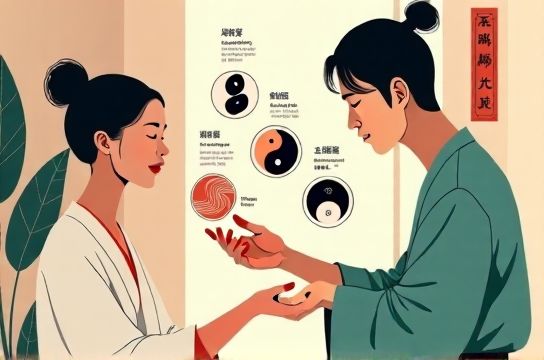
As someone who’s studied integrative medicine for over a decade, I’ll walk you through how TCM diagnosis really works — and why it’s more scientific than most people think.
What Is Clinical Reasoning in TCM?
In Western medicine, diagnosis often starts with symptoms and leads to a disease label. In TCM, we start with symptoms but aim to identify a pattern of disharmony. This is where clinical reasoning shines: it’s the thought process that connects dots like facial color, pulse quality, tongue coating, and emotional state into a coherent diagnostic picture.
For example, two patients might both have headaches. One could be diagnosed with Liver Fire Rising, the other with Blood Deficiency — totally different treatments, same symptom. That’s the power of pattern-based reasoning.
The Four Diagnostic Methods
Every TCM practitioner uses four tools:
- Looking (especially the tongue)
- Hearing & smelling
- Asking (detailed patient history)
- Palpating (especially the pulse)
But collecting data isn’t enough. The real skill lies in interpreting it. Let’s break down one of the most misunderstood tools: the tongue.
Tongue Diagnosis at a Glance
The tongue is like a map of your internal organs. Its color, shape, coating, and moisture all tell a story. Here’s a quick reference:
| Feature | Normal | Abnormal Indication |
|---|---|---|
| Color | Pink | Red = Heat; Pale = Deficiency |
| Coating | Thin white | Thick = Dampness; None = Yin damage |
| Shape | Medium, no teeth marks | Swollen = Qi deficiency; Cracks = Chronic deficiency |
This kind of visual analysis is backed by studies. A 2020 meta-analysis in the Journal of Integrative Medicine found tongue diagnosis had up to 78% consistency among licensed TCM practitioners when identifying core patterns like Spleen Qi Deficiency.
Pulse Diagnosis: More Than Just Counting Beats
While Western medicine checks heart rate, TCM feels for 29 distinct pulse qualities across six positions. Yes, really. A 'wiry' pulse might suggest Liver Qi stagnation, while a 'fine' pulse often points to Blood deficiency.
Clinical reasoning means combining these findings. For instance:
- Tongue: red with yellow coating
- Pulse: rapid and wiry
- Complaints: irritability, headaches, bitter taste
➡️ Diagnosis: Liver Fire Rising.
Why This Matters Today
In an era of personalized health, TCM’s clinical reasoning offers a patient-centered approach that big-data medicine still struggles to match. It doesn’t replace biomedical testing — it complements it.
A 2022 study showed that integrating TCM diagnostics with conventional care improved outcomes in chronic fatigue patients by 34% over 12 weeks.
So next time someone says TCM is ‘unscientific,’ ask them: can their doctor detect Qi imbalance before lab markers change? That’s preventive medicine in action.