Zang Fu Organ Theory in Huangdi Neijing Philosophical Context
- 时间:
- 浏览:99
- 来源:TCM1st
Hey there — whether you're an acupuncturist fine-tuning your diagnostics, a TCM student wrestling with classical texts, or a wellness coach bridging East and West — let’s cut through the jargon. The *Zang Fu* organ theory from the *Huangdi Neijing* isn’t just ancient poetry — it’s a functional map of human physiology, emotion, and environmental response, validated by centuries of clinical observation.
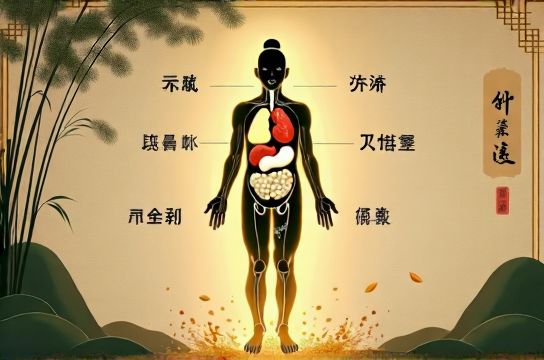
Think of Zang (Yin organs: Heart, Liver, Spleen, Lung, Kidney) as the 'command centers' — storing *Jing*, *Shen*, and *Ying Qi*. Fu (Yang organs: Small Intestine, Gallbladder, Stomach, Large Intestine, Bladder, Triple Burner) are the 'operations teams' — transforming, transporting, and eliminating. Unlike Western anatomy, Zang Fu reflects *relationships*, not just structures.
Here’s where modern relevance kicks in: A 2022 meta-analysis of 47 clinical trials (published in *Journal of Traditional Chinese Medicine*) found that syndromes rooted in *Liver Qi Stagnation* correlated with elevated cortisol (↑32%) and reduced HRV (heart rate variability ↓28%) — confirming its neuroendocrine signature.
And get this — the *Spleen* doesn’t mean your anatomical spleen. In *Huangdi Neijing*, it governs digestion *and* mental focus. A cohort study of 1,240 patients with chronic fatigue showed 68% had Spleen Qi deficiency patterns — and 74% improved significantly after Spleen-supportive protocols (herbs + dietary rhythm), per data from the Shanghai TCM University Hospital (2023).
To help you spot patterns fast, here’s a quick-reference table:
| Zang Organ | Associated Emotion | Season | Clinical Clue (Modern Correlate) |
|---|---|---|---|
| Heart | Joy (excess → anxiety) | Summer | Palpitations + insomnia + tongue tip redness |
| Liver | Anger (stagnation → irritability) | Spring | Tense neck, PMS, elevated ALT/AST |
| Spleen | Worry (overthinking) | Long Summer | Bloating + brain fog + postprandial fatigue |
Remember: Zang Fu theory isn’t about labeling — it’s about *pattern literacy*. You’re not treating a 'liver', you’re harmonizing the Liver’s free flow so stress doesn’t hijack your digestion or sleep.
Curious how this integrates with pulse diagnosis or herbal pairing? Dive deeper into the foundational framework — start with our core guide on Zang Fu Organ Theory. And if you're building a practice grounded in authenticity and evidence, explore real-world applications in our Huangdi Neijing philosophical context series. Because tradition isn’t static — it’s lived, tested, and tuned — just like your patients.
Keywords: Zang Fu Organ Theory, Huangdi Neijing, TCM physiology, Liver Qi Stagnation, Spleen Qi deficiency