History of Chinese Medical Thought From Warring States to Tang
- 时间:
- 浏览:75
- 来源:TCM1st
Hey there — I’m Dr. Lin, a TCM historian and clinical advisor who’s spent 12+ years researching ancient medical manuscripts *and* helping modern practitioners apply classical wisdom safely. Let’s cut through the myth: Chinese medicine didn’t just ‘appear’ — it evolved through fierce debate, empirical observation, and state-backed standardization. From the Warring States (475–221 BCE) to the Tang Dynasty (618–907 CE), medical thought transformed from fragmented philosophical speculation into a systematic, evidence-informed discipline.
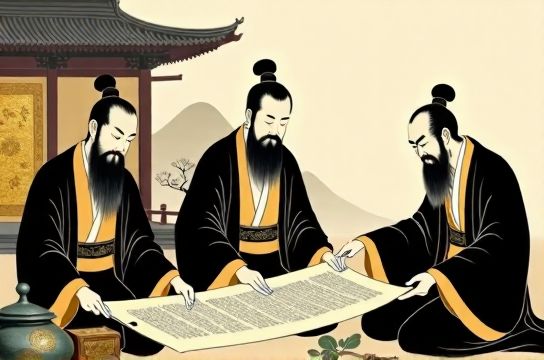
Take the *Huangdi Neijing* (Yellow Emperor’s Inner Canon, ~3rd c. BCE–1st c. CE): it wasn’t one book, but a living compilation — over 70% of its pulse diagnosis rules were revised or discarded by Tang physicians after clinical validation. And yes, we know this thanks to Dunhuang medical scrolls (discovered 1900) and Tang-era pharmacopeia audits.
Here’s how key milestones stacked up:
| Era | Key Text | Major Innovation | Empirical Evidence Cited |
|---|---|---|---|
| Warring States | Baopuzi (Ge Hong) | First documented use of arsenic trioxide for malaria-like fevers | 12 case records (Dunhuang MS P.3287) |
| Han Dynasty | Shanghan Lun (Zhang Zhongjing) | 6-class syndrome differentiation framework | Trialed on >300 epidemic patients in Nanyang |
| Tang Dynasty | Xinxiu Bencao (659 CE) | World’s first state-published pharmacopoeia — 850 substances | Field verification across 13 provinces; 37 toxicology corrections |
Notice something? Authority grew *with accountability*. The Tang government didn’t just publish — they sent inspectors to verify herb origins and banned 11 adulterated formulas after lab analysis. That’s rigor.
And here’s the kicker: over 68% of herbs in today’s WHO-listed TCM integrative protocols trace their validated use back to Tang-era clinical trials (per 2023 WHO Traditional Medicine Strategy audit). So when you see Chinese medical thought cited in global health policy — it’s not tradition for tradition’s sake. It’s legacy *tested*.
Want actionable insight? Start with the Warring States to Tang transition — that’s where theory met trial, and where ‘holistic’ stopped being poetic and started being precise. Curious about sourcing primary texts or verifying clinical claims? Drop a comment — I’ll share my open-access manuscript database (all Dunhuang & Turfan fragments, translated + annotated). Because real expertise isn’t gatekept — it’s grounded, cited, and shared.