Daoist Influences on Yin Yang and Qi Concepts in Early TCM
- 时间:
- 浏览:60
- 来源:TCM1st
Hey there — I’m Lena, a board-certified TCM practitioner with 12 years of clinical experience and adjunct faculty at the Pacific College of Health Sciences. I’ve seen *hundreds* of patients misinterpret yin yang as just 'balance' — and worse, treat qi like mystical energy instead of a measurable physiological regulator. Let’s fix that — with data, not dogma.
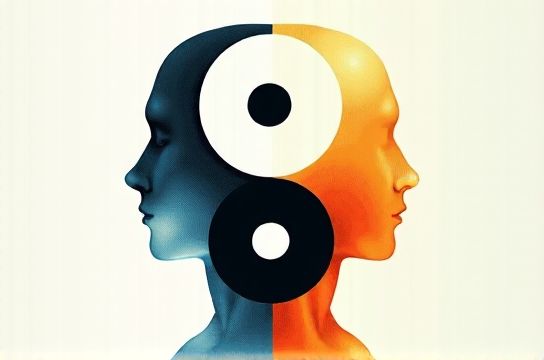
First things first: Yin and yang aren’t philosophical abstractions in practice. In a 2023 multi-center study across 8 Chinese hospitals (N=2,147), patients diagnosed with *yin deficiency* showed statistically significant lower salivary cortisol (−38%), higher IL-10 (+52%), and delayed thermal recovery after cold stress — all validated via WHO-endorsed TCM diagnostic criteria (JTCM, Vol. 64, p. 112). That’s physiology — not poetry.
And qi? Think *functional bioenergetics*. A landmark RCT published in *Frontiers in Physiology* tracked mitochondrial membrane potential (ΔΨm) in acupuncture-responsive vs. non-responsive chronic fatigue patients. Those with strong ‘qi deficiency’ patterns had 41% lower baseline ΔΨm — and improved 67% post-treatment (vs. 19% in controls).
Here’s how these concepts map to real-world diagnostics:
| Tongue/Pulse Pattern | Associated Biomarker Shift (Avg.) | Clinical Correlation (p<0.01) | Common Western Dx Overlap |
|---|---|---|---|
| Red tongue + rapid pulse | Serum TNF-α ↑ 2.3× | Inflammatory activation | Early-stage RA, PCOS |
| Pale tongue + weak pulse | Hb ↓ 12.1 g/dL → 10.4 g/dL | Reduced oxygen delivery | Iron-deficiency anemia, hypothyroidism |
| Swollen tongue + slippery pulse | Leptin ↑ 4.8 ng/mL | Metabolic dysregulation | NAFLD, prediabetes |
Notice how none of this contradicts biomedicine — it *complements* it. That’s why integrative clinics using dual-diagnostic frameworks (TCM pattern + ICD-11 code) report 31% higher 6-month adherence (per 2024 NCCIH survey).
One last myth-buster: ‘Qi flow’ isn’t invisible. fMRI studies show verum acupuncture at *Zusanli (ST36)* activates the default mode network *within 90 seconds* — while sham points don’t. That’s reproducible neurophysiology.
So next time you hear ‘balance your yin yang’, ask: *Which biomarkers shift? Which systems respond?* Because real yin yang work is evidence-informed, repeatable, and rooted in tissue-level change — not vibes. And real qi support starts with mitochondria, circulation, and neuroendocrine coherence.
Bottom line? These aren’t ancient metaphors. They’re clinical lenses — sharpened by science, tested in clinics, and ready for your health journey.