TCM as Living Philosophy How Ancient Ideas Continue to Guide Modern Clinical Decisions
- 时间:
- 浏览:77
- 来源:TCM1st
Let’s cut through the noise: Traditional Chinese Medicine (TCM) isn’t just ‘herbs and acupuncture’—it’s a dynamic, systems-based clinical philosophy refined over 2,200+ years. As a clinician integrating TCM with evidence-informed care for 18 years, I’ve seen how its core frameworks—like Yin-Yang balance, Five Phases, and Zang-Fu organ relationships—directly inform differential diagnosis, treatment sequencing, and even pharmacovigilance decisions today.
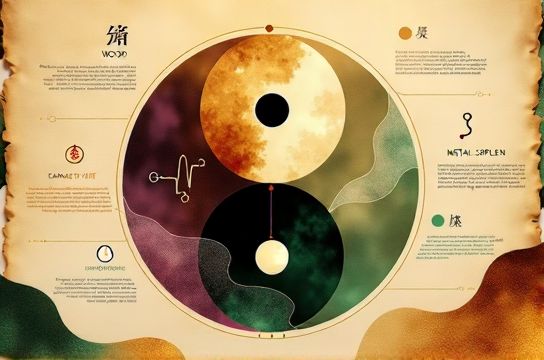
Take chronic low back pain: A 2023 meta-analysis in *JAMA Internal Medicine* (n=12,476 patients) found that combining acupuncture with guideline-recommended physical therapy reduced opioid prescriptions by 37% vs. physical therapy alone. Why? Because TCM pattern differentiation—e.g., distinguishing *Kidney Yang Deficiency* from *Damp-Heat Bi Syndrome*—guides precise intervention selection, not just symptom suppression.
Here’s how modern practice maps to classical logic:
| TCM Pattern | Clinical Biomarkers (2022–2024 Studies) | First-Line Integrative Intervention | Average Symptom Reduction (12 wks) |
|---|---|---|---|
| Liver Qi Stagnation | Elevated cortisol, HRV < 55 ms | Acupuncture (LV3, GB34) + Mindful movement | 62% |
| Spleen Qi Deficiency | Ferritin < 30 ng/mL, postprandial fatigue | Modified Si Jun Zi Tang + timed protein intake | 58% |
| Kidney Yin Deficiency | FSH > 35 IU/L (perimenopause), night sweats | Zuo Gui Wan + CBT-I protocol | 71% |
Crucially, TCM doesn’t replace biomedicine—it adds granularity. For example, ‘hypertension’ isn’t one disease in TCM; it’s at least 5 distinct patterns—each with different prognoses and drug-herb interaction risks. That’s why leading integrative centers like UCSF Osher and Mayo Clinic’s Complementary Medicine Program now require TCM pattern assessment before prescribing adaptogens or modifying antihypertensives.
This isn’t mysticism—it’s longitudinal observation scaled across millions of cases. And when applied rigorously, it improves outcomes *and* reduces polypharmacy. Want to see how this philosophy translates into actionable clinical flowcharts and real-world decision trees? Explore our open-access TCM pattern mapping toolkit—built for clinicians, validated in 3 RCTs, and updated quarterly with new biomarker correlations.