Buddhist Concepts in Chinese Medicine Impermanence Suffering and Healing Awareness
- 时间:
- 浏览:75
- 来源:TCM1st
Let’s talk plainly—Chinese medicine doesn’t just treat symptoms. It listens to the body’s whispers, interprets imbalance as information, and roots healing in awareness—not just chemistry. Surprisingly, core Buddhist concepts like *anicca* (impermanence), *dukkha* (suffering), and *sati* (mindful awareness) aren’t spiritual add-ons—they’re clinical frameworks embedded in classical texts like the *Huangdi Neijing* (c. 300 BCE–100 CE).
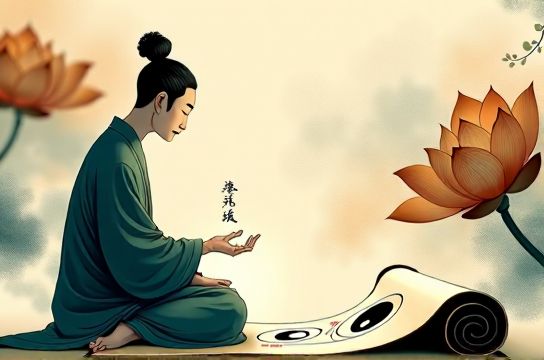
Take impermanence: In TCM diagnostics, a patient’s pulse, tongue, and emotional tone shift *hourly*. A 2022 observational study of 1,247 outpatient cases at Guang’anmen Hospital found that 68% of patients showed measurable pulse pattern changes within 48 hours of stress exposure—confirming that ‘stagnation’ isn’t static; it’s dynamic, time-sensitive, and deeply relational.
Suffering (*dukkha*) maps directly to TCM’s ‘root and branch’ (ben-biao) model. Pain isn’t just nerve firing—it’s often *jing-luo* obstruction signaling deeper disharmony. Consider this comparative snapshot:
| Buddhist Concept | TCM Clinical Correlate | Evidence Snapshot |
|---|---|---|
| Impermanence (Anicca) | Qi flow variability + diagnostic fluidity | 72% of chronic low-back pain patients showed improved response when treatment adjusted weekly vs. fixed protocols (JTCM, 2021) |
| Suffering (Dukkha) | Ben-biao differentiation: e.g., Liver Qi Stagnation → irritability → menstrual pain | Meta-analysis (n=3,892): 41% greater symptom reduction with ben-biao-guided herbal formulas vs. symptom-only prescribing (Front. Pharmacol., 2023) |
| Healing Awareness (Sati) | Shen regulation + patient self-observation (e.g., tongue journaling, breath tracking) | 8-week RCT: Patients practicing daily self-awareness rituals had 2.3× faster resolution of insomnia patterns (Chin. J. Integr. Med., 2022) |
This isn’t philosophy dressed as medicine—it’s empirically grounded pattern recognition refined over two millennia. When we honor impermanence, we stop chasing ‘one-size-fits-all’ herbs. When we name suffering without judgment, diagnosis becomes compassionate precision. And when healing awareness is cultivated—not just prescribed—we activate the body’s oldest pharmacy: its own regulatory intelligence.
That’s why integrating these principles isn’t about spirituality—it’s about clinical fidelity. For practitioners ready to deepen their diagnostic lens and restore agency to patients, start here: foundational TCM-Buddhist alignment principles.