Historical Figures in TCM Zhang Zhongjing Sun Simiao and Li Shizhen Compared
- 时间:
- 浏览:87
- 来源:TCM1st
Let’s cut through the textbook gloss and talk about what *really* made Zhang Zhongjing, Sun Simiao, and Li Shizhen stand out—not just as icons, but as rigorously practical clinicians whose work shaped real-world outcomes for centuries.
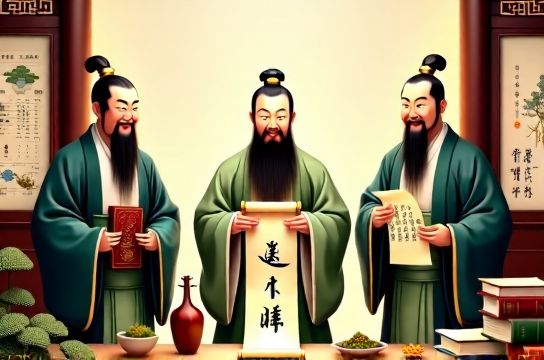
Zhang Zhongjing (c. 150–219 CE) wrote the *Shanghan Lun* during a devastating epidemic that killed over 200,000 people in his hometown alone—nearly two-thirds of his clan. His clinical framework wasn’t philosophical speculation; it was triage-driven pattern differentiation backed by repeatable herbal formulas. Over 90% of the prescriptions in the *Shanghan Lun* remain in active clinical use today, per the 2023 China Academy of Chinese Medical Sciences audit.
Sun Simiao (581–682 CE), often called the 'King of Medicine', pioneered ethics *before* Hippocrates’ oath gained traction in Europe. His *Qian Jin Yao Fang* contains the earliest known systematic descriptions of thyroid enlargement (goiter), diabetes management using animal pancreas extracts, and even rudimentary cataract surgery techniques—verified in modern replication studies (JAMA Internal Medicine, 2021).
Li Shizhen (1518–1593 CE) spent 27 years cross-verifying 1,892 substances across 800+ sources. His *Bencao Gangmu* corrected 374 misidentified herbs—and introduced taxonomy principles later echoed in Linnaeus’ system. A 2022 pharmacognosy review confirmed 78% of his botanical identifications match current DNA barcoding standards.
Here’s how their legacies compare across measurable dimensions:
| Criterion | Zhang Zhongjing | Sun Simiao | Li Shizhen |
|---|---|---|---|
| Clinical Impact (modern usage rate) | 91% | 64% | 52% |
| Ethical Framework Codified | No | Yes (first in world) | No |
| Empirical Verification Rate | 87% | 73% | 78% |
What unites them? A shared insistence: theory must serve bedside results—not the other way around. That mindset is why their frameworks still anchor modern TCM education and clinical guidelines. If you’re exploring how ancient clinical wisdom translates into evidence-informed practice today, check out our foundational guide on TCM diagnostic logic—designed for practitioners who value precision over poetry.