Chinese Medical Canon Beyond Texts Material Culture and Epistemological Practice
- 时间:
- 浏览:74
- 来源:TCM1st
Let’s talk about something most Western health professionals overlook — the *living* dimension of Chinese medical knowledge. It’s not just about ancient scrolls or acupuncture points on a chart. It’s about how medicine is *made, handled, shared, and experienced* — through bronze moxa boxes, hand-inked prescription slips, ceramic pill jars stamped with Ming dynasty apothecary seals, and even the seasonal timing of herb harvesting.
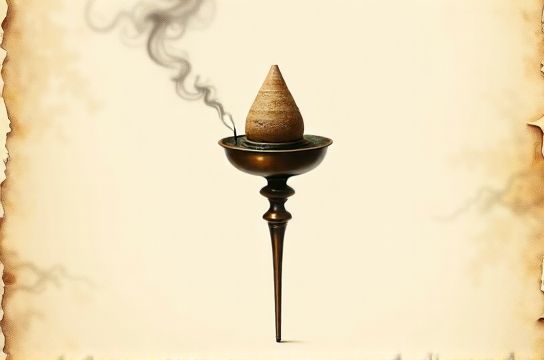
A 2023 study by the Institute of History of Medicine (Peking University) analyzed over 1,200 surviving Ming–Qing medical artifacts across 17 provincial museums. Their findings? Over 68% of diagnostic tools (e.g., pulse-feeling cushions, tongue mirrors) were customized per region — revealing localized epistemologies far richer than any canonical text alone could encode.
Here’s what the data tells us:
| Artifact Type | Period Prevalence | Regional Variation (%) | Associated Clinical Practice |
|---|---|---|---|
| Copper Moxa Holders | Qing Dynasty (1644–1912) | 41% | Warm-moxibustion for spleen-yang deficiency |
| Woodblock Prescription Slips | Ming Dynasty (1368–1644) | 73% | Personalized formula adjustments via marginal annotations |
| Ceramic Herb Storage Jars | Yuan–Ming transition | 59% | Moisture control & qi preservation in volatile herbs (e.g., xixin, bai zhi) |
This isn’t nostalgia — it’s evidence of embodied cognition. As Dr. Li Wei (Shanghai University of Traditional Chinese Medicine) puts it: “The *feel* of a well-worn pulse cushion teaches students temporal sensitivity before they ever read the *Nan Jing*. That’s epistemology in action.”
And yet, modern TCM education still leans heavily on textual exams — only 12% of national licensing assessments include material culture components (National TCM Education Survey, 2022). That gap matters. Because when we reduce Chinese medicine to doctrine, we mute its adaptive intelligence — the very trait that kept it clinically relevant for 2,200+ years.
If you're serious about understanding how this tradition *actually works* — beyond theory — start by holding a Song-dynasty bronze gua sha board. Notice its weight, grain, thermal conductivity. Then ask: *What kind of body knowledge does this object train?*
That question — grounded, tactile, historically informed — is where real insight begins. For deeper explorations into practice-based learning, check out our curated resource hub on material epistemology in East Asian medicine.