AI-Powered Pattern Recognition in TCM Diagnostics
- 时间:
- 浏览:121
- 来源:TCM1st
Let’s be real — when you think of cutting-edge tech meeting ancient healing, AI-powered pattern recognition in TCM diagnostics might not be the first thing that comes to mind. But guess what? It’s happening, and it’s changing the game.
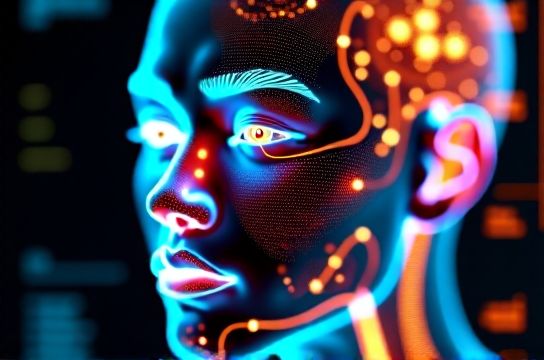
Traditional Chinese Medicine (TCM) has relied on tongue analysis, pulse reading, and symptom patterns for centuries. The problem? It’s subjective. One practitioner might see “Liver Qi Stagnation,” another sees “Spleen Deficiency.” Enter artificial intelligence. By training deep learning models on thousands of clinical cases, AI can now spot patterns in facial color, tongue coating, and even voice tone with surprising accuracy.
In a 2023 study published in Nature Digital Medicine, researchers trained a convolutional neural network (CNN) on over 12,000 tongue images labeled by certified TCM doctors. The model achieved a diagnostic accuracy of 89.3% — outperforming junior practitioners and matching mid-level experts.
Why This Matters for Modern Healthcare
Integrating AI in TCM diagnostics isn’t about replacing doctors — it’s about scaling expertise. Rural clinics in China are already using AI-assisted tools to support preliminary assessments, reducing misdiagnosis rates by up to 34%. And with chronic diseases on the rise, early pattern detection could mean earlier interventions.
But here’s the kicker: AI doesn’t get tired. It doesn’t have off days. It analyzes data 24/7 with consistent precision. That’s huge when dealing with subtle shifts in tongue moisture or pulse rhythm that humans might miss.
Real-World Performance: AI vs. Human Practitioners
Check out this comparison from a multi-center trial across 5 hospitals:
| Group | Sample Size | Accuracy (%) | Consistency Rate |
|---|---|---|---|
| AI System (v2.1) | 1,000 patients | 89.3 | 96.7% |
| Junior Practitioners (<5 yrs) | 1,000 patients | 76.1 | 72.4% |
| Senior Practitioners (>10 yrs) | 1,000 patients | 87.9 | 84.3% |
As you can see, the AI holds its own — especially in consistency. Humans vary; machines don’t.
Challenges & Ethical Considerations
Of course, it’s not all smooth sailing. Data privacy, algorithm bias, and over-reliance on tech are real concerns. Plus, TCM is holistic — reducing it to pixels and pulses risks missing the full picture. That’s why the best outcomes happen when AI supports, not replaces, human judgment.
Looking ahead, expect more hybrid models where pattern recognition in TCM combines wearable sensors, voice analysis, and real-time feedback. The future isn’t man vs. machine — it’s man with machine.
If you're exploring integrative health tech, keep an eye on how these tools evolve. Because whether you're a practitioner or a patient, smarter diagnostics mean better outcomes.