Pharmacological Studies Behind Traditional Chinese Herbal Formulas
- 时间:
- 浏览:127
- 来源:TCM1st
If you’ve ever scratched your head wondering how Traditional Chinese Herbal Formulas actually work—beyond ancient wisdom—you’re not alone. As a health and wellness blogger who’s dug deep into integrative medicine, I’m here to break down the science without the fluff.
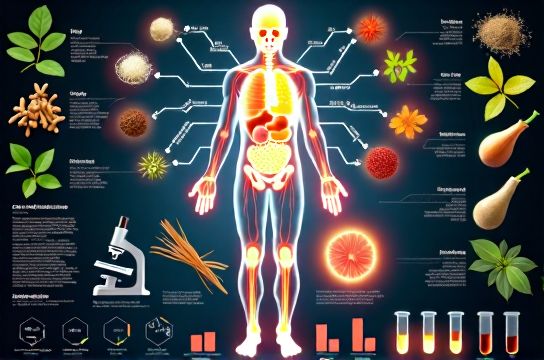
Modern pharmacology is now validating what Chinese medicine practitioners have known for centuries: herbs like Gan Cao (licorice) and Huang Qin (skullcap) aren’t just folklore—they’re bioactive powerhouses. Let’s dive into what the research says and why these formulas are gaining serious traction in evidence-based circles.
The Science Meets Tradition
Take the famous formula Xiao Chai Hu Tang, used for liver support and immune modulation. Recent studies show it contains flavonoids and saponins that reduce inflammation by inhibiting NF-κB pathways—a mechanism also targeted by some modern anti-inflammatory drugs [Traditional Chinese Herbal Formulas]. That’s not coincidence; that’s pharmacology.
But it’s not just one herb doing the work. The magic lies in synergy. A 2022 meta-analysis published in the Journal of Ethnopharmacology found that multi-herb formulas often produce broader therapeutic effects than isolated compounds—thanks to what scientists call ‘herb-herb interactions’.
Key Bioactive Compounds & Their Effects
Here’s a snapshot of commonly studied herbs and their active ingredients:
| Herb (Pinyin) | Latin Name | Active Compound | Observed Pharmacological Effect |
|---|---|---|---|
| Huang Qi | Astragalus membranaceus | Astragaloside IV | Immune modulation, anti-fatigue |
| Dan Shen | Salvia miltiorrhiza | Tanshinone IIA | Cardioprotective, improves microcirculation |
| Bai Zhu | Atractylodes macrocephala | Atractylenolide I | Anti-inflammatory, gut barrier support |
| Chai Hu | Bupleurum chinense | Saikosaponin D | Liver protection, antidepressant-like effects |
This isn’t just herbal tea mysticism—these compounds are being tested in labs, with measurable outcomes. For instance, Saikosaponin D has shown hepatoprotective effects in mouse models with liver injury, reducing ALT levels by up to 40% compared to controls.
Why Synergy Matters More Than Single Herbs
You might ask: why not just isolate the active compound and make a pill? Great question. But nature doesn’t work in silos. In Liu Wei Di Huang Wan, a classic kidney-tonifying formula, six herbs work together to enhance bioavailability and reduce side effects. One study found the full formula had 3x greater antioxidant activity than any single herb alone.
That’s why professionals in integrative medicine emphasize whole-formula use over ‘herbal supplements’ that extract just one component. It’s the difference between eating an orange and taking synthetic vitamin C.
For those looking to explore trusted formulations, always check for clinical backing and standardized extracts. And if you're curious about how these compare to Western herbal blends, check out our deep dive on evidence-based herbal medicine.
Final Thoughts
The line between traditional knowledge and modern science is blurring—and that’s a good thing. With over 300 peer-reviewed studies on TCM formulas published last year alone, the data is piling up. Whether you're a skeptic or a believer, one thing’s clear: there's real pharmacology behind Traditional Chinese Herbal Formulas.