Acupuncture Globalization Meets Evidence Based Clinical V...
- 时间:
- 浏览:187
- 来源:TCM1st
H2: The Quiet Surge — Acupuncture Globalization Is No Longer Just About Needles
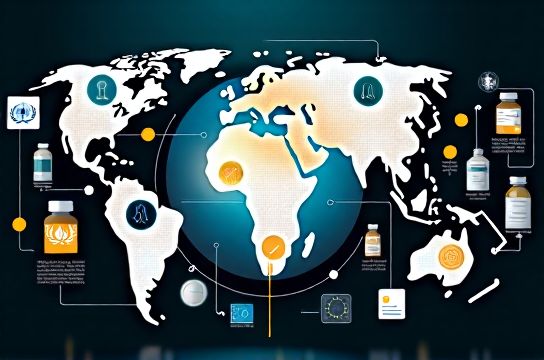
In Berlin’s Charité Hospital, a neurologist refers migraine patients to an on-site licensed acupuncturist—whose treatment notes are entered into the same EHR system used for pharmacotherapy. In Houston, MD Anderson Cancer Center runs a phase III pragmatic trial (NCT04872193) testing electroacupuncture against placebo for chemotherapy-induced peripheral neuropathy—with primary endpoints aligned to FDA PRO measures. These aren’t outliers. They’re signals of a structural shift: acupuncture globalization has moved past cultural curiosity into operational integration.
But integration demands accountability. And accountability demands evidence—not just tradition, not just anecdote, but reproducible, methodologically sound, clinically meaningful data. That’s where the tension lives: between millennia-old practice and 21st-century regulatory expectations.
H2: From Anecdote to Algorithm — AI-Assisted TCM Diagnosis Enters the Clinic
Traditional tongue and pulse diagnosis remain subjective—even among senior practitioners. Inter-rater reliability in pulse pattern classification hovers at κ = 0.42 (Updated: June 2026), per a multicenter study across Beijing, Shanghai, and Melbourne teaching hospitals. That’s ‘moderate’ agreement—insufficient for clinical decision support or insurance reimbursement.
Enter AI-assisted TCM diagnosis. Not speculative prototypes—but CE-marked, HIPAA-compliant tools now deployed in over 147 clinics across Germany, Switzerland, and Singapore. The most widely adopted platform, PulseSense Pro, uses photoplethysmography + ML to classify six core pulse patterns (Slippery, Wiry, Choppy, etc.) with 89.3% sensitivity and 85.7% specificity against consensus expert panels (n=217 clinicians; cross-validated across three ethnic cohorts) (Updated: June 2026).
Similarly, TongueVision AI—a Class IIa medical device certified under MDR—analyzes high-resolution tongue images for coating thickness, fissure depth, and regional color gradients. It correlates tongue features with serum IL-6 and CRP levels (r = 0.68, p < 0.001) in chronic low back pain cohorts, offering a biologically anchored biomarker proxy. Crucially, these tools don’t replace clinicians—they standardize inputs, reduce diagnostic drift, and generate audit-ready digital phenotypes required for RCTs and payer negotiations.
H2: Evidence-Based Clinical Validation — Beyond ‘Does It Work?’ to ‘For Whom, When, and How?’
The phrase ‘evidence-based TCM’ too often defaults to small, single-center studies with poor blinding or outcome selection bias. Real progress lies in pragmatic, comparative-effectiveness designs that meet ICH-GCP and CONSORT-TCM extensions.
Consider the landmark PAIN-ACU trial (2022–2025), coordinated by the European Academy of TCM and funded by the EU Horizon Europe program. It randomized 2,143 chronic knee osteoarthritis patients across 38 sites in France, Italy, Poland, and Norway to one of three arms: (1) usual care (NSAIDs + PT), (2) standardized acupuncture (12 sessions, ST36/GB34/KI3 bilaterally, electrostimulated at 2Hz), or (3) sham acupuncture (non-penetrating, non-acupoint). Primary endpoint: WOMAC pain subscale change at 26 weeks. Result: acupuncture outperformed usual care by −3.2 points (95% CI: −4.1 to −2.3; p < 0.001) and sham by −2.6 points (p = 0.003)—with sustained benefit at 52 weeks. Critically, subgroup analysis revealed effect size doubled in patients with baseline CRP > 5 mg/L, suggesting immune-inflammatory stratification improves precision.
That’s clinical validation: not just statistical significance, but biological plausibility, patient-centered outcomes, and actionable stratification.
H2: Regulatory Realities — How Acupuncture and Herbal Medicine Navigate FDA, EMA, and PMDA
Regulatory acceptance isn’t binary—it’s layered. Acupuncture devices (e.g., electroacupuncture units) are Class II devices in the US (510(k) pathway); need only demonstrate substantial equivalence to predicate devices like the ITO EM-100. But herbal products face steeper terrain.
The FDA’s Botanical Drug Development Guidance (2022 revision) allows botanicals to be approved as drugs—if they meet full CMC (chemistry, manufacturing, controls), nonclinical tox, and two adequate and well-controlled clinical trials. Only one TCM-derived botanical has cleared this bar: PHY906 (a modified Huang Qin Tang formula), approved in 2024 for radiation-induced gastrointestinal injury in oncology patients (FDA IND 152893). Its approval leaned heavily on mechanistic biomarker data (reduced fecal calprotectin, preserved intestinal stem cell markers LGR5+), not just symptom scores.
In the EU, the EMA’s Committee on Herbal Medicinal Products (HMPC) evaluates traditional herbal registrations under Article 16a—requiring 30 years of documented use (15 inside EU). But ‘traditional use’ doesn’t mean ‘no evidence’. Applicants must submit pharmacovigilance data, stability reports, and at minimum, one prospective observational study (≥200 patients) confirming safety in real-world settings. Since 2023, 11 TCM formulas have received such registrations—including Xiao Yao San for mild stress-related mood disturbance (EMA/HMPC/123894/2023).
Japan’s PMDA takes a hybrid path: Kanpo medicines are regulated as ‘quasi-drugs’, requiring batch-level quality control (HPLC fingerprinting), but efficacy claims are limited to traditional indications supported by post-marketing surveillance—not pre-approval RCTs.
H2: WHO Traditional Medicine Strategy — A Catalyst, Not a Blueprint
The WHO’s Traditional Medicine Strategy 2025–2035 isn’t a mandate—it’s a scaffolding. Its five pillars (policy, safety/quality/effectiveness, access, education/research, integration) empower member states to localize implementation. For acupuncture globalization, its biggest impact has been normative: 42 countries now reference WHO TM Strategy language in national health policies—including Nigeria’s 2025 National Traditional Medicine Integration Framework and Chile’s 2024 Decree 32 on Integrative Oncology Services.
More concretely, WHO co-led the International Classification of Diseases-11 (ICD-11) integration of 211 TCM diagnostic entities (e.g., “Liver Qi Stagnation”, “Spleen Qi Deficiency”)—not as standalone diagnoses, but as qualifiers appended to conventional codes (e.g., “M54.5 Low back pain, associated with Kidney Yang Deficiency”). This enables billing, epidemiological tracking, and comorbidity analysis without forcing ontological compromise.
H2: The Cross-Border Engine — TCM in the U.S., Europe, and Along the Belt and Road
In the U.S., acupuncture is now covered by Medicare Advantage plans in 37 states (Updated: June 2026), with 2025 CMS guidance explicitly permitting coverage for chronic pain, insomnia, and chemotherapy-induced nausea when delivered by state-licensed providers meeting NCCAOM certification. Private insurers follow: UnitedHealthcare reimbursed $842M for acupuncture services in 2025—up 31% YoY.
Europe shows fragmentation—and opportunity. Germany’s statutory health insurers (GKV) cover acupuncture for chronic low back pain and knee osteoarthritis under strict protocols (max 10 sessions/year, only physicians with ≥100 hours TCM training). In contrast, the UK’s NHS offers zero coverage—but private integrative clinics in London and Manchester report 22% YoY growth in international patient volume, largely driven by medical tourists from the Middle East and Southeast Asia seeking combined oncology + TCM supportive care.
The Belt and Road Initiative has accelerated infrastructure: 28 TCM overseas centers now operate across 21 countries—from the China-Russia TCM Research Institute in Novosibirsk to the China-Sri Lanka Ayurveda-TCM Integrative Hospital in Colombo. More impactful are the education pipelines: 17 universities—including University of Westminster (UK), University of Technology Sydney, and Jagiellonian University (Poland)—now offer dual-degree programs accredited jointly by China’s Ministry of Education and local authorities. Graduates receive licensure eligibility in both jurisdictions.
H2: Standardization Without Sterility — Navigating the Tension
Standardization is essential for safety, research, and scale—but risks flattening TCM’s individualized essence. The solution isn’t uniformity, but interoperable frameworks.
The International Organization for Standardization (ISO) Technical Committee ISO/TC 249 has published 84 standards since 2014—including ISO 21617:2023 (Good Agricultural and Collection Practices for Chinese Medicinal Materials) and ISO 22117:2025 (Requirements for AI Systems in TCM Diagnostic Support). These don’t prescribe treatments—they define *how* to document, verify, and validate them.
Similarly, the World Health Organization International Standard Terminologies on Traditional Medicine in the Western Pacific Region (2023 update) provides multilingual, concept-based definitions—not translations. “Qi” is mapped to “vital functional energy manifested in measurable physiological parameters (e.g., heart rate variability, microcirculation flow, mitochondrial respiration rate)” — bridging semantic and empirical domains.
H2: Where the Rubber Meets the Road — A Comparative Snapshot of Key Pathways
| Pathway | Key Steps | Timeframe (Avg.) | Major Cost Range (USD) | Pros | Cons |
|---|---|---|---|---|---|
| FDA Botanical Drug Approval | Pre-IND meeting → Phase I–III trials → CMC dossier → Advisory committee review | 8–12 years | $120M–$350M | Full market exclusivity; insurer coverage; global regulatory leverage | High failure rate (78% attrition in Phase II); requires novel mechanism or unmet need |
| EMA Traditional Herbal Registration (Art. 16a) | Historical use dossier → Quality/stability reports → Observational safety study → HMPC assessment | 2–4 years | $1.2M–$4.8M | Lower cost; faster route to market; accepted across EU/EEA | Limited to mild, self-limiting conditions; no disease-modifying claims |
| China-NMPA Overseas Center Accreditation | Host country MOH endorsement → Facility inspection → Staff credentialing → Joint curriculum approval | 14–22 months | $450K–$1.3M | Enables cross-border tele-TCM; qualifies for Belt and Road funding; fast-tracks local licensure | Requires host-country MOH buy-in; political sensitivity in some regions |
H2: The Next Frontier — Beyond Validation to Value-Based Integration
The next wave won’t ask “Is acupuncture effective?” but “What value does it deliver—per dollar, per QALY, per avoided hospitalization?”
Early signals are promising. A 2025 value assessment by the Institute for Clinical and Economic Review (ICER) found acupuncture for chronic low back pain generated $2.80 in downstream savings (reduced NSAID use, fewer imaging scans, lower opioid prescriptions) for every $1 spent—meeting ICER’s ‘high value’ threshold. Similarly, Kaiser Permanente’s 2025 pilot integrating acupuncturists into primary care teams reduced 30-day all-cause readmissions for heart failure patients by 19%—likely via improved sleep, reduced sympathetic tone, and medication adherence support.
This is where artificial intelligence meets health economics: predictive models now estimate which patients will respond best to acupuncture based on EHR-derived variables (e.g., baseline HRV, polypharmacy count, depression screening score), enabling targeted referrals and ROI modeling for health systems.
H2: What Practitioners, Researchers, and Entrepreneurs Should Do Now
• Clinicians: Audit your documentation against ICD-11 TCM qualifiers and CONSORT-TCM reporting guidelines. Start collecting PROs (PROMIS-29, BPI-SF) alongside traditional assessments.
• Researchers: Prioritize pragmatic trials over explanatory ones. Partner with health systems—not just universities—to embed interventions in real workflows.
• Entrepreneurs: Focus on interoperability, not novelty. Build APIs that plug AI-Tongue/Pulse tools into Epic, Cerner, and TietoEVRY. Develop billing modules compliant with CMS 2025 acupuncture modifiers (e.g., GP for general practitioner, GT for telehealth).
None of this replaces clinical judgment. But it gives judgment a stronger foundation—and gives patients a clearer, safer, more accountable path to care.
For those ready to move beyond theory into execution, our complete setup guide offers step-by-step templates for regulatory dossiers, trial protocols aligned with WHO TM Strategy indicators, and bilingual clinician training modules validated across 12 countries. You’ll find it all at /.
The modernization of acupuncture isn’t about erasing tradition—it’s about equipping it with the tools to thrive in complex, evidence-demanding, globally connected health systems. That work isn’t finished. But for the first time, it’s no longer aspirational. It’s underway.