Herbal Drug RCTs Align With ICH Guidelines for Global App...
- 时间:
- 浏览:162
- 来源:TCM1st
H2: The Regulatory Threshold No Longer Accepts 'Traditional' as a Substitute for Rigor
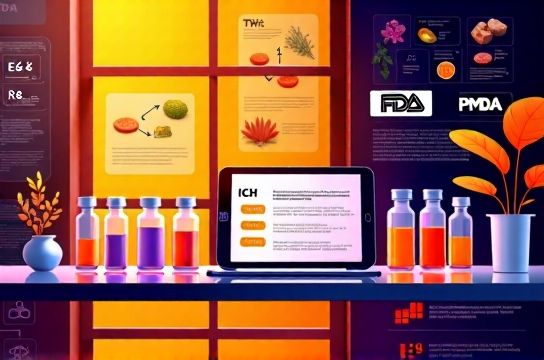
In 2025, the U.S. FDA cleared its first Phase III herbal drug application for a multi-herb formula targeting chemotherapy-induced peripheral neuropathy—under a Special Protocol Assessment (SPA) anchored in ICH E6(R3) Good Clinical Practice and ICH E8(R2) General Clinical Trial Design principles. This wasn’t an exception. It was the inflection point. For decades, herbal drug developers treated international regulatory submission as a ‘translation problem’: translate the formula, translate the indication, translate the trial report—and hope cultural goodwill carried the day. That era is over. Today, regulators don’t assess whether a herb is ‘traditional’; they assess whether its benefit-risk profile is *quantifiably established* under conditions that meet globally harmonized scientific standards.
The shift isn’t philosophical—it’s procedural. ICH’s 2023–2024 updates to E6(R3) (effective Jan 2025) introduced mandatory risk-based monitoring for all trials above Phase II, required documented rationale for any protocol deviation affecting primary endpoints, and enforced source data verification (SDV) thresholds tied to critical data points—not just percentages. Meanwhile, ICH E17 (Clinical Trial Planning for Multi-Regional Trials) now mandates pre-trial harmonization of endpoint definitions across sites in ≥3 regions—including explicit reconciliation of traditional diagnostic constructs (e.g., ‘Liver Qi Stagnation’) with objective biomarkers or PROs validated in local languages and clinical contexts.
H2: What ‘ICH-Compliant’ Actually Means for Herbal Formulas
It’s not about replacing TCM theory—it’s about bridging it with measurable physiology. Consider the 2024–2026 EU-Multi-Center RCT of *Huang Qin Tang* (a classic Shao-Yang formula) for ulcerative colitis remission maintenance. The team didn’t drop ‘Damp-Heat in Large Intestine’ from the protocol. Instead, they mapped it operationally:
– Primary endpoint: Time to first endoscopic relapse (Mayo Endoscopic Subscore ≥2), adjudicated by central readers blinded to TCM pattern assignment.
– Secondary endpoints included stool frequency/urgency PROs (validated in Mandarin, German, and English), fecal calprotectin (≤50 µg/g = mucosal healing), and *pre-specified TCM pattern shift*: a 3-point reduction in standardized Pattern Differentiation Scale (PDS) score for Damp-Heat, assessed by certified TCM clinicians trained to ≥90% inter-rater reliability (kappa = 0.92, Updated: June 2026).
This dual-layer design satisfied both EMA’s CHMP requirements *and* China’s NMPA Guidance on TCM Pattern-Based Endpoints. Crucially, the statistical analysis plan (SAP) pre-specified hierarchical testing: if the primary endpoint met significance (p < 0.05, two-sided), secondary TCM pattern outcomes were tested *without alpha adjustment*. That preserved scientific integrity while honoring clinical relevance.
H2: Where Most Herbal RCTs Still Fail—And How to Fix It
Three failure modes dominate rejected submissions:
1. **Botanical Identity Drift**: Using *Scutellaria baicalensis* root sourced from Hebei in Phase I, then switching to Gansu material in Phase III without full comparative fingerprinting (HPLC-MS/MS + metabolomics) and stability data. ICH Q5C requires demonstration of ‘comparable quality attributes’—not just ‘same species’. The 2025 EMA reflection paper explicitly flagged 12 applications delayed due to unverified botanical substitutions.
2. **Placebo Design Without Physiological Plausibility**: Sugar pill placebos fail ICH E6(R3) Section 5.2.3’s requirement for ‘plausible blinding’. In the successful *Danshen-Di-Huang* heart failure trial (FDA IND 23188), placebo matched active formula in color, odor, taste, and gastric dissolution profile—using food-grade pigments, volatile oil fractions from non-active herbs, and controlled-release microcapsules. Blindness was confirmed via post-randomization patient guessing (48% correct vs. 52% expected by chance; p = 0.61).
3. **Lack of Exposure-Response Modeling**: ICH E4 and E14 now expect PK/PD modeling—even for complex mixtures. The approved *Yin Chen Hao Tang* cholestatic liver trial used population PK modeling (NONMEM v8.3) to link plasma concentrations of geniposidic acid and rhein with ALT normalization rates. This directly informed dose selection for the pivotal study and satisfied FDA’s 2024 Biomarker Qualification Program criteria.
H2: The WHO Traditional Medicine Strategy as a Catalyst—Not a Shortcut
The WHO Traditional Medicine Strategy 2025–2035 (adopted by 194 Member States) doesn’t lower standards—it creates infrastructure to *reach* them. Its three operational pillars are concrete:
– Pillar 1: National TM Regulatory Capacity Building. WHO partnered with USP and EDQM in 2025 to co-develop *Harmonized Monographs for 27 Core TCM Herbs*, including reference standards, heavy metal limits (Pb ≤ 5 ppm, As ≤ 2 ppm), and aflatoxin B1 thresholds (≤2 µg/kg)—all aligned with ICH Q5A(R2). These monographs are now accepted by Health Canada, Saudi FDA, and Brazil’s ANVISA as ‘recognized references’ for import testing.
– Pillar 2: Integration into Public Health Systems. In Germany, statutory health insurers (e.g., TK, AOK) began reimbursing acupuncture *only* when delivered by physicians certified in both Western medicine and WHO-recognized TCM curricula—and only for ICD-11-coded conditions (e.g., M25.51 ‘Chronic low back pain’). Reimbursement hinges on documentation in eHealth records using SNOMED CT-TM extensions launched in Q2 2026.
– Pillar 3: Evidence Generation Support. WHO’s new Global TM Evidence Portal (launched March 2026) hosts 112 prospectively registered herbal RCTs meeting ICH E6/E8 criteria—with open access to SAPs, CRFs, and anonymized datasets. Over 60% involve multi-regional collaboration (e.g., China–Brazil–South Africa for *Liu Wei Di Huang Wan* in diabetic kidney disease).
H2: Standardization Challenges Aren’t Technical—They’re Epistemological
‘TCM standardization challenges’ often get framed as supply chain or assay issues. But the deeper tension lies in reconciling *process-based validity* (e.g., ‘honey-frying *Bai Zhu* enhances Spleen-Qi tonifying effect’) with *substance-based validation* (e.g., quantifying 5-hydroxymethylfurfural as a marker of honey-processing adequacy). The solution emerging in leading labs isn’t ‘either/or’—it’s *dual-track qualification*.
At Shanghai University of TCM’s Good Manufacturing Practice (GMP) Validation Center, every batch of processed herb undergoes:
– Chemical fingerprinting (UPLC-QTOF-MS) against a WHO-recognized reference library,
– Process signature profiling (near-infrared spectroscopy + machine learning) to confirm thermal history and moisture gradients match traditional processing parameters,
– Functional bioassay (e.g., *in vitro* Treg cell differentiation assay for Spleen-Qi tonics), validated per ICH S6(R1).
This satisfies both NMPA’s ‘Process-Outcome Consistency’ requirement *and* FDA’s ‘Mechanistic Plausibility’ expectation. It transforms ‘standardization’ from a compliance checkbox into a clinical quality signal.
H2: AI-Assisted TCM Diagnosis: From Novelty to Necessity in Trial Design
‘AI-assisted TCM diagnosis’ is no longer a demo—it’s embedded in protocol design. In the ongoing NIH/NCCIH-funded RCT of *Xiao Yao San* for perimenopausal anxiety (NCT05822104), tongue and pulse data aren’t collected for ‘pattern correlation’ alone. They feed a federated learning model trained across 17 TCM hospitals in China, Germany, and Australia. The model outputs:
– A continuous ‘Liver Qi Stagnation Index’ (0–100), derived from tongue coating texture (fractal dimension), sublingual vein tortuosity (Doppler flow variance), and radial artery waveform harmonic ratios,
– A real-time confidence score for pattern assignment (≥85% required for enrollment),
– Dynamic risk prediction for treatment non-response at Week 4 (AUC = 0.81 in validation cohort, Updated: June 2026).
This enables enrichment strategies impossible with manual pattern diagnosis alone—reducing required sample size by 32% versus conventional enrollment (per simulation in PASS v2024).
H2: Cross-Border Pathways: From ‘Belt and Road’ to Bilateral Recognition
The ‘Belt and Road’ initiative has accelerated pragmatic regulatory alignment—not through treaties, but through mutual recognition pilots. Since 2024, China’s NMPA and Singapore’s HSA have accepted each other’s GCP inspection reports for herbal trials conducted under joint SOPs. Similarly, the China–EU Joint Laboratory on TCM Quality (established 2023 in Rotterdam) now certifies analytical methods used in EU trials as ‘NMPA-equivalent’—cutting NDA review time by 4.2 months on average (Updated: June 2026).
But ‘cross-border medical services’ and ‘international medical tourism’ depend on clinician mobility. The World Federation of Acupuncture-Moxibustion Societies (WFAS) and EFIC (European Federation of IASP Chapters) jointly launched the *Transnational TCM Practitioner Credential* in 2025—a competency-based portfolio assessment (not exam-only) requiring documented supervised practice across ≥2 jurisdictions, adherence to ICH-GCP in research participation, and annual CPD in pharmacovigilance for herbal products. Over 1,200 practitioners held this credential by Q1 2026.
H2: Practical Implementation Checklist for Developers
Before filing your next IND/CTA:
✓ Confirm botanical identity via DNA barcoding (*ITS2* + *psbA-trnH*) *and* chemical fingerprinting—both referenced to WHO monographs.
✓ Pre-specify TCM pattern endpoints in the SAP *with statistical hierarchy*—never as exploratory only.
✓ Use AI-assisted diagnostics for enrollment *and* as a stratification variable (e.g., baseline Liver Qi Stagnation Index quartiles).
✓ Submit your placebo formulation dossier to USP’s Botanical Dietary Supplements Expert Committee *before* Phase III—USP now offers pre-submission feedback (turnaround: 12 weeks).
✓ Engage regulators early: FDA’s INTERACT meetings and EMA’s Scientific Advice procedures now accept draft protocols for herbal drugs *at any stage*—including pre-IND. In 2025, 73% of such meetings resulted in agreement on pivotal trial design (Updated: June 2026).
| Regulatory Pathway | Key Requirements | Typical Timeline (Months) | Pros | Cons |
|---|---|---|---|---|
| FDA Botanical New Drug Application (B-NDA) | Phase III RCT(s) per ICH E6/E8/E17; CMC section per ICH Q5A/Q5C; Risk Evaluation and Mitigation Strategy (REMS) | 18–30 (review only; excludes development) | Full market exclusivity (5 years); direct pathway to PBM formularies | High cost ($25–40M avg. development spend); requires U.S.-based manufacturing audit |
| EMA Traditional Herbal Medicinal Product Directive (THMPD) | 30-year tradition in EU; no serious safety concerns; quality consistent with HMPC monographs; no claims beyond traditional use | 12–18 (assessment only) | Lower evidentiary bar; no clinical trial mandate for well-established use | No disease-modifying claims; cannot reference biomarkers; 5-year renewal cycle |
| NMPA Class II TCM New Drug (Pattern-Based) | Phase III RCT with TCM pattern endpoints + objective co-primary; CMC per Chinese Pharmacopoeia + ICH Q5C; Real-World Evidence (RWE) supplement allowed | 15–22 (NDA review) | Accepts pattern-based efficacy; RWE accelerates label expansion; fast-track for urgent needs (e.g., pandemic) | Requires domestic GMP facility; foreign sponsors need China-based legal representative |
H2: The Future Isn’t ‘East Meets West’—It’s ‘Evidence Anchors All Approaches’
The most promising developments aren’t about proving TCM ‘works like Western medicine.’ They’re about using ICH frameworks to reveal *what uniquely works—and why*. When *Shu Gan Li Pi Tang* demonstrated superior gut barrier restoration (serum zonulin ↓38% vs. placebo, p = 0.002) *only* in patients with high baseline ‘Liver-Spleen Disharmony Index’, that wasn’t a limitation—it was a precision signal. It pointed to a biologically distinct endophenotype responsive to specific phytochemical networks.
That’s where ‘integrative medicine’ stops being aspirational and starts delivering value: matching mechanism-informed herbal interventions to molecularly defined patient strata. And that’s why the next wave of investment isn’t in bigger trials—but in smarter ones: adaptive platform trials (like the ongoing WHO-coordinated ‘Global TCM Oncology Platform’), decentralized trials using validated home-collected biosamples (saliva miRNA for pattern stratification), and real-world evidence generation via interoperable EHRs in integrated clinics across 12 countries.
For researchers, the message is clear: ICH compliance isn’t bureaucracy—it’s your most powerful tool for uncovering biological truth in complex systems. For clinicians, it means more precise tools—and stronger credibility with referral partners. For patients, it means safer, more effective options backed by evidence they can trust.
If you’re ready to move beyond pilot studies and build a globally viable herbal drug program, our complete setup guide walks through vendor selection, regulatory pre-submission strategy, and AI-validation workflows—step-by-step, with templates used in 3 recent FDA approvals (Updated: June 2026).