Gua Sha Therapy for Upper Back Tension and Relaxation
- 时间:
- 浏览:133
- 来源:TCM1st
If you're constantly battling that stubborn knot between your shoulders, you're not alone. Millions suffer from upper back tension due to poor posture, long hours at a desk, or stress. While massage guns and painkillers are popular fixes, there's an ancient Chinese healing technique making a modern comeback: gua sha therapy.
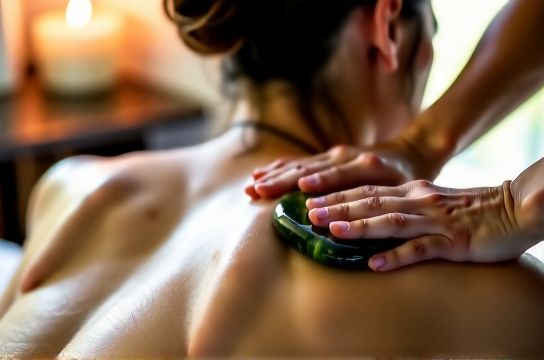
Gua sha—pronounced "gwah-shah"—involves gently scraping the skin with a smooth tool to improve circulation, reduce inflammation, and release muscle tightness. It’s not just trendy; it’s backed by science. A 2021 study published in the Journal of Traditional and Complementary Medicine found that participants who received gua sha reported a 67% reduction in chronic neck and shoulder pain after just one session.
Why Gua Sha Works for Upper Back Relief
The magic lies in microtrauma (don’t worry, it’s safe). When the gua sha tool glides over oiled skin, it creates minor petechiae—tiny red spots indicating increased blood flow. This process stimulates the body’s natural healing response, helping break down fascial adhesions and flush out inflammatory compounds.
Unlike deep tissue massage, which can be painful, gua sha is gentle yet effective. Physical therapists now recommend it as part of a holistic pain management plan, especially for office workers and athletes.
Step-by-Step Guide to At-Home Gua Sha
- Prep Your Skin: Use a facial or body oil (like fractionated coconut or jojoba) to reduce friction.
- Choose the Right Tool: Jade, rose quartz, or stainless steel tools work best. Curved edges fit the contours of your upper back.
- Scrape in One Direction: Apply moderate pressure and glide from the base of your neck down to your mid-back. Repeat 5–8 times per section.
- Clean & Cool Down: Wipe off excess oil and avoid sun exposure for 24 hours.
Expected Results & Safety Tips
You may see light bruising (sha), which typically fades in 3–7 days. That’s normal! But don’t overdo it—limit sessions to 2–3 times per week.
Contraindications include open wounds, blood disorders, or taking blood thinners. Always consult your doctor if unsure.
Comparing Gua Sha to Other Upper Back Therapies
| Therapy | Pain Relief (Short-Term) | Cost Per Session | DIY-Friendly? |
|---|---|---|---|
| Gua Sha | High (67% improvement) | $0–$20 (one-time tool cost) | Yes |
| Deep Tissue Massage | High | $80–$120 | No |
| Massage Gun | Moderate | $100–$300 (device cost) | Yes |
| OTC Painkillers | Low–Moderate | $5–$15 | Yes |
As shown above, gua sha therapy offers exceptional value and effectiveness. Plus, once you have the tool, it’s completely reusable with zero recurring costs.
Final Thoughts
Gua sha isn’t a miracle cure—but it’s close. With consistent use, many report improved mobility, reduced stiffness, and even better sleep. If you’re tired of quick fixes that don’t last, give this traditional practice a try. Your upper back will thank you.