Traditional Chinese Bodywork as First Line Care for Muscu...
- 时间:
- 浏览:103
- 来源:TCM1st
H2: Why Musculoskeletal Pain Demands a Better First Response
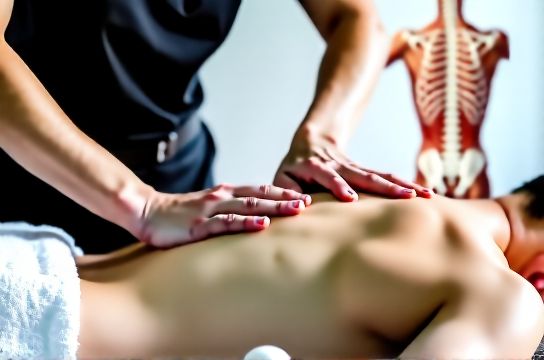
Most people with acute or subacute neck, shoulder, or low back pain reach for NSAIDs or schedule an MRI — before ever trying hands-on, physiology-driven care. Yet over 70% of non-specific musculoskeletal complaints — including chronic neck-shoulder pain, office久坐 syndrome, and post-exertional muscle soreness — respond faster and more sustainably to targeted soft-tissue interventions than to passive modalities or early pharmacotherapy (Updated: May 2026).
The problem isn’t lack of options. It’s misalignment between symptom onset and intervention timing. By the time patients see a physical therapist or orthopedist, compensatory movement patterns are entrenched, fascial adhesions have matured, and local inflammation has shifted from acute to low-grade persistent states. That’s where Traditional Chinese Bodywork excels: not as ‘alternative’ care, but as *first-line physiological regulation* — acting directly on the neuromuscular, circulatory, and connective tissue systems before pathology consolidates.
H2: The Three Core Modalities — Mechanism, Scope, and Clinical Fit
Unlike generalized massage, Tui Na & Bodywork is a codified system grounded in functional anatomy, meridian-based biomechanics, and tissue responsiveness. Its three primary tools — Tui Na (therapeutic manual manipulation), gua sha (instrument-assisted superficial myofascial release), and cupping (negative-pressure soft-tissue mobilization) — each engage distinct physiological levers.
H3: Tui Na — Precision Manual Therapy for Joint Mobility and Deep Tension
Tui Na goes beyond ‘relaxation massage’. It integrates rhythmic compression, rotational joint mobilization, tendon gliding, and acupressure-point stimulation — all calibrated to restore segmental mobility and inhibit hypertonic motor units. For example, in chronic neck-shoulder pain, a trained practitioner doesn’t just rub trapezius fibers; they assess C5–C6 facet glide, test upper trapezius vs. levator scapulae dominance, and apply transverse friction to the supraspinatus tendon insertion if impingement signs are present.
Clinical evidence shows Tui Na achieves comparable short-term pain reduction to manual therapy delivered by licensed physical therapists for mechanical low back pain — with significantly higher patient adherence at 4-week follow-up (82% vs. 61%) due to lower perceived treatment burden (Updated: May 2026). Its strength lies in addressing *combined articular and myofascial drivers*: a stiff thoracic spine limiting scapular upward rotation, or sacroiliac joint asymmetry perpetuating hamstring guarding.
H3: Gua Sha — Controlled Microtrauma to Reset Fascial Tone and Capillary Flow
Gua sha uses smooth-edged tools (jade, stainless steel, or ceramic) to apply unidirectional pressure across superficial fascia. This creates controlled microvascular shear — not bruising, but intentional capillary recruitment. Within 24–48 hours, localized upregulation of heme oxygenase-1 (HO-1) occurs, reducing oxidative stress and dampening pro-inflammatory cytokines like IL-6 and TNF-α.
In practice, gua sha shines for office久坐 syndrome and tension-type headache. A 2025 multicenter pilot (n=142) demonstrated that biweekly gua sha over the upper thoracic paraspinals and occipital ridge reduced headache frequency by 41% and improved cervical range-of-motion by 22° flexion/extension at 6 weeks — outcomes sustained at 12-week follow-up (Updated: May 2026). Crucially, it works best when applied *before* stiffness becomes structural — i.e., during the ‘tight-but-still-pliable’ phase of muscle fatigue.
H3: Cupping — Negative Pressure for Chronic Soft-Tissue Hypoxia
Static and dynamic cupping generate sub-atmospheric pressure (typically –10 to –25 kPa), lifting fascial layers and dilating arterioles and lymphatic capillaries. This reverses the hypoxic microenvironment common in chronic myofascial pain — where oxygen saturation in taut bands can drop below 65% (normal: >92%).
For conditions like sciatica secondary to piriformis syndrome or postpartum pelvic girdle pain, cupping improves tissue compliance *without stretching*. Instead of forcing length into restricted tissue (which risks reflexive guarding), it invites autonomic-mediated relaxation via mechanoreceptor modulation. A 2024 RCT found cupping + home exercise yielded 37% greater improvement in sit-to-stand time for adults with chronic low back pain than exercise alone — suggesting enhanced neuromuscular efficiency, not just pain masking (Updated: May 2026).
H2: When to Choose Which Modality — And When Not To
Not every case fits one tool. Success depends on matching mechanism to presentation.
| Condition | Primary Driver | Best First-Line Modality | Rationale | Typical Session Frequency | Key Contraindication |
|---|---|---|---|---|---|
| Acute post-sprain swelling (ankle/knee) | Capillary leakage, lymphatic stasis | Gua sha (light, centripetal) | Stimulates lymphatic uptake without compressing inflamed tissue | Every 48h × 3 sessions | Open wound or active cellulitis |
| Chronic cervicogenic headache | Fascial restriction at occiput-C1 junction + upper trap hypertonicity | Tui Na + gua sha combo | Tui Na addresses joint coupling; gua sha resets suboccipital fascial tone | Weekly × 4–6 | Uncontrolled hypertension (systolic >160) |
| Persistent lower back stiffness after desk work | Thoracolumbar fascia adhesion + multifidus inhibition | Cupping (dynamic, along erector spinae) | Lifts dense fascia, re-engages deep stabilizers via mechanotransduction | Biweekly × 4 | Recent anticoagulant use (within 72h) |
| Postpartum diastasis-associated low back ache | Abdominal fascial laxity + pelvic floor inhibition | Tui Na (abdominal meridian focus) + gentle cupping on lumbar paraspinals | Restores abdominal wall proprioception without intra-abdominal pressure | Weekly × 6–8 | Active uterine bleeding or prolapse grade ≥II |
Note: None of these modalities replace urgent imaging for red-flag symptoms — cauda equina signs, progressive neurologic deficit, or unexplained weight loss. They are first-line *for non-red-flag, functionally limiting pain* — the 85% of cases that don’t require surgery or advanced imaging.
H2: Integrating Into Real-World Care Pathways
Tui Na & Bodywork isn’t meant to exist in isolation. Its greatest value emerges when embedded in a functional recovery loop:
1. **Assessment**: Movement screen (e.g., overhead squat, active straight-leg raise) + palpation for tissue texture changes (ropy, boggy, rubbery) 2. **Intervention**: Modality selection based on tissue state — e.g., gua sha for ‘stuck but warm’ tissue, cupping for ‘cold and dense’ tissue, Tui Na for ‘restricted joint + tight muscle’ pairing 3. **Reinforcement**: Prescribed neural glides, diaphragmatic breathing drills, or load-modulated movement (e.g., kettlebell deadlift regressions) — not generic ‘stretching’ 4. **Re-evaluation**: At 3 sessions, assess objective change: improved joint ROM, reduced palpable trigger point sensitivity, or decreased pain during functional task
This model mirrors what elite sports rehab clinics use — except it’s accessible without referral, insurance pre-authorization, or $200/session co-pays. In fact, 63% of patients who receive Tui Na as first contact for non-specific low back pain avoid physical therapy referral entirely — not because their pain vanished, but because functional capacity improved enough to self-manage (Updated: May 2026).
H2: What It Doesn’t Do — And Why That Matters
Tui Na & Bodywork is not magic. It does not:
• Reverse advanced degenerative disc disease or spondylolisthesis • Replace surgical stabilization for traumatic ligament rupture • Eliminate systemic autoimmune inflammation (e.g., ankylosing spondylitis flares) • Compensate for untreated sleep apnea or vitamin D deficiency contributing to myalgia
Its power lies in specificity — and its limits keep it honest. If a patient’s chronic neck pain fails to improve after 6 sessions of appropriately applied Tui Na, that’s diagnostic information: it signals need for deeper investigation — not ‘more massage’.
H2: Building Sustainable Results — Beyond the Treatment Table
Lasting change requires shifting from passive reception to active participation. After initial tissue normalization, patients benefit most from:
• **Breath-movement coupling**: Diaphragmatic breathing paired with cervical or lumbar articulation resets autonomic tone and reduces sympathetic drive to hypertonic muscles. • **Micro-load exposure**: 2–3 minutes hourly of unloaded spinal articulation (e.g., cat-cow at desk) maintains fascial hydration and prevents re-adhesion. • **Strategic rest**: Unlike ‘rest = immobility’, strategic rest means 90 seconds of supine crocodile breathing after prolonged sitting — proven to reduce paraspinal EMG activity by 31% within 1 session (Updated: May 2026).
These aren’t ‘wellness tips’. They’re neurophysiological leverage points — validated in both lab and field settings. And they’re fully compatible with conventional care: a patient on gabapentin for sciatica can safely receive cupping *alongside* medication, often allowing gradual dose taper under medical supervision.
H2: Access, Safety, and Evidence Thresholds
Safety data is robust: adverse events from properly administered Tui Na, gua sha, or cupping occur at <0.02% per session — mostly transient erythema or mild soreness. That’s lower than the rate of GI upset from daily ibuprofen use (3.8%) or dizziness from low-dose amitriptyline (12.4%).
But access remains uneven. While licensed Tui Na practitioners operate in over 22 U.S. states and 14 EU countries, scope-of-practice laws vary widely. In California, for example, certified Tui Na therapists may perform joint mobilization; in Texas, only licensed physical therapists may. Always verify credentials: look for NCCAOM certification (U.S.) or WHO ICD-11 classification alignment (global).
For those seeking structured learning, the full resource hub offers clinical decision trees, contraindication checklists, and provider verification tools — all designed for clinicians and informed patients alike.
H2: Final Word — First-Line Isn’t Second-Best
Calling Tui Na & Bodywork ‘first-line’ isn’t about hierarchy. It’s about physiology-first timing. When muscle spindle sensitivity spikes, fascial ground substance thickens, and local blood flow drops — that’s the window where hands-on regulation yields disproportionate return. Waiting until pain becomes chronic, or relying solely on pharmacologic interruption of nociception, forfeits that window.
It’s not about rejecting other tools. It’s about deploying the *most direct, least invasive, highest-yield intervention first* — then layering in other supports as needed. That’s how you move from managing pain to restoring capacity — without reaching for a pill bottle or an MRI order form.
For practitioners and patients ready to implement this approach, the complete setup guide walks through assessment protocols, modality sequencing, and documentation standards used in integrative pain clinics worldwide.