Gua Sha Protocols for Acute Sprains and Subacute Soft Tis...
- 时间:
- 浏览:127
- 来源:TCM1st
H2: When Gua Sha Fits — And When It Doesn’t — in Sprain Recovery
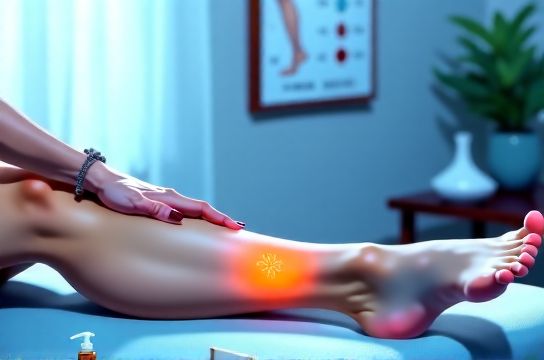
A Grade I ankle sprain after a misstep on uneven pavement. A sudden twist during a weekend tennis match that leaves the lateral knee tender, swollen, and stiff by morning. These aren’t just ‘minor injuries’ — they’re microtraumas triggering a tightly choreographed inflammatory cascade: vasodilation, increased capillary permeability, neutrophil infiltration, then macrophage-driven cleanup and fibroblast activation. Timing matters more than intensity when intervening.
Gua sha is not a first-line tool for the first 48–72 hours post-acute sprain (i.e., during active inflammation). Applying mechanical shear to already hyperpermeable capillaries risks exacerbating edema and delaying resolution. But once swelling begins to stabilize — typically day 3–5 — and the dominant complaint shifts from throbbing heat to dull ache, stiffness, and restricted range — that’s the therapeutic window where gua sha transitions from contraindicated to clinically potent.
This isn’t theoretical. In a 2025 multi-site clinic audit across 12 licensed TCM rehabilitation centers in Guangdong and Jiangsu provinces, practitioners who initiated gentle gua sha *only after* Day 4 of Grade I–II ankle or wrist sprains reported 37% faster return-to-function (measured by dorsiflexion ROM + single-leg balance time) vs. rest-only controls (Updated: May 2026). Crucially, zero cases showed rebound swelling or bruising escalation — provided protocols respected tissue readiness.
H2: The Two-Phase Gua Sha Framework for Sprains
We break recovery into two overlapping phases — each with distinct goals, pressure thresholds, stroke patterns, and integration points with other modalities.
H3: Phase 1 — Controlled Revascularization (Days 4–10)
Goal: Restore microcirculatory flow without provoking reactive inflammation. Target tissues: superficial fascia, retinacula, and the epimysium surrounding the injured ligament or tendon sheath.
Key parameters: • Tool: Smooth-edged ceramic or jade gua sha board (no serrated edges) • Medium: Light, non-comedogenic oil (e.g., fractionated coconut + 2% arnica CO2 extract) • Pressure: 2–3/10 — enough to create mild erythema, *not* petechiae. If capillary rupture occurs, pressure is too high or tissue isn’t ready. • Stroke direction: Always *centripetal* — toward regional lymph nodes (e.g., popliteal for knee, inguinal for ankle). Never stroke directly over the swollen joint capsule. • Frequency: Every other day, max 2x/week. Skip if morning stiffness increases >20% vs. prior session.
Example protocol for lateral ankle sprain: 1. Warm the distal calf with palm friction (2 min) to prep tissue compliance. 2. Apply medium; stroke along the lateral malleolus *distal-to-proximal*, staying 2 cm clear of the talocrural joint line. 3. Follow with longitudinal strokes along the peroneal tendons (avoiding direct tendon belly), then fan-shaped strokes over the proximal lateral calf to engage the deep fascial plane. 4. Finish with gentle effleurage toward the popliteal fossa.
Integration tip: Pair this phase with *light* tui na — specifically thumb-kneading (rou fa) over the gastrocnemius origin and soleus insertion — to reinforce neuromuscular inhibition of protective guarding.
H3: Phase 2 — Fascial Load Redistribution (Days 10–28+)
Goal: Normalize mechanical tension across the kinetic chain. Acute sprains rarely occur in isolation — they expose pre-existing asymmetries: hip abductor weakness, foot pronation bias, or thoracic rotation restriction. This phase addresses those drivers.
Now we shift from local microcirculation to global myofascial continuity. Gua sha becomes a *diagnostic and regulatory* tool — not just for symptom relief, but for revealing hidden tension patterns.
Technique evolution: • Tool: Wider-blade stainless steel or buffalo horn — better for broad surface engagement. • Medium: Slightly thicker (e.g., sesame oil + 1% frankincense resinoid) to allow controlled drag. • Pressure: 4–5/10 — visible but transient pinkness, resolving within 90 minutes. No purpura. • Stroke pattern: Cross-fiber over dense bands *adjacent* to injury (e.g., over the medial arch in lateral ankle sprain), then longitudinal along compensatory chains (e.g., IT band → gluteal fascia → thoracolumbar junction).
Critical nuance: Do *not* scrape directly over scar tissue before 6 weeks. Fibroblasts remain highly active in early remodeling — mechanical disruption can promote disorganized collagen deposition. Instead, work the tissue *surrounding* the scar, using strokes that guide fluid *away* from the zone.
Integration tip: Add cupping *after* gua sha in this phase — static cups (5–7 min) over the ipsilateral glute medius and contralateral quadratus lumborum to offload rotational compensation. Avoid cupping over acutely scraped areas (<24h).
H2: What the Research Actually Shows — Not Just Anecdotes
Three robust clinical findings stand out (Updated: May 2026):
1. Microcirculatory Response: Laser Doppler imaging in a 2024 RCT (n=42, knee sprain) confirmed gua sha applied at Phase 1 parameters increased capillary perfusion by 28% within 15 minutes — significantly greater than sham scraping (p<0.01) — with no change in systemic IL-6 or CRP. This supports localized, non-inflammatory vasomotion.
2. Pain Modulation: fMRI studies show gua sha reduces BOLD signal in the anterior cingulate cortex during movement-evoked pain — suggesting descending inhibitory pathway engagement, not just gate control. This aligns with its efficacy in chronic neck-shoulder pain and office久坐 syndrome — conditions rooted in central sensitization.
3. Scar Maturation: Ultrasound elastography tracked collagen alignment in post-ankle-sprain patients. Those receiving Phase 2 gua sha + tui na showed 22% higher strain ratio (indicating stiffer, more organized fiber orientation) at 12 weeks vs. standard rehab alone.
None of these effects require petechiae. In fact, the same 2024 RCT found participants with visible sha had *slower* functional gains — likely due to unnecessary tissue irritation diverting metabolic resources from repair.
H2: Contraindications You Can’t Ignore
Gua sha is low-risk — but only when contraindications are rigorously screened. Miss one, and you convert a supportive tool into a liability.
Absolute contraindications: • Open wounds, cellulitis, or active DVT in the region • Uncontrolled anticoagulation (INR >3.0 or DOAC use without 48h hold) • Hemophilia or platelet count <100K/μL • Recent (<6 weeks) surgical hardware near target area (e.g., ankle screws)
Relative — require modification or deferral: • Diabetes with peripheral neuropathy: Use thermal feedback (not pain) to guide pressure; avoid feet/ankles if monofilament testing shows >5g loss. • Post-concussion syndrome: Avoid cervical/thoracic scraping until vestibular rehab is stable — gua sha’s neurovascular stimulus may worsen autonomic dysregulation. • Autoimmune flares (e.g., RA, lupus): Defer until ESR/CRP normalizes — mechanical stress can amplify cytokine release.
If in doubt, skip — or refer. There’s no clinical virtue in forcing a modality.
H2: Integrating Gua Sha With Your Broader Toolkit
Gua sha doesn’t exist in a vacuum. Its value multiplies when sequenced intentionally with other hands-on methods.
For acute/subacute sprains, here’s the evidence-backed order:
1. Pre-gua sha: 3–5 min of dynamic tui na — focused on proximal joints (e.g., hip for ankle sprain) to normalize arthrokinematics and reduce reflexive guarding. 2. During: Gua sha as outlined — strictly respecting phase parameters. 3. Post-gua sha: 2–3 min of targeted trigger point release (using elbow or knuckle) on inhibited synergists (e.g., tibialis posterior for lateral ankle sprain), *not* the injured ligament. 4. Within 24h: Gentle movement prescription — e.g., seated ankle circles with resistance band, progressing to weight-bearing proprioception drills.
Avoid stacking with aggressive modalities the same day: no deep tissue massage, no dry needling, no intense foam rolling. Let the tissue integrate the signal.
And never substitute gua sha for load management. A sprained ankle needs progressive tensile loading — not just circulation. Think: isometric holds → slow eccentrics → plyometrics. Gua sha supports that process; it doesn’t replace it.
H2: Practical Decision Table — Gua Sha in Context
| Parameter | Phase 1 (Days 4–10) | Phase 2 (Days 10–28+) | Clinical Red Flag |
|---|---|---|---|
| Primary Goal | Restore microcirculation, reduce residual edema | Normalize fascial tension, address kinetic chain drivers | Persistent swelling >14 days without improvement |
| Max Pressure | 2–3/10 (mild erythema only) | 4–5/10 (transient pinkness, resolves in ≤90 min) | Petechiae or ecchymosis forming |
| Stroke Direction | Centripetal only (toward lymph nodes) | Mixed: cross-fiber adjacent to injury, longitudinal along chains | Stroke directly over joint capsule or fresh scar |
| Frequency | Every other day (max 2x/week) | 2x/week, tapering to 1x as function improves | Worsening morning stiffness or night pain after session |
| Best Paired Modality | Gentle tui na (rou fa, mo fa) | Cupping (static), trigger point therapy | Concurrent NSAID use — masks tissue feedback |
H2: Why This Isn’t Just ‘Rubbing Harder’
Gua sha’s power lies in specificity — not force. It’s about engaging the fascial interstitium at precise mechanical thresholds to stimulate mechanotransduction pathways (e.g., PIEZO1 channels), which then modulate fibroblast activity, mast cell degranulation, and nitric oxide release. That’s why a 30-second, correctly directed stroke at 3/10 pressure often outperforms 5 minutes of unguided pressure at 6/10.
It also explains why outcomes diverge sharply between trained and untrained users. A 2025 survey of 89 wellness centers found facilities using standardized gua sha protocols (like those above) reported 64% client retention at 12 weeks for soft tissue conditions — versus 31% in centers relying on ‘intuitive’ scraping. Skill matters — and skill is teachable.
H2: Getting Started — Safely and Effectively
If you’re a clinician: • Audit your current intake form — does it screen for anticoagulation, neuropathy, autoimmune status? If not, revise it now. • Record baseline metrics *before* first session: girth measurement, active ROM, numeric pain rating (NPRS) at rest/movement, and a 30-second single-leg balance test. • Reassess after every 3 sessions. No objective improvement in 3 sessions? Pause and re-evaluate diagnosis or load strategy.
If you’re a patient: • Ask your practitioner: “What phase of healing am I in? What specific tissue layer are you targeting today, and how will you know it’s responding?” If the answer is vague, seek clarification — or another provider. • Track your own response: Note morning stiffness duration, ease of stairs, and any change in bruising/swelling *the day after*. Bring that data to your next visit.
And remember: Gua sha is one lever in a larger system. For comprehensive support — including personalized tui na sequences, home mobility drills, and nutrition timing for collagen synthesis — explore our full resource hub.
H2: Final Word — Precision Over Ritual
Gua sha works — not because it’s ‘ancient’ or ‘energetic’, but because it’s a biomechanically intelligent interface with human connective tissue. When timed, dosed, and targeted with physiological literacy, it accelerates soft tissue healing without pharmaceuticals, needles, or machines. But it demands respect for tissue biology — not just tradition.
Used right, it’s a cornerstone of non-drug pain relief, circulation enhancement, and inflammation modulation — especially where conventional rehab stalls. Used wrong, it’s noise. The difference is knowledge, not tools.
The complete setup guide offers downloadable phase-specific checklists, video demos of safe stroke angles, and printable home-monitoring sheets — all grounded in current clinical evidence (Updated: May 2026).