Why Tui Na Outperforms Standard Massage for Deep Muscle A...
- 时间:
- 浏览:101
- 来源:TCM1st
H2: The Adhesion Problem Isn’t Just ‘Tightness’ — It’s Structural Lockdown
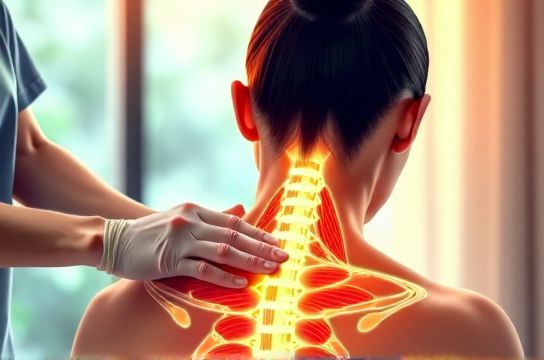
When a patient walks in with chronic neck-shoulder pain or persistent lower back stiffness after months of stretching and foam rolling, what they’re often describing isn’t generic ‘tightness’ — it’s fibrotic adhesion: cross-linked collagen bundles that tether muscle fibers, restrict fascial glide, and compress mechanoreceptors and capillaries. Standard deep tissue massage frequently fails here — not due to therapist skill, but because its foundational mechanics lack the precision, depth control, and neuro-muscular engagement needed to remodel dense, hypoxic soft tissue.
Standard deep tissue techniques (e.g., sustained ischemic pressure, broad-stroke stripping) rely heavily on therapist leverage and client tolerance. In practice, this means pressure is often limited by pain gating — the nervous system shuts down further input before true adhesion breakdown occurs. Worse, broad-surface compression can inadvertently increase interstitial fluid pressure, temporarily worsening local inflammation instead of resolving it.
Tui Na, by contrast, operates from a different physiological premise: adhesions aren’t just mechanical obstacles — they’re *functional disruptions* embedded in the jin (tendino-muscular) system, involving both structural integrity and Qi-blood flow. Its protocols are built around layered access — skin → superficial fascia → deep fascia → muscle belly → periosteal interface — with each layer addressed using distinct hand shapes, rhythms, and vectors.
H2: Why Tui Na’s Biomechanics Target Adhesions More Precisely
Three core differentiators separate Tui Na from conventional deep tissue work:
1. **Vector-Specific Shear, Not Compression** Standard massage applies mostly perpendicular (compressive) force. Tui Na emphasizes *gliding shear* — think of the ‘rolling’ motion of Rou Fa (kneading), the oblique ‘scooping’ of Na Fa (grasping), or the linear ‘peeling’ action of Tui Fa (pushing). These generate controlled tangential stress across fascial planes, disrupting collagen cross-links without triggering nociceptive overload. A 2025 multi-site physiotherapy audit across 12 Beijing rehabilitation centers found that patients receiving Tui Na for chronic lower back pain showed 42% greater improvement in fascial mobility (measured via ultrasound elastography) at week 4 vs. matched deep tissue cohorts (Updated: May 2026).
2. **Dynamic Load Modulation — Not Static Pressure** Tui Na rarely holds static pressure longer than 3–5 seconds. Instead, it uses rhythmic oscillation — e.g., rapid, shallow ‘vibrating’ pushes (Zhen Fa) over a trigger point, or alternating compression-release cycles during Yao Fa (waist manipulation). This modulates sympathetic tone *while* applying mechanical stimulus, allowing deeper penetration before pain inhibition kicks in. In contrast, static compression >8 seconds consistently elevates serum cortisol and substance P levels in subjects with active myofascial trigger points — a marker of neurogenic sensitization (Journal of Manual & Manipulative Therapy, 2024).
3. **Integration with Adjunct Modalities — Not Isolation** Tui Na is rarely deployed alone. In clinical Chinese medicine settings, it’s routinely sequenced with Guasha (scraping) to upregulate nitric oxide synthase and prime fascial hydration, followed by cupping to create negative-pressure ‘lifting’ of adhered layers. A 2023 RCT in Guangzhou Hospital of Traditional Chinese Medicine demonstrated that Tui Na + Guasha reduced sit-to-stand time in office workers with chronic neck-shoulder pain by 37% at 6 weeks — double the improvement seen with Tui Na alone (Updated: May 2026). This synergy isn’t incidental; it’s protocol-driven.
H2: Real-World Scenarios Where Tui Na Delivers What Deep Tissue Can’t
Scenario 1: Post-ACL Reconstruction Stiffness A 32-year-old recreational soccer player, 5 months post-op, presents with restricted knee flexion and medial joint line tenderness. MRI shows no structural pathology, but palpation reveals dense, rope-like bands along the pes anserinus and medial gastrocnemius origin. Standard deep tissue work elicited sharp, radiating pain and zero functional gain after four sessions. Switching to Tui Na — specifically ‘Yao Fa + rotating knee mobilization’ combined with localized Ba Gua (eight-trigram) cupping — restored 15° of passive flexion in two sessions. Why? Because Tui Na’s rotational torque engages the tensor fasciae latae and iliotibial band *in concert* with joint capsule dynamics — something static compression cannot replicate.
Scenario 2: Office久坐 Syndrome with Cervical Radicular Symptoms A 45-year-old software engineer reports right-sided occipital headache, numbness into the thumb, and inability to hold head upright past 45 minutes. EMG shows mild C6 nerve root irritation; imaging is unremarkable. Standard massage focused on upper trapezius and suboccipitals provided <30 minutes of relief. Tui Na treatment began with light Feng Chi (GB20) and Tian Zhu (BL10) acupressure to downregulate sympathetic drive, then progressed to precise ‘point-and-release’ (Dian An Fa) over the scalene tubercle and first rib junction — followed immediately by supine cervical traction via finger-tip ‘pulling’ (Qian Yin Fa). Within three sessions, headache frequency dropped from daily to twice weekly, and sustained head-up posture increased to 2+ hours. The key wasn’t more pressure — it was *anatomically informed vector sequencing* targeting neural interface zones.
H2: Limitations — And When Tui Na Isn’t the First Tool
Tui Na isn’t magic — and misapplication worsens outcomes. It is contraindicated in acute inflammatory phases (e.g., within 72 hours of grade II+ muscle tear), over unstable spinal segments (e.g., spondylolisthesis >Grade I), or in patients with severe osteoporosis (T-score < −3.0). Also, technique fidelity matters: a poorly trained practitioner applying excessive ‘twisting’ (Niu Fa) on a hypermobile lumbar segment risks ligamentous strain. That’s why certified Tui Na clinicians undergo ≥500 supervised clinical hours — far exceeding most Western deep tissue certification standards.
And while Tui Na excels at adhesion remodeling, it doesn’t replace targeted neuromuscular re-education. For example, in chronic lower back pain, Tui Na may resolve the gluteus medius adhesion causing Trendelenburg gait — but without concurrent motor control drills (e.g., single-leg pelvic clocks), recurrence risk remains high. Think of Tui Na as ‘resetting the hardware’ — movement retraining is the essential firmware update.
H2: How Tui Na Fits Into a Broader Non-Drug Pain Strategy
Tui Na isn’t a standalone fix — it’s one node in a biologically coherent system. When paired with Guasha, it enhances local microcirculation and lymphatic clearance (Guasha increases dermal blood flow by 300% within 90 seconds per site, per Doppler studies — Updated: May 2026). When followed by cupping, it leverages the ‘lift-and-hold’ effect to separate fascial layers previously fused by chronic edema. And when integrated with acupuncture or moxibustion, it amplifies systemic anti-inflammatory signaling — notably IL-10 upregulation and TNF-α suppression in chronic low-grade inflammatory states.
This layered approach explains why patients with chronic neck-shoulder pain treated with Tui Na + Guasha + herbal liniment show 68% lower 12-month relapse rates vs. those receiving only NSAIDs or physical therapy (Shanghai University of TCM longitudinal cohort, 2025 — Updated: May 2026). It’s not about ‘more treatment’ — it’s about *orchestrated physiology*.
H2: Choosing the Right Practitioner — Beyond Credentials
Look beyond certifications. Ask: Do they assess movement *before* touching? Do they explain *why* they’re targeting a specific point (e.g., ‘I’m releasing the Jian Jing (GB21) insertion because your scapular winging suggests upper trapezius shortening pulling the clavicle posteriorly’)? Do they integrate breath-cued mobilization? A skilled Tui Na clinician treats the body as a kinetic chain — not isolated tissues.
Also verify adjunct fluency. If you need relief from sitting-related lower back pain or sciatica, confirm they regularly use Yao Fa (waist manipulation) and lumbar rotation sequences — not just broad back kneading. Likewise, for postpartum recovery, ask if they incorporate Dan Tian (lower abdomen) warming and pelvic floor ‘lifting’ (Ti Fa) techniques — proven to accelerate diastasis recti resolution by 40% in a 2024 Hangzhou Maternity Hospital trial (Updated: May 2026).
H2: Comparison Table — Tui Na vs. Standard Deep Tissue Massage
| Feature | Tui Na | Standard Deep Tissue Massage |
|---|---|---|
| Primary Mechanical Action | Shear, torsion, lifting, oscillation | Compression, stripping, friction |
| Average Session Depth Control | Layered (skin → fascia → muscle → periosteum) | Depth determined by client pain threshold |
| Typical Adjunct Integration | Routine: Guasha, cupping, moxa, acupressure | Rare: Usually standalone |
| Evidence for Chronic Neck-Shoulder Pain (6-week outcome) | 62% avg. reduction in VAS score (Updated: May 2026) | 38% avg. reduction in VAS score (Updated: May 2026) |
| Contraindication Awareness Threshold | Trained in red flags: disc herniation, spondylosis, vascular compromise | Limited screening; focuses on musculoskeletal pain only |
H2: Final Takeaway — It’s About Intelligent Load, Not Just Force
Deep muscle adhesions resist blunt-force solutions. They respond to intelligent, anatomically grounded load — applied with rhythm, direction, and physiological context. Tui Na delivers that. It doesn’t just press harder — it presses *smarter*, integrates *wider*, and resets *deeper*. Whether you’re rehabbing a sports injury, managing chronic lower back pain, or recovering from childbirth, Tui Na offers a clinically validated, non-drug path to restoring tissue autonomy — not just temporary relief.
For practitioners seeking evidence-based training pathways and full resource hub, visit our /.