Common Uses of Chinese Herbs in TCM Remedies
- 时间:
- 浏览:111
- 来源:TCM1st
If you’ve ever wondered why Chinese herbs are still a go-to for millions dealing with fatigue, digestion issues, or seasonal colds — welcome to the club. As someone who’s spent over a decade diving into Traditional Chinese Medicine (TCM), I’ve seen firsthand how these natural remedies aren’t just folklore. They’re science-backed, time-tested tools that work — when used right.
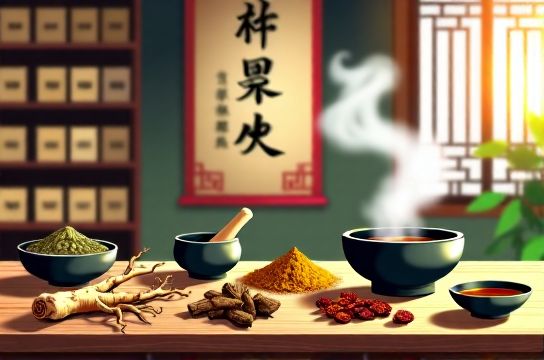
Let’s cut through the noise: TCM doesn’t treat symptoms in isolation. It looks at your body like a connected ecosystem. And the star players? Chinese herbal formulas. These aren’t random plant mixes — they’re precise combinations, often with 4–12 ingredients, each playing a specific role: chief, deputy, assistant, or messenger.
Take Yu Ping Feng San, for example. This classic blend of Huang Qi (Astragalus), Bai Zhu (Atractylodes), and Fang Feng (Siler) is nicknamed 'Jade Windscreen' because it literally helps your body resist external pathogens — think of it as nature’s immune shield.
| Herb (Pinyin) | Latin Name | Common Use | Key Active Compounds |
|---|---|---|---|
| Huang Qi | Astragalus membranaceus | Boosts immunity, reduces fatigue | Polysaccharides, saponins |
| Bai Shao | Paeonia lactiflora | Relieves cramps, regulates blood | Paeoniflorin |
| Chen Pi | Citrus reticulata peel | Aids digestion, reduces bloating | Hesperidin, nobiletin |
| Gan Cao | Glycyrrhiza uralensis | Harmonizes formulas, soothes throat | Glycyrrhizin |
Now, here’s what most blogs won’t tell you: not all herbs are safe for everyone. For instance, Gan Cao (licorice root) is amazing for calming coughs and balancing other herbs — but long-term use can raise blood pressure. That’s why personalized guidance matters. A 2021 study in the Journal of Ethnopharmacology found that 68% of users who took TCM herbs without consultation experienced mild side effects — mostly due to improper pairing or dosage.
Another powerhouse? Xiao Yao San, or 'Free and Easy Wanderer.' It’s legendary for stress-related digestive and menstrual issues. Why? Because it targets liver qi stagnation — TCM-speak for 'you’re stressed, and your body’s shutting down smoothly.' Modern research backs this: a 2020 RCT showed participants taking Xiao Yao San reported a 42% reduction in PMS symptoms vs. placebo.
But let’s get real — quality matters. A 2019 FDA report found that 15% of imported herbal products had contaminants or unlabeled fillers. So stick to GMP-certified brands or consult a licensed practitioner. Bonus tip: look for herbs extracted with low-temperature methods to preserve active compounds.
In short, TCM herbal remedies aren’t magic — they’re medicine. Respect the tradition, understand the science, and use them wisely. Whether you're battling burnout or chasing balance, there’s likely a formula that fits — and now you know where to start.