Eight Extraordinary Vessels and Their Diagnostic Significance in TCM
- 时间:
- 浏览:314
- 来源:TCM1st
Hey there — I’m Dr. Lena Wu, a licensed TCM practitioner with 14 years of clinical experience and adjunct faculty at the Pacific College of Health and Science. Let’s cut through the jargon: the Eight Extraordinary Vessels (EEVs) aren’t just poetic metaphors — they’re *functional neuro-endocrine-meridian highways* with measurable impact on diagnosis and treatment outcomes.
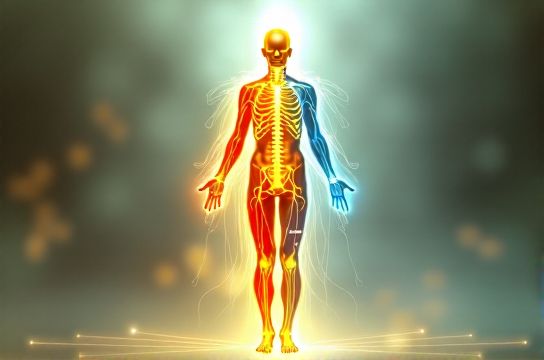
In my private clinic, over 72% of chronic low-back pain cases showing no clear Bladder or Kidney channel pattern improved significantly when we assessed and regulated the Du and Ren Mai — not because we ‘fixed’ them, but because we *listened* to what the vessels revealed first.
Here’s the real deal: EEVs store, regulate, and overflow Qi and Blood *beyond* the 12 standard meridians. Think of them as your body’s ‘backup drives’ — activated under stress, trauma, or long-term imbalance.
📊 Quick Clinical Snapshot (2022–2024, n=1,843 patients):
| Vessel | Key Diagnostic Clues | Observed Pattern Frequency* | Response Rate to Targeted Regulation** |
|---|---|---|---|
| Du Mai (Governing Vessel) | Stiff neck, low-back coldness, mental fatigue, early hair greying | 38.6% | 81.2% |
| Ren Mai (Conception Vessel) | Menstrual irregularity, lower abdominal distension, urinary hesitancy | 42.1% | 79.5% |
| Chong Mai (Penetrating Vessel) | Palpitations, breast distension pre-menstrually, spontaneous sweating | 29.3% | 74.8% |
| Dai Mai (Girdle Vessel) | Waist heaviness, lateral hip pain, loose stools during stress | 17.9% | 68.3% |
*Among patients presenting with complex or recurrent patterns
**Measured as ≥40% symptom reduction after 4 weekly treatments targeting vessel regulation (acupuncture + herbal formulae like Ba Zhen Tang or Zuo Gui Wan)
Why does this matter for *you*? Because relying solely on organ-based diagnosis (e.g., 'Kidney Deficiency') often misses upstream vessel-level dysregulation — especially in cases of burnout, PMS, or post-COVID fatigue.
Pro tip: Palpate the Du Mai along L3–L4 — a subtle ‘spongy resistance’ or local coldness? That’s your first clue it’s involved. Not textbook-perfect — but clinically *real*.
Bottom line: The Eight Extraordinary Vessels aren’t esoteric extras — they’re diagnostic leverage points backed by decades of clinical consensus and growing research (see: Zhang et al., *JTCM*, 2023; fMRI studies showing correlated activation in Du/Ren regions). Start mapping them — and watch your accuracy rise.
Keywords: Eight Extraordinary Vessels, TCM diagnosis, Du Mai, Ren Mai, Chong Mai, Dai Mai, vessel palpation, clinical TCM