Key Differences Between Western and Chinese Herbal Uses
- 时间:
- 浏览:139
- 来源:TCM1st
If you're diving into the world of natural health, you’ve probably come across both Western herbalism and Traditional Chinese Medicine (TCM). But here’s the real tea: they’re not just different plants—they’re entirely different philosophies. As someone who’s spent over a decade comparing herbal systems, let me break it down in plain English.
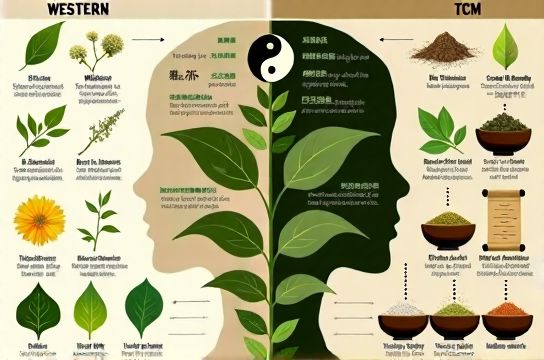
Western herbalism is like your no-nonsense friend who says, “This plant does this.” It’s symptom-focused. Got insomnia? Try valerian root. Allergies acting up? Butterbur might help. This system leans heavily on clinical research and isolated active compounds—think echinacea for immune support, backed by studies showing a 58% reduction in cold risk (according to a 2015 meta-analysis in CMAJ Open).
Meanwhile, TCM is more like a life coach. It doesn’t just ask “What’s wrong?” but “Why now?” TCM uses herbs in complex formulas—often 6 to 20 ingredients—to restore balance based on patterns like “Spleen Qi Deficiency” or “Liver Fire.” For example, Xiao Yao San, a classic formula for stress-related digestive issues, combines Bupleurum, White Peony, and Atractylodes to regulate Qi flow.
Let’s get visual with how these systems compare:
| Aspect | Western Herbalism | Chinese Herbalism (TCM) |
|---|---|---|
| Approach | Symptom-targeted | Pattern-based diagnosis |
| Herb Use | Single herbs or simple blendsComplex multi-herb formulas | |
| Evidence Basis | Clinical trials, phytochemistry | 2,000+ years of empirical practice |
| Common Delivery | Tinctures, capsules, teas | Decoctions, granules, pills |
| Regulation | FDA dietary supplement rules | Pharmacopoeia standards (China) |
Now, here’s where people get tripped up: safety. Just because it’s “natural” doesn’t mean it’s safe. St. John’s Wort (Western) can interfere with antidepressants, while Ma Huang (Ephedra in TCM) was banned in the U.S. due to cardiovascular risks. Always consult a pro—especially with TCM, where improper pattern diagnosis can make symptoms worse.
Which should you choose? If you want fast relief for a clear issue—say, seasonal allergies—go for evidence-backed Western herbs. But if you’re dealing with chronic fatigue, hormonal swings, or stress-related gut issues, TCM’s holistic lens might uncover root causes Western tests miss.
Bottom line: They’re not rivals. They’re allies. The smartest move? Use Western science to validate safety and efficacy, and borrow TCM’s wisdom for long-term balance. And hey—start small. Try one system at a time, track results, and respect the tradition behind every leaf.