Common Myths About Chinese Herbal Medicine Busted with Facts
- 时间:
- 浏览:135
- 来源:TCM1st
Let’s be real — Chinese herbal medicine has been both glorified and misunderstood in the wellness world. From TikTok trends to celebrity endorsements, it’s everywhere. But how much of what you hear is actually true? As someone who’s spent over a decade diving into traditional practices and comparing them with modern science, I’m here to bust the most common myths — with facts, data, and zero fluff.
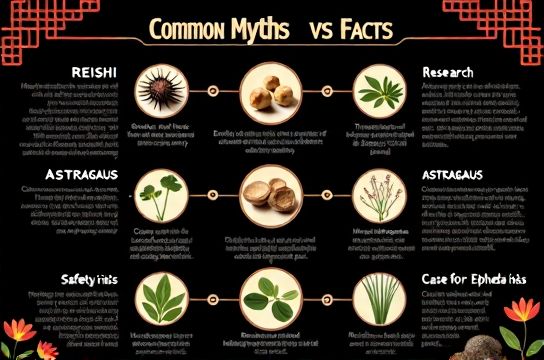
Myth #1: “It’s All Natural, So It’s Always Safe”
Hold up. Just because something’s “natural” doesn’t mean it won’t mess with your system. Sure, herbs like Ganoderma lucidum (Reishi mushroom) and Astragalus membranaceus have solid research backing their immune support, but others can interact dangerously with medications.
For example, Ma Huang (Ephedra) was banned by the FDA due to heart risks. And some herbal formulas have been found to contain hidden heavy metals or prescription drugs — especially when sourced from unregulated suppliers.
| Herb | Traditional Use | Known Risk | Scientific Support Level |
|---|---|---|---|
| Reishi (Ganoderma) | Immune modulation | Low (mild digestive upset) | High |
| Ephedra (Ma Huang) | Energy, weight loss | Heart palpitations, stroke | Banned in US |
| Angelica sinensis (Dang Gui) | Women's health | Blood thinning (caution with warfarin) | Moderate |
Bottom line? Always consult a licensed practitioner. Safety comes from knowledge — not just labels.
Myth #2: “It Works Faster Than Western Medicine”
Nah, not really. One of the biggest misconceptions is that Chinese herbal medicine delivers instant miracles. Truth is, it’s designed for long-term balance, not quick fixes. While antibiotics knock out infections in days, herbs like Huang Qin (Scutellaria) may take weeks to reduce inflammation — but with fewer side effects over time.
According to a 2022 meta-analysis in the Journal of Ethnopharmacology, herbal treatments showed comparable efficacy to conventional meds for chronic conditions like irritable bowel syndrome (IBS) and mild-to-moderate depression — but response times were slower by an average of 2–3 weeks.
Myth #3: “All Herbs Are the Same, No Matter Where You Buy Them”
Big red flag. Quality varies wildly. A 2020 study tested 45 popular herbal supplements sold online — nearly 30% didn’t contain the listed herb, and 20% had contaminants.
If you’re serious about results, look for brands with:
- Third-party lab testing (like NSF or USP verified)
- Clear sourcing (preferably from GACP-certified farms)
- Transparent processing methods
And if you're curious about which brands actually deliver, check out our deep dive on trusted sources — because your health isn’t a gamble.
Final Takeaway
Traditional Chinese herbs aren’t magic — but they’re not myths either. When used wisely, they offer powerful support for long-term wellness. Don’t fall for hype. Do your homework. Talk to pros. And remember: real healing takes time, transparency, and truth.