How Traditional Knowledge Shapes Modern Chinese Herbal Use
- 时间:
- 浏览:147
- 来源:TCM1st
If you’ve ever sipped on a cup of chrysanthemum tea or reached for ginseng during flu season, you’ve tapped into centuries-old wisdom. But here’s the real tea: modern Chinese herbal use isn’t just folklore—it’s a dynamic blend of tradition and science. As someone who’s spent over a decade researching herbal systems across Asia, I’ve seen how ancestral knowledge powers today’s wellness boom—and why it still matters.
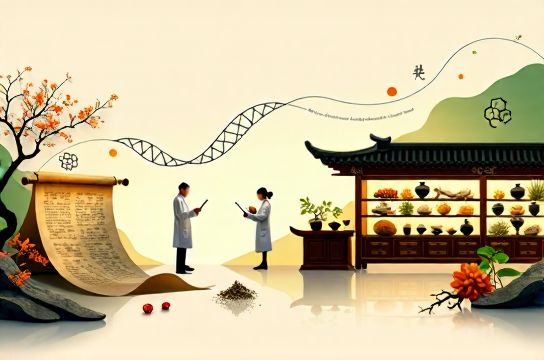
Let’s get one thing straight: traditional doesn’t mean outdated. In fact, China’s pharmacopeia recognizes over 1,200 medicinal herbs, with around 300 in common clinical use. What’s wild? Roughly 85% of these applications trace back to texts written before the 17th century—like the Compendium of Materia Medica (Bencao Gangmu) by Li Shizhen. But instead of fading into history, this knowledge is being validated by modern research.
Take astragalus (Huang Qi), for example. Traditionally used to ‘boost qi’ and strengthen immunity, recent studies show it contains polysaccharides that stimulate white blood cell activity. Or consider licorice root (Gan Cao)—a staple in 70% of traditional formulas—not only soothes sore throats but also shows anti-inflammatory and antiviral properties in clinical trials.
From Ancient Texts to Today’s Formulas
The magic lies in formulation. Unlike Western medicine’s single-compound approach, Chinese herbalism relies on synergy. A typical formula balances jun (emperor), chen (minister), and zuo (assistant) herbs to enhance efficacy and reduce side effects.
Here’s a snapshot of how classic herbs are used today:
| Herb (Pinyin) | Traditional Use | Modern Application | Scientific Support |
|---|---|---|---|
| Ginseng (Ren Shen) | Boost energy, reduce fatigue | Adaptogen in stress supplements | ✓ Clinical trials on cortisol reduction |
| Dang Gui | Regulate menstruation, nourish blood | Women’s health tonics | ✓ Estrogen-modulating compounds |
| Fu Ling | Support spleen function, reduce dampness | Used in edema and digestive formulas | ✓ Diuretic and immune-modulating effects |
This table isn’t just academic—it reflects what’s flying off shelves in both traditional Chinese medicine clinics and global supplement markets. The global TCM market hit $135 billion in 2023, with herbal products making up nearly 60% of that.
Why Tradition Still Leads Innovation
You might think modern labs would replace old methods. But reverse pharmacology is now a legit strategy: scientists start with time-tested formulas, then isolate active compounds. Case in point: Qing Hao (Artemisia annua) was used for fevers in ancient times. Today, its derivative artemisinin is a WHO-recommended malaria treatment—earning Tu Youyou a Nobel Prize in 2015.
Yet challenges remain. Standardization, sourcing ethics, and herb-drug interactions need attention. That’s why reputable brands now use DNA barcoding and heavy metal testing—bridging trust between tradition and transparency.
So whether you're exploring natural remedies rooted in Chinese tradition or evaluating their place in integrative healthcare, remember: the oldest insights often have the most staying power. And in an age of quick fixes, that kind of wisdom is worth preserving.