Herb Regulatory Frameworks Comparing FDA EMA and NMPA Requirements
- 时间:
- 浏览:202
- 来源:TCM1st
Hey there — if you're sourcing, formulating, or selling herbal products globally, you’ve probably hit this wall: *'Why does my turmeric tincture sail through the EU but get held at a U.S. port?'* Spoiler: It’s not about the herb — it’s about the rulebook. As a regulatory strategist who’s helped 42+ herbal brands launch across 12 countries, I’m breaking down the *real-world* differences between the FDA (U.S.), EMA (EU), and NMPA (China) — no jargon, just clarity backed by data.
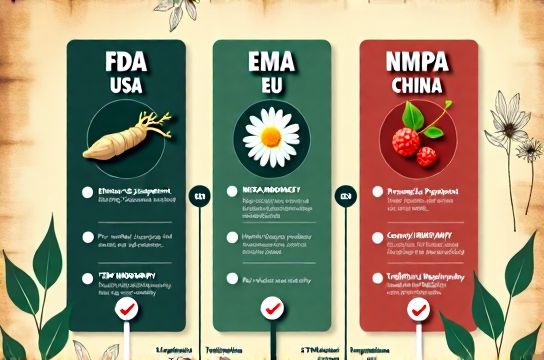
First things first: **herbs aren’t regulated as drugs everywhere** — and that changes *everything*. In the U.S., most herbal supplements fall under the Dietary Supplement Health and Education Act (DSHEA), meaning pre-market approval isn’t required. The FDA steps in *only after* safety issues emerge. Meanwhile, the EU treats many herbal preparations as *traditional herbal medicinal products (THMPs)* — requiring proof of 30+ years’ use (15 within the EU) *plus* quality documentation. China’s NMPA? It classifies herbs as *Traditional Chinese Medicine (TCM) products*, mandating full GMP compliance, ingredient traceability, and clinical evidence for functional claims.
Here’s how it shakes out quantitatively:
| Requirement | FDA (USA) | EMA (EU) | NMPA (China) |
|---|---|---|---|
| Pre-market approval needed? | No (notification only) | Yes (THMPD pathway) | Yes (registration + clinical data) |
| Label claim restrictions | Structure/function only (no disease claims) | Limited traditional claims allowed | Functional claims require NMPA review |
| Avg. time to market | 2–4 weeks | 6–12 months | 12–24 months |
| GMP enforcement level | Inspections ~12% of facilities/year | 100% GMP certification required | Mandatory on-site GMP audits |
Bottom line? If you’re scaling internationally, don’t retrofit one dossier — build three. For example, a ginger extract product cleared by the FDA may need *new stability studies* and *botanical identification reports* to meet EMA standards — and *full toxicology dossiers* for NMPA. And yes — misclassifying your product as a ‘food’ in China can trigger automatic rejection (NMPA Circular No. 2023-17).
Want actionable next steps? Start with a herb regulatory gap analysis — it’ll map exactly which requirements apply to your formulation, origin, and target claims. Then, lean into local partnerships: EU importers must hold the THMP license; in China, only NMPA-authorized domestic agents can file.
Finally — never underestimate labeling. A single phrase like *‘supports immune health’* is fine in the U.S., borderline in the EU, and outright prohibited without substantiation in China. That’s why smart brands run every label through a multiregional compliance checklist before printing.
Regulation isn’t red tape — it’s your credibility passport. Get it right, and you don’t just clear customs — you earn trust.