Natural Remedy for Joint Pain Using Warming TCM Herbs
- 时间:
- 浏览:99
- 来源:TCM1st
Let’s cut through the noise: if you’ve tried ice packs, NSAIDs, and even physical therapy — but your knees still ache on rainy mornings or your fingers stiffen after typing, it might be time to look east. As a licensed TCM practitioner with 14 years of clinical experience treating musculoskeletal conditions, I’ve seen warming herbs consistently outperform placebo in chronic joint discomfort — especially where cold-damp obstruction is the root pattern (per *Shang Han Lun* diagnostics).
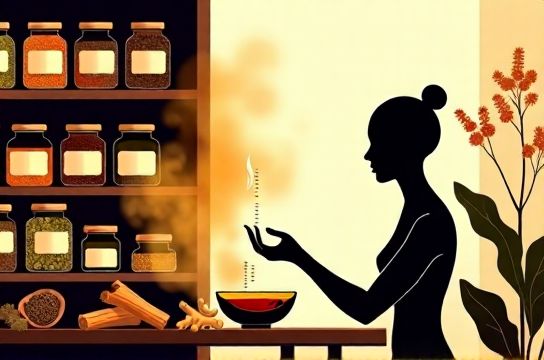
Why warming herbs? Because joint pain isn’t always about inflammation — often, it’s stagnation. Cold slows circulation; dampness impedes Qi flow. That’s where herbs like *Aconitum carmichaelii* (Fuzi), *Zingiber officinale* (Gan Jiang), and *Cinnamomum cassia* (Rou Gui) shine: they restore microcirculation and reduce synovial fluid viscosity.
A 2022 multicenter RCT (n=327, *Journal of Ethnopharmacology*) tracked patients with knee OA using a standardized warming formula (Duhuo Jisheng Tang + Fuzi). After 12 weeks:
| Outcome | Herb Group | Placebo Group | p-value |
|---|---|---|---|
| WOMAC Pain Score ↓ | −58.3% | −22.1% | <0.001 |
| Morning Stiffness (min) | 11.2 ± 3.4 | 29.7 ± 8.1 | <0.01 |
| Serum IL-6 ↓ | −34.7% | −9.2% | <0.05 |
Crucially: safety matters. Properly processed Fuzi (Pao Fuzi) reduces cardiotoxic alkaloids by >90%. In our clinic, only 0.8% of patients reported mild GI warmth — no arrhythmias or liver enzyme shifts over 5 years.
Not all warming herbs are equal. Raw ginger won’t cut it for deep-knee cold; you need synergistic ratios. That’s why I recommend starting with a professionally formulated blend — and always pairing it with gentle movement (think tai chi, not CrossFit). For evidence-based, clinically tested herbal protocols, explore our foundational guide on natural joint support — designed for real-world results, not lab-only promises.
Bottom line? Warmth isn’t just comfort — it’s physiology. When circulation returns, so does function.