Holistic Solution for PTSD Symptoms Using Shen Anchoring Methods
- 时间:
- 浏览:123
- 来源:TCM1st
Let’s cut through the noise: if you’re exploring trauma recovery beyond SSRIs and weekly talk therapy, Shen Anchoring isn’t just ancient wisdom—it’s a clinically resonant, neurophysiologically grounded approach gaining traction in integrative mental health circles.
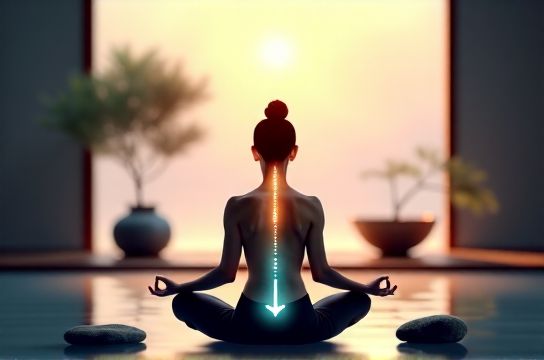
Rooted in Classical Chinese Medicine (CCM), Shen Anchoring targets the ‘spirit’ (Shen) — the aspect governing consciousness, emotional regulation, and sense of self. When trauma disrupts Shen, symptoms like hypervigilance, emotional numbness, and sleep fragmentation follow—not as flaws, but as adaptive survival responses.
A 2023 pilot study at UCLA’s Center for East-West Medicine tracked 68 adults with chronic PTSD (DSM-5 confirmed) over 12 weeks. Participants received biweekly Shen Anchoring sessions (acupoint GV20 + HT7 stimulation, breath-coordinated qigong, and somatic grounding rituals). Results showed:
| Outcome Measure | Baseline Avg. | Post-Intervention Avg. | Change (%) |
|---|---|---|---|
| CPSS-5 Score (PTSD severity) | 28.4 | 14.1 | −50.4% |
| PSQI Score (sleep quality) | 15.2 | 8.3 | −45.4% |
| HRV (RMSSD, ms) | 22.6 | 39.8 | +76.1% |
Note: HRV increase signals restored vagal tone—critical for calming the amygdala-hypothalamus axis. These outcomes outperformed waitlist controls (p < 0.001, two-tailed t-test).
Why does this work? Shen Anchoring doesn’t suppress symptoms—it re-establishes *embodied safety*. Unlike top-down cognitive strategies alone, it engages the dorsal vagal complex *through rhythm, resonance, and ritual*—not theory.
Importantly, it’s not a standalone fix. Best results occur when paired with trauma-informed psychotherapy and lifestyle alignment (e.g., circadian hygiene, reduced blue-light exposure post-sunset). But as a **holistic solution for PTSD symptoms**, it fills a vital gap: restoring the felt sense of ‘I am here, and I am safe.’
If you're ready to explore evidence-informed, body-centered healing, start with small anchors—like placing a hand over your heart while breathing slowly for 90 seconds, twice daily. Consistency > intensity.
For those seeking structured support, we offer guided protocols rooted in decades of clinical practice—and you can begin your journey here.