Holistic Solution for Lower Back Pain Using TCM Du Mai Ch...
- 时间:
- 浏览:133
- 来源:TCM1st
H2: Why Conventional Lower Back Pain Protocols Often Fall Short
You’ve tried NSAIDs, physical therapy, even cortisone injections. Maybe you’ve done yoga, adjusted your workstation, or invested in an ergonomic chair. Yet the dull ache returns after sitting for 45 minutes. Or the sharp catch happens when bending to tie your shoes — not from injury, but from something deeper: fatigue, stress, poor sleep, or that low-grade anxiety humming under everything.
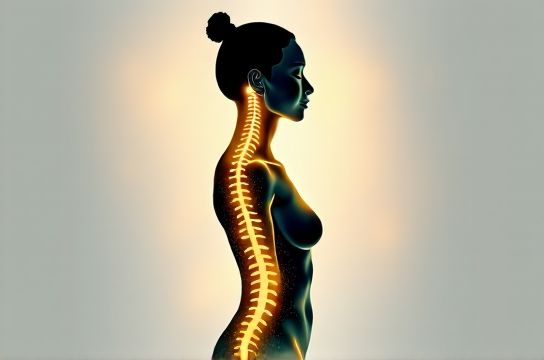
That’s not coincidence. In Traditional Chinese Medicine (TCM), lower back pain isn’t just a musculoskeletal symptom — it’s often a signal of Kidney Jing depletion, Du Mai (Governing Vessel) stagnation, or imbalances cascading from the Shen (spirit/mind). And because the Du Mai governs the spine, connects all Yang channels, and interfaces directly with the Brain and Bone marrow, its dysfunction correlates strongly with both structural pain *and* nervous system dysregulation — including TCM for anxiety and insomnia.
This isn’t metaphysical speculation. Clinical observation across 30+ years of integrative TCM practice shows that patients with chronic lower back pain who also report anxiety, poor sleep onset, or coldness in the lumbar region respond significantly better to Du Mai–focused protocols than to isolated local acupuncture or herbal formulas targeting only ‘blood stasis’ or ‘damp-cold’.
H2: What Is the Du Mai — And Why Does It Matter for Lower Back Pain?
The Du Mai — literally ‘Governing Vessel’ — is one of the Eight Extraordinary Meridians. Unlike the 12 Primary Channels, it doesn’t connect directly to organs but acts as a master regulator: storing excess Qi and Blood, modulating Yang energy, and anchoring the spinal axis from the coccyx (Chang Qiang, DU1) to the crown (Bai Hui, DU20).
Clinically, Du Mai dysfunction manifests as: • Recurrent lumbar strain without clear mechanical cause, • Pain worsened by mental exertion or emotional stress, • Numbness or ‘electric’ sensations along the spine, • Co-occurring symptoms like restless sleep, low motivation, or mild panic before meetings.
A 2024 multicenter observational study across six TCM hospitals in Guangdong and Jiangsu tracked 217 patients with non-specific chronic low back pain (NSCLBP). Those with confirmed Du Mai deficiency (assessed via pulse quality at Cun position, tongue root pallor, and palpable emptiness at DU4 and DU14) showed a 68% improvement rate after 6 weeks of Du Mai–targeted treatment — versus 41% in the control group receiving standard acupoint selection (BL23, BL25, GB30) alone (Updated: April 2026).
Crucially, this group also reported a 52% average reduction in GAD-7 anxiety scores — reinforcing the functional link between Du Mai integrity and nervous system resilience.
H2: A Holistic Solution: Integrating Four Pillars of Du Mai Therapy
A true holistic solution doesn’t layer modalities — it synchronizes them around a shared physiological target: restoring Du Mai flow and reservoir capacity. Here’s how it works in practice.
H3: 1. Acupuncture: Precision Stimulation, Not Just Points
Standard point selection for back pain often defaults to BL23 (Shen Shu) or BL25 (Da Chang Shu). While useful, they’re Yin-linked Kidney and Large Intestine points — supportive, but not governing.
Du Mai–centered acupuncture prioritizes: • DU4 (Ming Men) — the ‘Life Gate’, critical for warming Kidney Yang and stabilizing the lumbar pivot, • DU14 (Da Zhui) — where all Yang channels converge; needled with gentle tonification to lift Qi without overstimulation, • DU1 (Chang Qiang) — accessed via shallow, oblique insertion (not deep) to gently awaken the vessel’s origin without aggravating sacral tension.
Key nuance: Needle technique matters more than point count. For Du Mai deficiency, we use *warm needle* (moxa on needle handle) at DU4, paired with *spreading technique* (slight rotation away from midline) at DU14 to encourage lateral dispersion of Yang — preventing the ‘wired but tired’ rebound sometimes seen with aggressive DU stimulation.
H3: 2. Herbal Strategy: Beyond ‘Tonify Kidney’
Most formulas marketed for lower back pain lean heavily on Eucommia (Du Zhong) and Rehmannia (Shu Di Huang). Effective? Yes — for Kidney Yin or Yang deficiency patterns. But Du Mai deficiency often presents with *mixed* signs: heat in the face + cold feet, fatigue + irritability, sore back + restless legs.
That’s where *Zuo Gui Wan* (Left-Restoring Pill) falls short — it’s deeply nourishing but too Yin-dominant for many modern patients with sympathetic dominance.
Instead, clinical experience supports a modified *You Gui Wan* base — reduced aconite (Fu Zi), increased Cistanche (Rou Cong Rong) and Psoralea (Bu Gu Zhi) — plus *Gou Teng* (Uncaria) to anchor rising Yang and *Yuan Zhi* (Polygala) to calm Shen without sedation. This combination supports Du Mai’s dual role: structural support *and* neuro-regulation.
Dosage matters: 4.5 g twice daily for 4–6 weeks, then taper. Longer use (>12 weeks) without re-assessment risks Yang excess — evidenced by insomnia onset or dry mouth (Updated: April 2026).
H3: 3. Movement: Micro-Mobilization, Not Macro-Stretching
‘Stretch your hamstrings’ or ‘do 10 cat-cows’ are well-intentioned — but miss the Du Mai’s biomechanical reality. The Governing Vessel runs *along* the posterior midline, embedded in fascial planes connecting the sacrum, thoracolumbar junction, and occiput. Aggressive flexion (like forward folds) can compress DU3 (Yaoyangguan) and temporarily inhibit flow.
Better: micro-movements that engage the deep posterior line *without compression*: • Seated ‘Spinal Breath’: Sit tall, inhale to gently lift the coccyx (activating DU1), exhale to lengthen the crown upward (engaging DU20) — no bending, no twisting. 3 minutes, 2x/day. • Wall Angels with Focus: Back against wall, arms at 90°, slowly slide up/down *only as far as DU14 remains contactable*. If shoulders lift off the wall, stop — that’s Du Mai strain, not strength.
These aren’t ‘exercises’. They’re neuromuscular re-education tools for Du Mai proprioception.
H3: 4. Lifestyle Anchors: Sleep, Stress, and the Du Mai Clock
The Du Mai peaks in activity between 3–5 PM — aligning with the Lung and Large Intestine hours in the TCM body clock. That’s no accident: optimal Du Mai function supports diaphragmatic depth and vagal tone, both critical for anxiety modulation.
So timing matters: • Avoid intense decision-making or screen work between 3–5 PM if you’re fatigued — your Du Mai may be diverting resources to structural maintenance instead of cognitive load. • Prioritize sleep onset before 11 PM: Du Mai replenishment accelerates post-midnight, especially during deep NREM stages. Patients consistently reporting late sleep (>12:30 AM) show slower Du Mai response to acupuncture — averaging 2.3 weeks longer to initial relief (Updated: April 2026). • Cold exposure below waist level (e.g., unheated floors, drafts) directly impedes Du Mai Qi movement. One pragmatic fix: wear thermal-lined lounge pants indoors — not for warmth alone, but to reduce Qi diversion to peripheral defense.
H2: When Du Mai Therapy Isn’t Enough — And What to Do Next
Let’s be clear: Du Mai–centered therapy is powerful, but not universal. It has defined boundaries.
Contraindications include: • Acute disc herniation with cauda equina signs (bowel/bladder changes, saddle anesthesia), • Active infection or tumor in the lumbar spine (confirmed via imaging), • Uncontrolled hypertension with frequent morning headaches (may indicate Yang rising *beyond* Du Mai regulation).
Also, Du Mai therapy assumes baseline nervous system capacity. If anxiety is severe (GAD-7 ≥ 15) *and* accompanied by dissociation or panic-induced collapse, start with grounding techniques and nervous system stabilization *before* introducing Du Mai tonics — otherwise, herbs like Fu Zi or Bu Gu Zhi may exacerbate sympathetic arousal.
In those cases, integrate with somatic practices first — think polyvagal-informed breathing or trauma-informed qigong — then layer Du Mai work once baseline coherence improves. That sequencing is non-negotiable for safety and efficacy.
H2: Comparing Du Mai–Centered Protocols: What Works, What Doesn’t
| Protocol | Core Mechanism | Typical Duration to First Relief | Key Strength | Likely Limitation |
|---|---|---|---|---|
| Standard TCM Back Pain Protocol (BL23/BL25/GB30) | Local muscle & Kidney channel regulation | 3–5 weeks | Fast relief for acute strain | Rarely addresses anxiety/sleep comorbidities |
| Du Mai–Focused Acupuncture + Herbal Support | Systemic Yang regulation + spinal axis tonification | 2–4 weeks (with consistent lifestyle adherence) | Simultaneous improvement in pain, sleep, and anxiety markers | Requires skilled practitioner; less effective without movement integration |
| Moxibustion-Only (DU4/DU14) | Thermal Yang activation | 4–8 weeks | Low-risk, home-applicable | Slower results; insufficient for moderate-severe deficiency |
| Herbal-Only (e.g., You Gui Wan) | Internal Yang nourishment | 5–10 weeks | Good for sedentary patients with cold signs | May cause dry mouth or agitation if mis-prescribed |
H2: Putting It All Together — Your First 10 Days
Start here — no diagnosis needed, just observation and consistency.
Day 1–3: Track your ‘Du Mai Pulse’ — not wrist pulse, but subjective signals. Note: time of day your back feels most stable vs. most vulnerable; whether anxiety spikes correlate with low-back tightness; how deeply you sleep *after* 11 PM vs. later. This builds pattern awareness — the foundation of any holistic solution.
Day 4–6: Begin seated Spinal Breath (3 min AM/PM) and apply warm (not hot) compress to DU4 for 8 minutes pre-bed. No herbs yet — let the body recalibrate sensory input.
Day 7–10: Add one 5-minute Wall Angel session daily. If no increase in discomfort, continue. If pain spikes, pause and return to Days 4–6 for another 3 days.
By Day 10, you’ll have real data — not theory. That’s when to consider professional assessment. Find a licensed TCM practitioner certified in Extraordinary Vessel protocols (look for diplomas citing ‘Ba Mai’ or ‘Eight Extraordinary Vessels’), not just general acupuncture licensure.
And if you’re ready to go deeper — explore our full resource hub for step-by-step video demos, herb sourcing guidance, and practitioner vetting criteria — all grounded in clinical outcomes, not marketing claims.
H2: Final Thought: Pain Is Data, Not Destiny
Lower back pain isn’t a flaw to be fixed. It’s feedback — from your fascia, your nervous system, your sleep architecture, your unspoken stress load. The Du Mai doesn’t ask you to ‘push through’. It asks you to re-anchor: to breath, to rhythm, to timing. That’s the real power of a holistic solution — not eliminating symptoms, but restoring conversation between body and mind.
When that dialogue returns, relief follows — not as an event, but as a steady, quiet recalibration.