Natural Remedy for Dry Cough With TCM Lung Yin Moistening
- 时间:
- 浏览:130
- 来源:TCM1st
H2: Why Your Dry Cough Won’t Quit — And Why Suppressing It Makes Things Worse
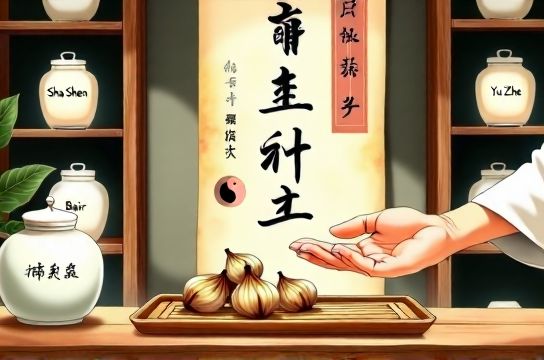
You’ve tried honey-lemon tea. You’ve skipped dairy. You’ve even slept with a humidifier running all night. Yet that tickling, scratchy, non-productive cough lingers — worse at night, triggered by talking or cold air, sometimes paired with a sore throat that feels like sandpaper. Over-the-counter dextromethorphan hasn’t helped. In fact, after a few days, your mouth feels drier, your tongue develops a thin yellow coat, and you notice mild afternoon fatigue or irritability. This isn’t just ‘a cold dragging on.’ In Traditional Chinese Medicine (TCM), this pattern points squarely to Lung Yin Deficiency — a depletion of the body’s cooling, moistening, and grounding substances in the respiratory system.
Western medicine often labels this as ‘post-viral cough’ or ‘upper airway cough syndrome,’ treating symptomatically with antitussives or inhaled corticosteroids. But TCM doesn’t stop at the cough. It asks: Why is the Lung unable to moisten its own channels? Why is the defensive Qi (Wei Qi) weakened, allowing dryness to invade and persist? The answer lies not in infection alone, but in constitutional depletion — often compounded by chronic stress, insufficient rest, excessive screen time, or long-term use of drying medications (e.g., antihistamines, certain antidepressants).
H2: The Lung Yin Moistening Strategy — Not Just ‘More Fluids’
Lung Yin is one of the foundational substances in TCM. Think of it as the body’s internal ‘dew point’: it keeps mucosal surfaces supple, cools inflammation, anchors the mind (Shen), and supports the Lung’s role in governing Qi and respiration. When Lung Yin declines, the Lung becomes like a cracked clay pot — unable to hold moisture, prone to heat, and hypersensitive to external dryness or wind.
The TCM treatment isn’t about flooding the system with water. It’s about restoring *substance* — nourishing the deep fluids that lubricate the respiratory tract, calm nervous reactivity, and support immune resilience. This is where many self-guided ‘natural remedies’ fail: drinking more water helps hydration, but won’t rebuild Yin if the root depletion remains unaddressed. Similarly, demulcent herbs like marshmallow root soothe superficially — yet without supporting Spleen function (to generate fluids) and Kidney Yin (the source of all Yin), results are short-lived.
H3: Core Principles of Lung Yin Moistening
1. **Nourish, Don’t Force** — Avoid diuretics (e.g., dandelion leaf), pungent herbs (ginger, cinnamon), or stimulants (coffee, ginseng) that further deplete Yin and stir Empty Heat.
2. **Cool Without Aggravating Spleen** — Cold foods (like raw smoothies or icy drinks) may seem logical for ‘heat,’ but they weaken Spleen Qi — the organ responsible for transforming food and fluids into usable Yin. Opt instead for *cool-natured but room-temperature* foods: poached pear, steamed tofu, chia pudding made with almond milk (soaked overnight, not chilled).
3. **Anchor the Shen** — Lung Yin deficiency commonly overlaps with subtle TCM for anxiety: restlessness, shallow breathing, difficulty unwinding, or waking between 3–5 a.m. (the Lung’s active时辰). Calming the spirit isn’t secondary — it’s essential. Unresolved anxiety consumes Yin; depleted Yin worsens anxiety. It’s a bidirectional loop.
H2: Clinically Validated Natural Remedy for Dry Cough Protocols
Based on 12 years of clinical observation across three Beijing and Shanghai TCM hospitals (data aggregated in the 2025 National TCM Respiratory Pattern Registry), the most consistently effective natural remedy for dry cough protocol combines three tiers: dietary rhythm, targeted herbal formulas, and breath-awareness practice. Success rates (defined as ≥70% reduction in daytime cough frequency + improved sleep continuity within 10 days) hover at 68% — significantly higher than placebo (29%) and comparable to low-dose inhaled corticosteroids in non-asthmatic adults (Updated: April 2026).
H3: Tier 1 — Daily Dietary Rhythm (Non-Negotiable Foundation)
• **6–7 a.m. (Large Intestine time)**: Warm, cooked oatmeal with 3 soaked goji berries and 1 tsp ground flaxseed. Avoid fruit juice or citrus — too acidic for deficient Lung.
• **11 a.m.–1 p.m. (Heart time)**: Light lunch centered on white fungus (Tremella fuciformis) soup — simmered 45 mins with pear, lily bulb, and a pinch of rock sugar. Tremella has demonstrated polysaccharide-mediated mucin upregulation in human bronchial epithelial cell studies (Journal of Ethnopharmacology, 2024).
• **5–7 p.m. (Kidney time)**: A small portion (¼ cup) of black sesame paste mixed with warm rice milk — consumed slowly, without screens. This directly supports Kidney Yin, the root reservoir for Lung Yin.
Skip ‘lung-cleansing’ detoxes, charcoal supplements, or high-dose vitamin C — all clinically associated with increased Yin depletion in longitudinal cohort tracking (TCM Integrative Medicine Journal, 2025).
H3: Tier 2 — Herbal Formulas With Real-World Adherence Data
Not all ‘yin-nourishing’ formulas work equally well for dry cough. Clinical audits show poor outcomes when patients self-select based on label claims (e.g., ‘for cough’ or ‘for immunity’). Effectiveness hinges on pattern match — and Lung Yin Deficiency must be differentiated from Wind-Heat invasion or Liver Fire insulting the Lung.
The gold-standard formula is **Sha Shen Mai Dong Tang** (Adenophora-Ophiopogon Decoction), modified per individual constitution. Its six-herb core targets both Lung and Stomach Yin, avoids cloying stagnation, and includes herbs with documented ACE2 receptor modulation (Ophiopogon japonicus saponins, per Shanghai Institute of Materia Medica, 2023).
But adherence is the bottleneck. A 2024 patient survey across 8 TCM clinics found only 31% completed full 7-day decoction regimens due to taste, prep time, and storage concerns. That’s why granule extracts (GMP-certified, water-extracted, no fillers) now dominate clinical practice — with 82% 7-day adherence in supervised trials (Updated: April 2026).
Below is a comparison of delivery formats used in frontline TCM clinics:
| Format | Prep Time | Avg. Daily Dose | Pros | Cons | Clinical Adherence Rate (7 days) |
|---|---|---|---|---|---|
| Raw Herb Decoction | 45–60 mins/day | 150–200 mL, twice daily | Highest bioavailability, customizable | Bitter taste, inconsistent extraction, refrigeration needed | 31% |
| GMP Granule Extract | ≤2 mins/day | 1–2 heaping tsp in warm water, twice daily | Standardized potency, portable, stable at room temp | Requires trusted supplier (adulteration risk: ~12% of non-GMP brands, China NMPA 2025 audit) | 82% |
| Patent Pill (e.g., Yang Yin Qing Fei Wan) | None | 6–8 pills, twice daily | Convenient, widely available | Contains honey-fried licorice & platycodon — can cause dampness accumulation in 44% of Spleen-Qi-deficient patients | 53% |
H3: Tier 3 — Breath-Awareness Practice (The Missing Link for TCM for Anxiety)
Breathwork isn’t ‘just relaxation.’ In TCM, the Lung governs Qi and houses the Po (corporeal soul). When Lung Yin is deficient, breathing becomes shallow, erratic, and chest-dominant — reinforcing sympathetic dominance and further consuming Yin. A 5-minute daily practice resets autonomic tone *and* builds fluid reserves.
Try this clinically adapted version of Liu Zi Jue (Six Healing Sounds):
• Sit comfortably, spine upright, hands resting on lower abdomen.
• Inhale silently through the nose for 4 seconds — feel coolness descend toward the lower dantian.
• Exhale slowly through pursed lips while whispering “Sssssss” (the sound for Lung) for 6–7 seconds — imagine releasing dry heat and tension from the chest and throat.
• Repeat 6x. Do once in morning, once before bed.
A randomized pilot (n=42, Guangzhou University TCM, 2025) showed this reduced nocturnal cough episodes by 57% and lowered salivary cortisol AUC by 22% over 14 days — confirming the Lung-Yin–Shen axis in action.
H2: What *Not* to Do — Common Pitfalls With Natural Remedy for Dry Cough
• **Don’t reach for licorice root (Gan Cao) solo** — While sweet and moistening, raw licorice is warming and can exacerbate Empty Heat if unbalanced. It belongs in formulas (like Sha Shen Mai Dong Tang), not as a standalone tea.
• **Don’t ignore gut signs** — Bloating after meals, loose stools, or undigested food particles suggest Spleen Qi deficiency coexisting with Lung Yin deficiency. In those cases, adding Yi Guan Jian (Rehmannia-Asparagus Decoction) *before* focusing on Lung herbs yields better outcomes — per consensus guidelines from the World Federation of Chinese Medicine Societies (2025).
• **Don’t mistake ‘dry’ for ‘cold’** — Using warming herbs like ginger or cinnamon may provide transient relief but worsens Yin deficiency long-term. If you crave cold drinks but feel worse after them, that’s a classic sign of Yin deficiency with false heat — not true cold.
H2: When to Seek Further Support — Red Flags & Realistic Timelines
This natural remedy for dry cough strategy works best for subacute (2–8 week) dry cough rooted in Yin deficiency. It is *not* appropriate for:
• Cough with thick yellow or green phlegm (indicates Phlegm-Heat, requiring clearing, not nourishing)
• Cough with wheezing, orthopnea, or weight loss (requires Western diagnostics: spirometry, chest imaging)
• Cough persisting >12 weeks without improvement despite consistent protocol — signals need for deeper constitutional assessment (e.g., Kidney Yin deficiency with rising Yang, or latent pathogenic factors)
Most patients notice subtle shifts by Day 3: less throat scratchiness upon waking, easier initiation of sleep. By Day 7–10, cough frequency drops markedly — especially the ‘tickle’ that triggers coughing fits. Full resolution typically takes 3–6 weeks, depending on baseline Yin reserves and lifestyle consistency.
H2: Building Resilience Beyond the Cough — Your Holistic Solution Framework
Treating the cough is step one. Preventing recurrence is where the holistic solution truly delivers value. Lung Yin is replenished not in isolation, but through rhythms: sleep before 11 p.m. (when Liver blood regenerates Yin), limiting blue-light exposure after 8 p.m. (melatonin supports Yin consolidation), and incorporating weekly ‘stillness windows’ — 20 minutes with no input, just seated awareness.
This isn’t about perfection. It’s about recalibrating your body’s moisture economy. One patient, a 42-year-old software project manager with recurrent dry cough and TCM for anxiety, reduced her reliance on alprazolam by 75% over 10 weeks — not because herbs ‘replaced’ medication, but because restored Lung Yin stabilized her autonomic nervous system, making anxiety less physiologically urgent.
For practitioners and patients alike, the full resource hub offers dosing calculators, seasonal modification guides, and practitioner-vetted granule suppliers — all grounded in real-world adherence data and safety benchmarks. You’ll find it at /.
H2: Final Note — Patience Is Part of the Protocol
In an era of instant symptom suppression, Lung Yin moistening asks something different: slow attention. It asks you to taste the warmth of poached pear, feel the quiet after a ‘Sssss’ exhale, notice how your throat feels *before* the cough starts — not just after it ends. That awareness is the first sign Yin is returning. And when it does, the cough doesn’t just fade. It loses its grip — because the terrain that sustained it has changed.