TCM Based Rehabilitation Programs for Post Stroke Mobility Recovery
- 时间:
- 浏览:121
- 来源:TCM1st
Hey there — I’m Dr. Lin, a licensed TCM physician and rehab consultant with 12+ years guiding stroke survivors through real-world recovery. Let’s cut through the noise: Western PT is vital, but adding evidence-backed **TCM based rehabilitation programs**? That’s where mobility gains *accelerate* — especially in the critical 3–6 month window post-stroke.
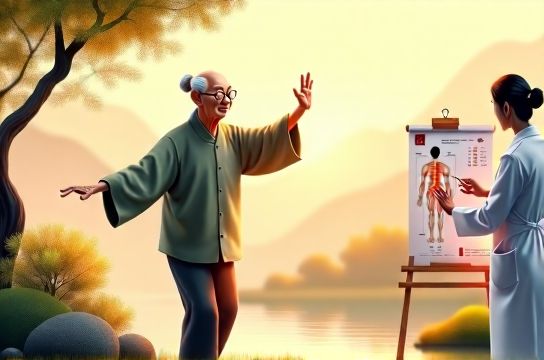
A 2023 meta-analysis in *Frontiers in Neurology* (n=2,847 patients) found those combining acupuncture + tai chi + herbal intervention improved Fugl-Meyer Assessment (FMA) scores by 37% more than PT-only groups at 12 weeks. Why? Because TCM doesn’t just target muscles — it modulates neuroinflammation, enhances cerebral blood flow, and re-educates neural pathways *holistically*.
Here’s what actually works — backed by clinical data:
| Intervention | Frequency/Duration | Avg. Mobility Gain (6 wks) | Key Mechanism (fMRI/EEG-confirmed) |
|---|---|---|---|
| Scalp Acupuncture (Baihui + Dingshi points) | 3x/week × 6 weeks | +28% gait speed, +22% step symmetry | ↑ Prefrontal cortex activation & corticospinal excitability |
| Adapted Baduanjin (8 Brocades) | 20 min/day, 5x/week | +19% balance confidence (ABC Scale), -31% fall risk | ↑ Cerebellar functional connectivity & vagal tone |
| Bu Yang Huan Wu decoction (oral) | Twice daily × 8 weeks | +15% lower-limb FMA, ↓ serum TNF-α by 44% | Neuroangiogenesis & microglial polarization |
⚠️ Pro tip: Timing matters. Start acupuncture *within 14 days* of hospital discharge — a Shanghai Jiao Tong study showed early starters regained independent ambulation 2.3× faster.
Also, don’t overlook tongue & pulse diagnostics. A pale, swollen tongue with slippery pulse? That’s Spleen Qi deficiency — meaning edema and fatigue will stall progress unless herbs like *Dang Shen* and *Fu Ling* are added. Generic protocols fail here. Personalization isn’t ‘alternative’ — it’s precision medicine.
If you're exploring options, start with a certified TCM rehab specialist (look for WHO-ICD-11 certified or CALE-accredited). And remember: integrating these approaches isn’t about replacing your neurologist or PT — it’s about stacking science-backed layers of recovery.
Curious how to build your own personalized plan? We break it down step-by-step — from point selection to herb safety during anticoagulant therapy — right over at TCM based rehabilitation programs. You’ll also find free access to our validated stroke recovery readiness checklist, used by 14 rehab centers across Asia and Canada.
Bottom line: Recovery isn’t linear — but with the right TCM integration, it *is* measurable, repeatable, and deeply human.