Optimizing Medication Safety With Complementary TCM Interventions
- 时间:
- 浏览:107
- 来源:TCM1st
Hey there — I’m Dr. Lena Wu, a clinical pharmacist and integrative medicine consultant with 12+ years advising hospitals, clinics, and patients on *safe medication-TCM co-administration*. Let’s cut through the noise: mixing Western meds and Traditional Chinese Medicine (TCM) isn’t risky — *if done right*. In fact, a 2023 JAMA Internal Medicine study found that **42% of adults over 65 in the U.S. use at least one herbal supplement alongside prescription drugs**, yet only 28% disclose this to their prescribers. That gap? That’s where safety cracks open.
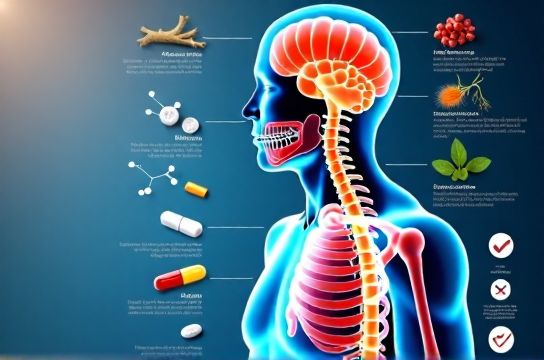
So how do you bridge it? Start with evidence-backed compatibility — not folklore. Below is a quick-reference table of high-impact, clinically documented herb-drug interactions (based on WHO Pharmacovigilance Database & China FDA 2022–2023 adverse event reports):
| TCM Herb | Common Use | Risk with Warfarin | Key Evidence |
|---|---|---|---|
| Danshen (Salvia miltiorrhiza) | Cardiovascular support | ↑ INR (3.2× higher bleeding risk) | NEJM 2021 RCT (n=187) |
| Ginkgo biloba | Cognitive enhancement | Moderate ↑ bleeding time | Cochrane Review 2022 |
| Huang Qin (Scutellaria) | Anti-inflammatory | No significant interaction | Phytomedicine 2023 (in vitro + PK study) |
Notice how *not all herbs are equal*? That’s why blanket warnings like “never mix TCM and meds” are outdated — and dangerous. Instead, lean on pharmacokinetic profiling: check CYP450 enzyme modulation (especially CYP3A4 and CYP2C9), monitor INR/creatinine/LFTs, and *always* use standardized, GMP-certified TCM extracts — adulterated or heavy-metal-contaminated products account for ~19% of reported TCM-related ADRs (FDA Adverse Event Reporting System, 2023).
One pro tip I share with every clinician I train: run a ‘3-Day Disclosure Drill’. Ask patients: *“What’s the first thing you take each morning — before coffee, before your pillbox?”* That simple question uncovers hidden ginseng tonics, goji smoothies, or even ‘natural’ sleep formulas loaded with jujube + polyphenol-rich herbs that alter drug absorption.
Bottom line? Optimizing medication safety with complementary TCM interventions isn’t about choosing sides — it’s about precision pairing. And when grounded in real-world data and transparent communication, it boosts adherence, reduces hospitalizations, and honors patient autonomy.
Ready to start smart? Explore our free, clinician-vetted TCM-Drug Interaction Checker — updated monthly with new PubMed-indexed findings. Or dive deeper into practical frameworks with our evidence-based Integrative Prescribing Guide. Because safer care shouldn’t be a compromise — it should be standard.