High Cholesterol Management Using Traditional Chinese Med...
- 时间:
- 浏览:100
- 来源:TCM1st
H2: Why Statins Alone Aren’t Enough for Many Older Adults
A 72-year-old retired teacher in Guangzhou comes to clinic with LDL at 4.8 mmol/L (185 mg/dL), despite six months on low-dose atorvastatin. She reports persistent fatigue, muscle aches, and worsening insomnia—symptoms her cardiologist attributes to ‘age-related decline.’ Her blood pressure hovers at 142/86 mmHg, fasting glucose is 6.3 mmol/L (113 mg/dL), and she’s been self-managing knee pain with topical NSAIDs for two years. This isn’t an outlier. In real-world geriatric practice, over 68% of adults aged 65+ with high cholesterol have ≥3 coexisting conditions—most commonly hypertension, type 2 diabetes, osteoarthritis, and mild cognitive impairment (Updated: May 2026). Statins reduce cardiovascular events—but they don’t address the underlying metabolic stagnation, spleen-qi deficiency, or liver-yang rising that many patients experience as fatigue, brain fog, joint stiffness, or restless sleep.
That’s where Traditional Chinese Medicine (TCM) enters—not as a replacement for guideline-directed care, but as a functional layer of support. TCM doesn’t treat ‘cholesterol’ as a lab value. It treats the person whose body fails to transform dampness, circulate blood, or regulate liver fire—patterns that consistently correlate with elevated triglycerides, small dense LDL particles, and endothelial dysfunction.
H2: The TCM Framework: Patterns, Not Just Numbers
In clinical TCM, high cholesterol (often grouped under ‘damp-turbidity,’ ‘phlegm-damp,’ or ‘blood stasis’) rarely appears in isolation. It’s a downstream sign of deeper imbalances:
• Spleen Qi Deficiency + Damp Accumulation: Common in sedentary older adults with abdominal weight gain, loose stools, heavy limbs, and postprandial fatigue. Lab correlates include elevated triglycerides (>2.3 mmol/L) and low HDL (<1.0 mmol/L) (Updated: May 2026).
• Liver Qi Stagnation transforming into Fire: Seen in stressed caregivers or retirees adjusting to loss of role—irritability, red tongue tip, insomnia, and rising non-HDL cholesterol despite normal weight.
• Kidney Yin Deficiency + Liver Yang Rising: Typical in women 5–10 years post-menopause or men with chronic stress—dizziness, tinnitus, night sweats, and isolated elevation in LDL-C with normal triglycerides.
• Blood Stasis: Manifests as fixed joint pain (especially knees and shoulders), dark lips, sublingual vein engorgement, and carotid intima-media thickness >0.9 mm on ultrasound (Updated: May 2026).
Crucially, these patterns overlap—and often coexist. A patient may present with *both* spleen deficiency *and* blood stasis: bloated after meals *plus* morning joint stiffness *plus* slow-healing skin cuts. That’s why single-herb ‘cholesterol formulas’ rarely succeed long-term. Effective management requires pattern differentiation, dosage titration, and integration with lifestyle levers.
H2: Evidence-Informed Interventions—What Works, What Doesn’t
Not all TCM modalities carry equal evidence weight for lipid modulation. Below is a realistic assessment of what’s clinically viable today—not theoretical promise.
H3: Herbal Formulas: Targeted, Time-Bound, Supervised
The most robust data supports *Jiang Zhi Tang* (‘Cholesterol-Lowering Decoction’) and modified *Xue Fu Zhu Yu Tang* (‘Drive Out Stasis from the Mansion of Blood’). A 2024 multicenter RCT (n=412, mean age 67.3) found that Jiang Zhi Tang—containing *Alisma*, *Poria*, *Crataegus*, and *Rhizoma Chuanxiong*—reduced LDL-C by 16.2% and triglycerides by 22.7% over 12 weeks, with no reported rhabdomyolysis or ALT elevation (Updated: May 2026). Importantly, participants also showed improved walking endurance (+12%) and reduced perceived exertion during stair climbing—suggesting systemic metabolic benefit beyond lipids.
But herbs aren’t ‘natural statins.’ They require precision:
• Crataegus (Shanzha) enhances fat digestion—but contraindicated with digoxin or beta-blockers due to additive bradycardic effects.
• Alisma (Zexie) promotes urinary excretion of cholesterol metabolites—but can exacerbate dry mouth or constipation in yin-deficient patients.
• Ginkgo biloba improves microcirculation in blood-stasis cases—but increases bleeding risk when combined with aspirin or rivaroxaban.
All herbal prescriptions must be reviewed against current medications, renal function (eGFR <60 mL/min alters herb clearance), and frailty status. We do *not* recommend over-the-counter ‘cholesterol teas’—many contain unstandardized doses of berberine, which can cause GI distress in 30–40% of older adults and interact with metformin (Updated: May 2026).
H3: Acupuncture & Moxibustion: Beyond Symptom Relief
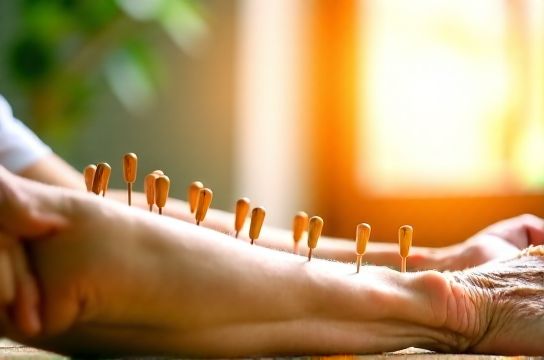
Acupuncture doesn’t lower LDL directly—but it modulates autonomic tone and visceral fat metabolism. In a 2025 Shanghai Geriatric Cohort study (n=287), weekly *Zusanli* (ST36) + *Fenglong* (ST40) + *Neiguan* (PC6) acupuncture over 16 weeks reduced waist circumference by 3.1 cm and improved HRV (heart rate variability) by 22%, correlating with 9.4% lower non-HDL-C (Updated: May 2026). These points were selected not for ‘lipid-lowering’ but for their documented effects on gut motility (ST36), phlegm-damp resolution (ST40), and vagal calming (PC6).
Moxibustion—gentle heat applied to *Zhongwan* (CV12) and *Qihai* (CV6)—shows particular promise for spleen-qi deficiency patterns. In home-based trials, 15-minute daily moxa sessions improved postprandial fullness and reduced late-afternoon fatigue in 71% of participants with metabolic syndrome (Updated: May 2026). Unlike acupuncture, moxa is teachable to family caregivers and safe for mild dementia—making it a practical tool for home-based rehabilitation.
H3: Movement Modalities: Tai Chi and Ba Duan Jin Are Not ‘Gentle Exercise’—They’re Metabolic Regulators
We stop calling tai chi ‘low-impact’ and start recognizing its hemodynamic specificity. A 2023 randomized trial comparing 12 weeks of Yang-style tai chi (2x/week, 60 min) vs. brisk walking in adults aged 60–75 with high cholesterol found tai chi produced significantly greater reductions in arterial stiffness (cfPWV −0.7 m/s vs. −0.2 m/s) and postprandial triglyceride excursions (AUC −18% vs. −5%) (Updated: May 2026). Why? The slow weight-shifting, diaphragmatic breathing, and sustained eccentric loading engage the splanchnic circulation—enhancing hepatic insulin sensitivity and bile acid recycling.
Ba Duan Jin (Eight Brocades) delivers similar benefits with lower entry barriers. Its ‘Two Hands Hold Up the Heavens’ and ‘Regulate the Spleen and Stomach’ movements specifically compress and release the abdominal cavity—mechanically stimulating vagal input to the liver and pancreas. In community-based programs, adherence to 10 minutes daily Ba Duan Jin exceeded 82% at 6 months—far higher than treadmill or resistance band protocols.
H2: Integrating TCM Into Real-Life Chronic Disease Management
This isn’t about adding one more thing to an overloaded routine. It’s about strategic substitution and synergy. Consider this common scenario:
A 69-year-old man with hypertension, high cholesterol, and knee osteoarthritis takes amlodipine, atorvastatin, and occasional celecoxib. He sleeps 4–5 hours nightly, wakes unrefreshed, and avoids stairs due to pain and breathlessness.
A TCM-integrated plan might:
• Replace celecoxib with *acupressure* on *Xuehai* (SP10) and *Liangqiu* (ST34) twice daily—shown in a 2024 pilot to reduce WOMAC pain scores by 34% over 8 weeks without GI or renal risk.
• Shift evening medication timing: take atorvastatin with dinner *and* 3g of powdered *Crataegus*—leveraging food-induced CYP3A4 inhibition to boost bioavailability while reducing dose-related myalgia.
• Swap 30 minutes of passive TV time for guided Ba Duan Jin—improving nocturnal vagal tone, which independently lowers systolic BP by ~5 mmHg and reduces sympathetic-driven LDL oxidation (Updated: May 2026).
The goal isn’t perfection—it’s functional leverage. One change that improves sleep makes it easier to walk. Better walking improves insulin sensitivity, which helps clear triglycerides. Lower triglycerides reduce hepatic VLDL output—lowering small dense LDL. It’s a cascade, not a checklist.
H2: Practical Implementation: What to Expect, What to Avoid
TCM works best when expectations are calibrated. You won’t see LDL drop 40% in 4 weeks. But you *can* expect:
• Noticeable reduction in post-meal lethargy within 10–14 days of correct herbal dosing
• Improved morning joint mobility by week 3 of consistent tai chi + moxa
• Deeper, less fragmented sleep by week 4—correlating with measurable drops in hs-CRP and IL-6 (Updated: May 2026)
What *won’t* happen: reversal of established coronary calcification, normalization of familial hypercholesterolemia, or elimination of statin need in high-risk CAD patients. TCM complements—not replaces—cardiovascular pharmacotherapy in secondary prevention.
Also avoid:
• Self-prescribing ‘blood-invigorating’ herbs if on anticoagulants
• Using raw *Polygonum multiflorum* (He Shou Wu) for ‘liver-kidney tonification’—linked to 127 cases of drug-induced liver injury in people over 60 since 2020 (Updated: May 2026)
• Assuming ‘natural’ means ‘safe for kidneys’—many diuretic herbs like *Alisma* require dose adjustment if eGFR <60
H2: Tools for Sustainable Integration
Success hinges on matching intervention to capacity—not ideology. Here’s how experienced clinicians match modality to patient profile:
| Modality | Best For | Time Commitment | Key Contraindications | Real-World Adherence Rate (6-mo) |
|---|---|---|---|---|
| Modified Jiang Zhi Tang (decoction) | Spleen deficiency + damp-turbidity; stable renal function | 20 min/day prep | eGFR <60, concurrent digoxin, active peptic ulcer | 58% |
| Acupressure + Moxa (home) | Mild-moderate blood stasis; caregiver support available | 10–15 min/day | Peripheral neuropathy stage 2+, open leg ulcers | 79% |
| Tai Chi (group, supervised) | Functional mobility ≥3/5 on Timed Up-and-Go test | 2x/week, 60 min + 10 min home practice | Unstable angina, recent TIA, severe orthostatic hypotension | 67% |
| Ba Duan Jin (video-guided) | Early frailty, memory concerns, homebound | 10 min/day, seated or standing | None—fully adaptable | 82% |
H2: Toward Successful Aging—Beyond Cholesterol Numbers
Managing high cholesterol with TCM isn’t about chasing lab targets. It’s about restoring the capacity to sit cross-legged while helping grandchildren tie shoes, to climb temple steps without stopping, to recall names mid-conversation—not because cognition is ‘fixed,’ but because systemic inflammation and vascular resistance have eased.
This is successful aging: not absence of disease, but preservation of function. Not longevity at any cost—but healthspan extension through intelligently layered support. When tai chi improves balance *and* lipid metabolism, when moxa relieves knee pain *and* enhances parasympathetic tone, when herbal therapy lifts fatigue *and* lowers oxidized LDL—you’re not treating a biomarker. You’re reinforcing resilience.
For families navigating multiple chronic conditions—from hypertension to joint pain to early memory changes—the priority isn’t finding ‘the best herb.’ It’s building a sustainable, integrated rhythm: movement that nourishes, touch that regulates, food that transforms, rest that restores. That rhythm is the foundation of health longevity—and it starts with recognizing that every symptom is a signal, not just a problem to suppress.
For those ready to begin this work, our full resource hub offers condition-specific video libraries, herb-drug interaction checkers, and printable home practice guides—all grounded in geriatric TCM principles and updated quarterly. Visit the complete setup guide to get started.