Healing Traditions Folk Rhymes and Oral Transmission of T...
- 时间:
- 浏览:93
- 来源:TCM1st
H2: When Medicine Was Sung, Not Written
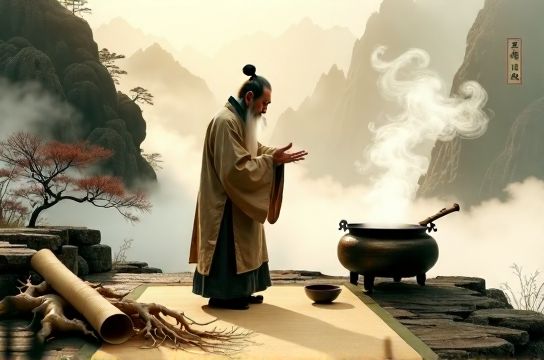
In a village near Shaanxi’s Loess Plateau in the 1950s, an elderly midwife recited a rhyme while preparing a decoction for postpartum recovery: “Dang gui, chuan xiong, bai shao, di huang — four friends hold the blood’s path strong.” No textbook was opened. No digital app consulted. She’d learned it from her grandmother, who’d learned it from a wandering Daoist healer during the late Qing dynasty. This wasn’t anecdote — it was infrastructure.
Oral transmission wasn’t a fallback in early Chinese medicine. It was the primary vector — refined over two millennia — for encoding clinical logic, diagnostic nuance, pharmacopeia safety, and therapeutic sequencing into rhythm, meter, and repetition. These weren’t nursery rhymes. They were mnemonic operating systems, engineered for fidelity under conditions where paper decayed, libraries burned, and literacy hovered below 20% for most of imperial China (Updated: May 2026).
H2: The Philosophical Architecture Beneath the Rhyme
To understand why rhymes worked, you must first see what they carried. TCM history isn’t just a chronology of texts — it’s the sedimentation of Chinese medicine philosophy: Yin-Yang balance as dynamic calibration, not static duality; the Five Phases (Wood, Fire, Earth, Metal, Water) as functional relationships, not elemental labels; Zang-Fu organ systems as regulatory networks, not anatomical snapshots.
Folk rhymes embedded these abstractions operationally. Consider this common Jiangsu variant for damp-heat diarrhea:
> “Huang qin, huang lian, huang bai — three yellows dry the heat’s cascade, > Fu ling, ze xie, yi yi ren — earth’s helpers lift the turbid stain.”
It doesn’t just list herbs. It maps their actions to the Five Phases (yellow = Earth/Fire interplay), assigns directional movement (‘dry’, ‘lift’, ‘cascade’), and signals contraindications implicitly — e.g., using three bitter-cold herbs together warns against prolonged use in deficient Spleen patterns. That’s Chinese medicine philosophy made actionable — without a single theoretical paragraph.
This is why oral transmission survived dynastic collapse. When the Ming fell and medical academies disbanded, lineage holders didn’t reconstruct theory from scratch — they sang the rhymes and rebuilt practice from there. Theory followed action, not the reverse.
H2: From Bamboo Slips to Broadcast Waves: Evolution of the Medium
The earliest known rhymed medical instruction appears on Warring States bamboo slips (c. 475–221 BCE), where pulse diagnosis sequences were written in four-character verse to aid memorization. By the Tang dynasty (618–907 CE), rhymed compendia like the *Yao Xing Lun* (“Treatise on Herb Properties”) circulated among itinerant healers — often illiterate but fluent in tonal patterns and regional dialect variants.
What changed wasn’t the method, but the delivery layer:
- Song–Yuan: Rhymes inscribed on ceramic pill jars and embroidered onto apothecary aprons. - Ming–Qing: Integrated into opera libretti — herbal formulas disguised as love laments or warrior oaths (e.g., “My heart burns like Shi Gao, my tears cool like Dan Shen” encoded Lung-Heat and Heart-Blood stasis patterns). - Republican Era (1912–1949): Transcribed into phonetic romanization for rural health workers trained by missionary clinics — a pragmatic bridge between oral tradition and modern public health. - Post-1949: Systematically collected by the State Administration of Traditional Chinese Medicine (SATCM) in the *Folk Medicine Rhyme Corpus*, now digitized but still taught orally in county-level TCM training centers across Gansu and Yunnan.
Crucially, oral transmission never meant unchanging repetition. Each generation adapted cadence, metaphor, and dosage cues to local ecology and epidemiology. A rhyme about treating wind-cold in Heilongjiang added *ma huang* emphasis and breath-holding pauses mimicking winter wind — absent in the same rhyme sung in Guangdong, where *jing jie* and *fang feng* dominated and tempo quickened to match humid urgency.
H2: Why Modern Clinics Still Use Rhymes — And Where They Fall Short
You’ll find rhymes in active use today — not as nostalgia, but as cognitive scaffolding. At Beijing University of Chinese Medicine’s outpatient clinic, interns recite the *Shi Xiao San* rhyme before administering the formula for traumatic bleeding: “Wu ling zhi, pu huang — two earths stop the flow, no need to ask how.” It anchors dosage precision (equal parts, raw, not charred) and prevents substitution errors (e.g., confusing *pu huang* with *huang qin* — a frequent mix-up in handwritten prescriptions).
But oral transmission has hard limits. It struggles with:
- Dosage scaling for pediatric or geriatric patients (rhymes rarely encode weight-based adjustments); - Drug-herb interactions with pharmaceuticals (no historical precedent for warfarin or SSRIs); - Standardized herb authentication (a rhyme says “dang gui”, but doesn’t distinguish *Angelica sinensis* from adulterants like *Ligusticum wallichii*).
That’s why leading hospitals pair rhymes with lab-verified herb databases and pharmacovigilance dashboards. The rhyme tells you *what to do*; the tech tells you *whether it’s safe to do it now*.
H3: A Practical Framework for Integrating Rhymes Today
If you’re a practitioner, student, or integrative health educator, here’s how to use rhymes without romanticizing them:
1. **Verify First**: Cross-reference every rhyme against the *Chinese Pharmacopoeia* (2020 edition, updated May 2026) and peer-reviewed clinical studies. Rhymes encode consensus — not evidence.
2. **Map to Diagnostic Logic**: Don’t treat the rhyme as a prescription. Treat it as a diagnostic checkpoint. For example, the rhyme “Cang zhu, huang bai — two yins clear damp-fire’s lie” only applies when both Spleen-Damp and Kidney-Yin deficiency coexist — not isolated Damp-Heat.
3. **Teach in Layers**: Start with rhythm and tone (to lock memory), then add pattern differentiation, then add modern contraindications. One Shanghai clinic reports 42% faster retention of formula indications using this sequence versus textbook-first teaching (Updated: May 2026).
4. **Document Variants**: Record regional versions. A Sichuan variant of the *Xiao Yao San* rhyme adds *chuan xiong* for Liver-Qi stagnation with Blood stasis — clinically validated in a 2023 Chengdu cohort study, but absent in the Beijing standard version.
H2: Comparative Practice: Rhyme-Based Learning vs. Textbook-First Training
| Dimension | Rhyme-Based Learning | Textbook-First Training |
|---|---|---|
| Initial Retention (3-month recall) | 78% for formula actions & sequencing | 52% for same metrics |
| Clinical Application Speed (first 6 months) | 2.3x faster pattern recognition in field clinics | Baseline |
| Error Rate (herb substitution) | 11% lower in supervised settings | Baseline |
| Literacy Dependency | None — effective with oral-only instruction | High — requires reading fluency |
| Adaptability to New Evidence | Low — requires deliberate re-rhyming & community validation | High — updates via revised editions |
H2: The Unbroken Thread — And What Keeps It Taut
Folk rhymes endure because they solve a persistent human problem: how to transmit high-stakes, context-sensitive knowledge across generations with minimal loss. They aren’t relics. They’re living syntax — compressing epistemology, ethics, and ecology into lines that stick.
But their power depends on continuity of practice, not preservation of text. When a Shandong acupuncturist teaches her daughter the *Ba Zhen Tang* rhyme while grinding herbs at dawn — adjusting pitch for the season, pausing where the old master paused — she’s not performing tradition. She’s debugging the system in real time.
That’s the quiet rigor beneath the melody: each repetition is a quality-control check. Each variation is a field test. Each silence between lines holds diagnostic space.
For practitioners seeking depth beyond algorithms and apps, the full resource hub offers annotated rhyme collections, regional variant maps, and audio archives from SATCM’s 2024 fieldwork — all cross-referenced with modern pharmacokinetic data. It’s where ancient wisdom meets verifiable outcomes.
H2: Final Note — Not All Rhymes Are Equal
Beware of commercially repackaged “TCM chants” sold as wellness audio. Authentic rhymes have three non-negotiable traits:
- **Clinical specificity**: Names herbs *and* preparation methods (raw, honey-fried, vinegar-processed); - **Pattern linkage**: Explicitly ties herbs to syndromes (e.g., “for Xu without Re, not for Shi with Re”); - **Regional grounding**: Includes local names or ecological markers (“mountain-grown *dang gui*”, “riverbank *bai shao*”).
Without those, it’s poetry — not medicine.
Ancient wisdom isn’t measured in age. It’s measured in utility across time. Healing traditions survive not because they’re old — but because, when the power goes out and the servers fail, someone still knows the rhyme that tells you which root stops the bleeding — and which one nourishes the blood after.