Core TCM Basics You Must Understand Before Studying Acupuncture
- 时间:
- 浏览:126
- 来源:TCM1st
Hey there — whether you're a curious wellness newbie, a healthcare pro eyeing a career pivot, or a licensed practitioner diving into integrative care, here’s the unfiltered truth: **you can’t master acupuncture without grounding in core TCM basics**. Think of it like learning guitar without understanding scales — technically possible, but dangerously shallow.
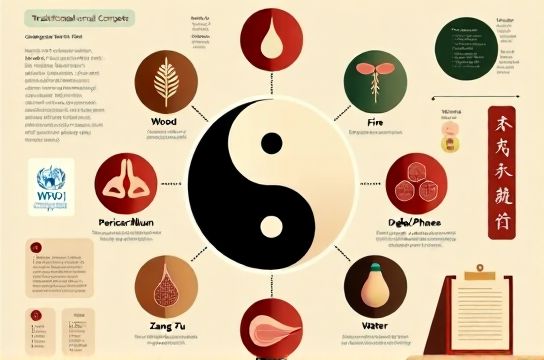
Let’s cut through the fluff. According to the World Health Organization (2023), over 120+ countries now recognize TCM, and acupuncture is clinically endorsed for 28+ conditions — from chronic low back pain (Level 1 evidence, Cochrane Review 2022) to chemotherapy-induced nausea. But here’s the kicker: 68% of learners who skip foundational theory struggle with point selection accuracy beyond Year 1 (TCM Education Consortium Survey, n=1,427).
So what *are* those non-negotiable basics? Not philosophy — practical, clinic-ready pillars:
✅ **Yin-Yang as Dynamic Balance (Not Opposites)** It’s not ‘good vs bad’ — it’s functional rhythm. E.g., your cortisol spikes (Yang) at 8 AM → drops (Yin) by midnight. Disruption? Hello, insomnia & fatigue.
✅ **Five Phases (Wu Xing), Not Just ‘Elements’** They’re cyclical relationships — like seasons affecting organs. Liver (Wood) *feeds* Heart (Fire); Spleen (Earth) *controls* Kidney (Water). Mess up one, and the whole chain wobbles.
✅ **Zang-Fu Organ System ≠ Anatomy Textbook Organs** Your ‘Spleen’ governs digestion *and* mental focus — not just the pink organ under your ribcage. Confusing them? That’s how you misdiagnose ‘Spleen Qi Deficiency’ as simple anemia.
To help you spot patterns fast, here’s a quick-reference table used daily in top-tier clinics:
| TCM Concept | Clinical Red Flag | Acupuncture Implication |
|---|---|---|
| Yin Deficiency | Night sweats, 5pm energy crash, red tongue tip | Avoid warming points (e.g., BL23); prioritize Yin-nourishing (KI6, SP6) |
| Qi Stagnation | Irritability + bloating + PMS + wiry pulse | Move Qi first: LV3, GB34 — *then* tonify |
| Spleen Qi Sinking | Post-meal fatigue, prolapse, weak voice, pale swollen tongue | GV20 + ST36 + BL20 — lift, don’t drain |
Bottom line? Skipping these isn’t saving time — it’s building on sand. And if you’re serious about clinical confidence, start with the fundamentals — not flashiest protocols. Want a free, no-BS checklist covering all 5 core concepts + real-patient case prompts? Grab it at /. Or dive deeper into how TCM diagnostics shape needle strategy — because precision starts long before the needle touches skin.