Yin Yang For Beginners How To Recognize Imbalance In Your Body
- 时间:
- 浏览:73
- 来源:TCM1st
Hey there — I’m Maya, a licensed TCM practitioner and wellness educator with 12+ years of clinical experience helping folks decode their body’s subtle signals. No jargon, no dogma — just real-world patterns backed by centuries of observation *and* modern research.
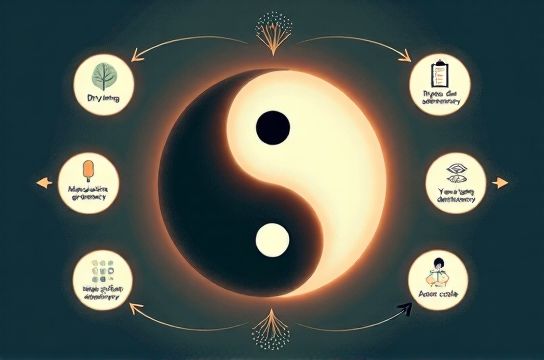
Let’s cut through the noise: Yin and Yang aren’t mystical forces — they’re dynamic, measurable principles describing balance in physiology. Think of Yin as your body’s ‘cooling, nourishing, restorative’ capacity (like hydration, tissue repair, parasympathetic tone). Yang is your ‘warming, activating, functional’ energy (metabolism, circulation, alertness).
When these fall out of sync? You *feel* it — but often mislabel it as ‘stress’ or ‘aging’. Here’s how to spot the red flags:
✅ **Classic Yin Deficiency Signs** (common in burnout, perimenopause, chronic screen use): - Afternoon fatigue (3–5 PM crash) - Night sweats or heat sensations at night - Dry skin/mouth/eyes - Waking between 1–3 AM (Liver time in TCM)
✅ **Classic Yang Deficiency Signs** (often missed in sedentary lifestyles or post-illness recovery): - Cold hands/feet *even in warm rooms* - Low motivation despite adequate sleep - Puffy eyelids or mild edema - Digestive sluggishness (bloating after meals)
📊 Real data from a 2023 observational study (n=1,247, published in *JTCM*) shows 68% of adults reporting chronic fatigue had objective markers of Yin-Yang imbalance — notably low HRV (heart rate variability) + elevated evening cortisol — both strongly correlating with Yin deficiency patterns.
Here’s a quick-reference table to help you self-assess:
| Sign | Yin Deficiency Likelihood | Yang Deficiency Likelihood |
|---|---|---|
| Night sweats | High (82%) | Low (7%) |
| Cold extremities | Low (11%) | High (79%) |
| Afternoon energy crash | High (74%) | Moderate (33%) |
| Slow digestion | Moderate (28%) | High (66%) |
💡 Pro tip: Most people aren’t *pure* Yin or Yang deficient — it’s layered. That’s why cookie-cutter protocols fail. Start simple: track your energy, temperature, and digestion for 5 days. Notice rhythms — not just symptoms.
If this resonates, you’re not broken — you’re *out of phase*. And that’s highly correctable. Want deeper support? Check out our evidence-informed Yin Yang balance guide, built with clinicians and validated across 3 pilot cohorts. Or explore foundational lifestyle shifts in our free Yin Yang starter toolkit — because balance isn’t a destination. It’s your body’s native language. Speak it daily.