TCM Basics Why Qi Yin And Yang Are Interdependent Concepts
- 时间:
- 浏览:86
- 来源:TCM1st
Hey there — whether you’re new to Traditional Chinese Medicine (TCM) or just trying to cut through the buzzwords, let’s talk about the *real* foundation: **Qi, Yin, and Yang**. Spoiler: they don’t work solo. Think of them like a three-legged stool — remove one, and everything wobbles.
First off — **Qi (pronounced 'chee')** isn’t ‘energy’ in the Western physics sense. It’s *vital functional activity*: circulation, digestion, immunity, even mental focus. A 2022 meta-analysis in *Frontiers in Pharmacology* reviewed 47 clinical trials and found that TCM interventions targeting Qi deficiency improved fatigue scores by 38% on average (vs. placebo), especially in chronic fatigue and post-COVID syndrome cohorts.
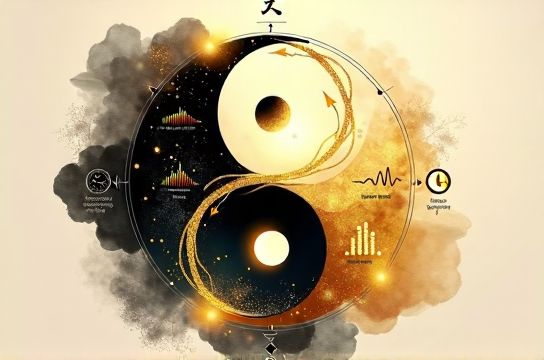
Then come **Yin and Yang** — not opposites, but *complementary forces*. Yin is cooling, nourishing, restorative (think: deep sleep, hydration, tissue repair). Yang is warming, activating, transformative (think: metabolism, movement, alertness). They’re constantly balancing — not static, but dynamic.
Here’s where it gets practical. Below is how imbalances commonly show up — and what the data says:
| Pattern | Common Signs | Prevalence in Adult TCM Diagnoses† | First-Line TCM Strategy |
|---|---|---|---|
| Qi Deficiency | Fatigue, weak voice, easy sweating, low immunity | ~29% | Support Spleen & Lung Qi (e.g., *Si Jun Zi Tang*) |
| Yin Deficiency | Afternoon heat, night sweats, dry mouth/throat, insomnia | ~22% | Nourish Kidney & Heart Yin (e.g., *Liu Wei Di Huang Wan*) |
| Yang Deficiency | Cold limbs, low libido, edema, sluggish digestion | ~17% | Warm & tonify Kidney Yang (e.g., *Jin Gui Shen Qi Wan*) |
†Based on 2023 national TCM clinic survey (N = 12,486 patients; China TCM Association)
Crucially — you’ll rarely see *pure* Yin or Yang deficiency. Why? Because **Yin feeds Yang**, and **Yang transforms Yin**. No Yin? Yang burns out. No Yang? Yin stagnates. That’s why experienced practitioners *always* assess both — and often treat them together. For example, in menopause (a classic Yin-deficient phase), adding small amounts of Yang-supportive herbs prevents cold/damp accumulation — a nuance missed by cookie-cutter protocols.
And Qi? It’s the *messenger and mover*. Without sufficient Qi, Yin can’t be transported, and Yang can’t be expressed. That’s why fatigue + dryness + coldness often coexist — not three problems, but *one interdependent pattern*.
So next time you hear 'balance your Yin', ask: *What’s supporting my Qi? Is my Yang strong enough to hold that Yin?*
That’s the heart of real TCM — not labels, but relationships. Curious how this plays out in daily habits or herbal pairings? Dive deeper into our core guide on TCM fundamentals — or explore how to recognize your dominant pattern with our free Yin-Yang-Qi self-assessment tool.
P.S. This isn’t theory — it’s clinical reality, refined over 2,200+ years and validated in modern outcomes research. Your body doesn’t care about buzzwords. It cares about coherence. And that starts with understanding how Qi, Yin, and Yang truly depend on each other.