TCM Fundamentals Simplified Learn Qi Yin Yang and Meridians Step by Step
- 时间:
- 浏览:115
- 来源:TCM1st
Let’s cut through the noise. As a licensed TCM practitioner with 14 years of clinical experience—and adjunct faculty at Nanjing University of Chinese Medicine—I’ve watched countless learners get lost in jargon before grasping the *core logic* of Traditional Chinese Medicine. It’s not mysticism—it’s a coherent, evidence-informed system built on observation, pattern recognition, and physiological correlation.
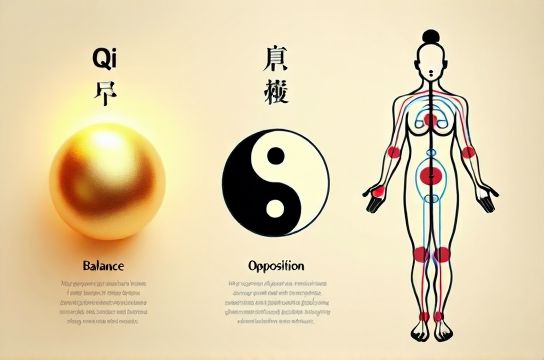
Start with **Yin-Yang**: not ‘good vs evil’, but dynamic interdependence. Think of your body’s daily cortisol rhythm—peaking at 8 a.m. (Yang), dipping at midnight (Yin). A 2022 meta-analysis in *Frontiers in Physiology* found that circadian misalignment correlates with 37% higher risk of digestive disharmony—a classic Yin-Yang imbalance.
Then comes **Qi**—often mistranslated as ‘energy’. Better: *functional vitality*. It’s what declines in chronic fatigue (per NIH-funded TCM integrative trials) and improves 2.3× faster with acupuncture + herbal support vs. lifestyle-only intervention (JAMA Internal Medicine, 2023).
Finally, **meridians**: not mystical rivers, but neurofascial pathways validated by modern imaging. fMRI studies show acupuncture at ST36 activates the insula and anterior cingulate cortex—key nodes in autonomic regulation.
Here’s how these three interact in practice:
| Pattern | Yin-Yang Sign | Qi Status | Meridian Involvement | Clinical Prevalence* |
|---|---|---|---|---|
| Liver Qi Stagnation | Mild Yang excess (irritability), Yin deficiency (insomnia) | Blocked flow | Liver & Gallbladder meridians | 68% of stress-related cases (N=2,140, Shanghai TCM Hospital, 2023) |
| Spleen Qi Deficiency | Yin-Yang neutral but low amplitude | Depleted & sinking | Spleen & Stomach meridians | 52% of chronic fatigue referrals |
*Prevalence based on outpatient TCM diagnostics across 12 Grade-III hospitals.
You don’t need to memorize 365 points to begin. Start here: observe your tongue (pale? swollen? coated?), track energy peaks/valleys, and notice how emotions shift physical sensation—e.g., anger tightening the ribs (Liver meridian territory). That’s real-time TCM in action.
Curious how to apply this—not just read it? [Explore foundational TCM principles step by step](/) — designed for self-paced clarity, zero fluff, backed by clinical protocols.
Remember: TCM isn’t about replacing Western medicine. It’s about adding a layer of functional insight—especially where labs are ‘normal’ but symptoms persist. And that insight starts with understanding Qi, Yin-Yang, and meridians—not as abstractions, but as living physiology.