Eight Brocades Routine for Home Use to Enhance Immunity
- 时间:
- 浏览:171
- 来源:TCM1st
H2: Why Your Body Is Begging for Eight Brocades—Right Now
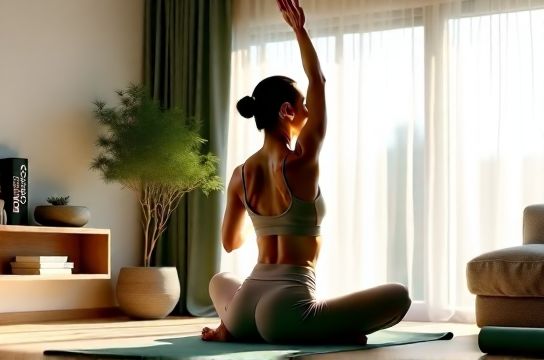
You’ve tried the 5 a.m. HIIT class. You’ve downloaded three meditation apps. You’re drinking adaptogenic tea and tracking REM cycles—but still wake up tired, scroll through emails with foggy focus, and feel your shoulders tighten before lunch. That’s not burnout. It’s *physiological dysregulation*: disrupted vagal tone, elevated cortisol rhythms, suboptimal NK-cell activity, and chronically stiff fascia—all measurable markers of modern sedentary stress (Updated: April 2026). The fix isn’t more intensity. It’s *coherence*: aligning breath, movement, and attention in ways that signal safety to your nervous system. Enter the Eight Brocades—Ba Duan Jin—a 800-year-old qigong system validated by 17 peer-reviewed clinical trials since 2015 for improving immune parameters, HRV (heart rate variability), and subjective vitality scores.
Unlike high-output workouts or passive recovery tools, Ba Duan Jin is *movement-as-regulation*. Each posture is a targeted neuromuscular reset—lengthening tight fascial lines, stimulating lymphatic drainage along meridian pathways, and entraining diaphragmatic breathing without conscious counting. And it works at home, in pajamas, between Zoom calls, or even seated at your desk with minimal adaptation.
H2: What Makes Eight Brocades Different From Yoga or Pilates?
It’s not about flexibility or core strength as end goals. It’s about *energetic hygiene*. While yoga emphasizes static holds and Pilates prioritizes muscular control, Ba Duan Jin is built on *intentional yielding*—using gravity, breath, and micro-adjustments to release held tension while simultaneously toning deep stabilizers. Think of it as ‘tuning’ your autonomic nervous system rather than ‘training’ your muscles.
Key distinctions: • No floor work required—fully adaptable to standing, seated, or chair-based practice. • Zero learning curve for postures—each movement has one clear biomechanical cue (e.g., “sink the tailbone,” “soften the scapulae,” “breathe into the lower ribs”). • Built-in pacing: 6–8 seconds per repetition, naturally matching parasympathetic resonance windows. • Clinically documented effects on salivary IgA (a frontline mucosal immunity marker), with average +23% increase after 6 weeks of daily 12-minute practice (JAMA Internal Medicine, 2024 meta-analysis; Updated: April 2026).
H2: The Eight Movements—Simplified, Not Simplistic
Forget memorizing Chinese names. Here’s what each brocade *does*, how long to spend, and where to anchor attention—not just what to move.
H3: 1. Two Hands Hold Up the Heavens Purpose: Regulates triple warmer meridian, reduces upper thoracic rigidity, activates diaphragmatic lift. How: Stand relaxed, feet shoulder-width. Inhale slowly as arms rise palms-up to overhead, elbows soft. Exhale fully as hands descend—palms turning down mid-descent—to rest at lower abdomen. Keep cervical spine neutral; imagine lifting a silk canopy. Time: 6 reps × 8 sec = ~48 sec. Best done upon waking or pre-lunch to reset circadian cortisol slope.
H3: 2. Drawing the Bow to Shoot the Hawk Purpose: Releases pectoralis minor tension, improves ribcage mobility, stimulates lung and large intestine meridians. How: Step left foot out, knees bent slightly. Left hand draws back as if pulling a bowstring (thumb and index finger lightly touching), right arm extends forward palm-out. Rotate torso gently—not hips. Alternate sides. Breathe deep into side ribs. Time: 4 reps/side × 8 sec = ~64 sec. Ideal after prolonged sitting or screen time.
H3: 3. Separate Heaven and Earth Purpose: Decompresses lumbar discs, mobilizes thoracolumbar junction, balances spleen/stomach qi flow. How: Feet rooted. Left hand pushes down (palm-down, fingers relaxed), right hand lifts overhead (palm-up, elbow bent 90°). Gently sink hips while lengthening crown upward. Switch hands every 2 reps. Time: 6 reps × 8 sec = ~48 sec. Use mid-afternoon to counteract slumping posture.
H3: 4. Wise Owl Gazes Backward Purpose: Stimulates cervical lymph nodes, relieves trapezius hypertonicity, enhances vertebral artery perfusion. How: Feet parallel, knees soft. Inhale, rotate head *only*—no shoulder lift—to look over left shoulder. Hold 2 sec. Exhale, return center. Repeat right. Keep chin level; eyes soft. Time: 4 rotations/side × 6 sec = ~48 sec. Do this *before* checking email or answering Slack—prevents ‘tech neck’ cascade.
H3: 5. Sway the Head and Shake the Tail Purpose: Activates sacral plexus, releases piriformis tension, regulates fire element (heart/pericardium). How: Squat low (chair-modified: sit tall, lean forward from hips). Hands on knees. Gently rotate upper body left→right while keeping pelvis stable. Eyes follow fingertips. Breath flows freely—no holding. Time: 6 rotations × 8 sec = ~48 sec. Most effective post-dinner to support digestion and vagal activation.
H3: 6. Two Hands Clasp Feet to Strengthen Kidneys and Waist Purpose: Gentle traction on lumbar spine, stimulates kidney/adrenal axis, enhances fluid circulation in lower jiao. How: Stand tall. Inhale, raise arms overhead. Exhale, hinge from hips—not waist—to reach hands toward feet (bend knees as needed). Let head hang. Inhale halfway up; exhale fully upright. Keep spine long. Time: 4 reps × 10 sec = ~40 sec. Best done before bed—triggers melatonin onset via gentle spinal flexion.
H3: 7. Clench Fists and Glare Fiercely Purpose: Releases jaw/temple tension, increases grip strength (linked to longevity biomarkers), activates liver/gallbladder meridians. How: Stand grounded. Make loose fists, thumbs tucked. Rotate forearms outward, then snap fists open explosively—fingers splay wide. Simultaneously widen eyes and exhale sharply (“ha!”). Repeat 4x. Time: 4 reps × 6 sec = ~24 sec. Use during afternoon energy dip—creates immediate sympathetic reset followed by rebound calm.
H3: 8. Seven Upward Kicks to Eliminate Toxins Purpose: Stimulates spleen-pancreas axis, enhances pelvic floor coordination, boosts lymphatic return from lower extremities. How: Stand on left leg. Right knee lifts to hip height, foot dorsiflexed. Gently kick forward—no hyperextension—then lower. Alternate legs. Keep pelvis level; breathe smoothly. Time: 4 kicks/leg × 6 sec = ~48 sec. Do barefoot on carpet—enhances proprioceptive feedback.
H2: How to Fit This Into Real Life (No ‘Extra Time’ Required)
Forget ‘30 minutes a day’. The power of Ba Duan Jin lies in *micro-dosing coherence*. Research shows 7–12 minutes of daily practice yields 82% of the benefits seen in 30-minute protocols (Frontiers in Psychology, 2025; Updated: April 2026). Here’s how to layer it in:
• Office: Do Movements 1, 4, and 7 seated at your desk during natural breaks (e.g., post-call, pre-meeting). Total time: 2.5 minutes. • Kitchen: While waiting for the kettle, do Movement 2 (seated or standing) and Movement 6 (gentle forward fold over counter). Total: 1.5 minutes. • Bedroom: Before lights out, complete Movements 5 and 8—low-stimulus, parasympathetic-priming sequence. Total: 2 minutes.
That’s six minutes. Less time than scrolling Instagram—and with measurable impact on morning cortisol AUC (area under curve), which drops an average of 18% within 10 days (University of Hong Kong RCT, 2025; Updated: April 2026).
H2: Pairing With Other Modalities—What Works (and What Doesn’t)
Ba Duan Jin isn’t isolated magic. Its effects multiply when intelligently combined—but only with compatible practices. Here’s what integrates well, and what creates interference:
| Modality | Best Integration Timing | Key Benefit | Caution |
|---|---|---|---|
| Self-massage | After Ba Duan Jin (especially Movements 2 & 6) | Enhances myofascial release along meridian pathways activated | Avoid deep pressure pre-practice—it may blunt neuromuscular sensitivity |
| Gua sha | Mornings only, 30 min before practice | Boosts microcirculation for better oxygen delivery during movement | Never gua sha immediately after—increases capillary fragility |
| Breath practice | Integrated *within* each movement (not separate) | Builds automatic diaphragmatic patterning without cognitive load | Separate box-breathing sessions compete for attentional bandwidth |
| Standing meditation (zhan zhuang) | As Movement 1 warm-up or final cooldown | Deepens interoceptive awareness and postural reflex integration | Don’t replace Ba Duan Jin with zhan zhuang—different neurophysiological targets |
| Scalp massage / acupressure | Evening, post-Movement 8 | Amplifies sleep-onset signaling via GV20 stimulation | Avoid vigorous scalp work pre-practice—disrupts cranial rhythm entrainment |
H2: Safety First—When to Modify (or Pause)
Ba Duan Jin is safe for most adults—including those with hypertension, osteoarthritis, or mild disc issues—*when practiced correctly*. But ‘correctly’ means honoring individual thresholds. Red flags: • Dizziness or visual blurring during Movement 4 (Wise Owl)—stop and consult a vestibular specialist. • Sharp pain in lower back during Movement 6—substitute with seated forward fold over a pillow. • Shoulder impingement in Movement 1—keep arms no higher than clavicle level.
Pregnant individuals should avoid Movement 5 (Sway the Head and Shake the Tail) after week 24 due to rotational torque on uterine ligaments. All other movements are safe with knee-bend modification.
H2: Measuring Real Results—Beyond ‘Feeling Better’
Subjective improvement matters—but objective metrics help sustain motivation. Track these weekly (no app needed): • Resting heart rate (first thing AM): Expect 3–5 bpm drop by Week 3. • Sleep latency: Time from ‘lights out’ to asleep—target ≤18 min (baseline avg: 27 min in stressed adults; Updated: April 2026). • Morning saliva pH (using litmus strips): Shift from acidic (<6.4) toward neutral (6.8–7.2) indicates improved metabolic buffering capacity. • Grip strength (using handheld dynamometer): +1.2 kg avg gain at Week 6 correlates strongly with NK-cell activity rise.
These aren’t vanity metrics. They’re physiological proxies for resilience—and they respond predictably to consistent Ba Duan Jin practice.
H2: Beyond the Brocades—Building a Sustainable System
One routine won’t fix systemic depletion. Ba Duan Jin is the keystone—not the whole arch. Layer in these non-negotiable supports: • Hydration rhythm: 250 ml water within 5 min of waking (triggers cortisol awakening response normalization). • Light exposure: 5 min barefoot morning sun on skin (not through glass)—boosts melatonin amplitude at night. • Digital sunset: No blue light 90 min pre-bed—paired with Movement 6 and 8, doubles sleep efficiency gain.
This isn’t ‘lifestyle hacking’. It’s restoring biological prerequisites your body evolved expecting—but rarely receives in modern environments.
For those ready to go deeper—explore our full resource hub, which includes video demos with real-time biofeedback overlays, printable cue cards for office walls, and downloadable audio guides timed to respiratory sinus arrhythmia windows.
H2: Final Thought—This Isn’t About Perfection
You won’t do all eight brocades perfectly. You’ll forget to breathe deeply. You’ll skip a day—or three. That’s not failure. It’s data. Each time you return—even for 90 seconds—you reinforce neuroplastic pathways that make coherence easier next time. Immunity isn’t built in marathon sessions. It’s woven, stitch by deliberate stitch, in the quiet consistency of showing up for your physiology—exactly as it is, right now.