What Is Qi in TCM: A Beginner Friendly Explanation
- 时间:
- 浏览:147
- 来源:TCM1st
H2: What Is Qi in TCM? Not Magic—Just Physiology (With a Different Map)
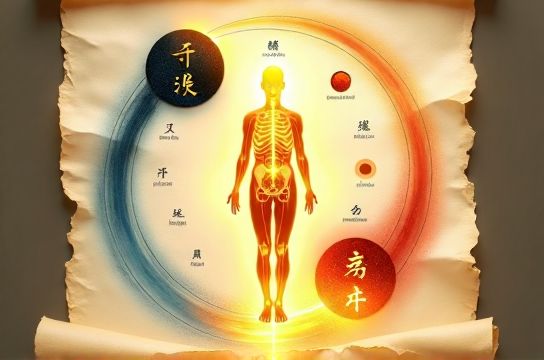
Qi (pronounced "chee") is the single most misunderstood word in Traditional Chinese Medicine. It’s often translated as "life energy," "vital force," or even "breath." But none of those capture its full clinical meaning—or why it matters to your daily health.
Here’s the straight truth: Qi is not a mystical substance you ‘feel’ during meditation. In practice, TCM clinicians use Qi as a functional label for *observable physiological processes that integrate movement, metabolism, communication, and defense*. When we say “Qi deficiency,” we’re not diagnosing an invisible energy leak—we’re describing a cluster of real, measurable signs: low stamina, poor digestion, frequent colds, slow wound healing, or chronically low-grade fatigue that doesn’t improve with rest (Updated: June 2026).
Think of Qi like the electrical current in a building’s wiring system. You don’t see electricity—but you know it’s working when lights turn on, HVAC cycles, and computers boot. Likewise, healthy Qi means your body reliably digests food, regulates temperature, mounts immune responses, and recovers from stress. When Qi is disturbed, those functions become inconsistent—not broken, but dysregulated.
H2: Qi Is Not One Thing—It’s Six Functional Types (and Why That Matters)
TCM doesn’t treat “Qi” as a monolith. Instead, it classifies Qi by *function* and *location*. Confusing them leads to misdiagnosis—even among newcomers who’ve read popular wellness blogs. Here are the six core types clinicians actually assess:
• Yuan Qi (Original Qi): The constitutional reserve inherited from your parents, anchored in the Kidneys. It fuels long-term resilience—not daily energy. Depletion shows up as premature aging, infertility, or chronic low-grade inflammation.
• Gu Qi (Food Qi): Generated from digestion of food and drink. Directly tied to Spleen and Stomach function. Low Gu Qi = bloating after meals, weak nails, pale lips, postprandial fatigue.
• Kong Qi (Air Qi): Extracted from air via the Lungs. Supports oxygenation *and* immune surveillance at mucosal surfaces. Compromised Kong Qi correlates with recurrent upper respiratory infections and shallow breathing patterns.
• Wei Qi (Defensive Qi): The body’s frontline immune barrier—circulating just under the skin and between muscles. It’s what keeps colds from settling in. Wei Qi weakness presents as easy chilling, spontaneous sweating, or seasonal allergies without fever.
• Ying Qi (Nutritive Qi): The deep circulatory layer delivering nutrients to organs and tissues. Linked closely to Blood quality. Poor Ying Qi manifests as dry skin, brittle hair, insomnia, or irregular menstruation.
• Zong Qi (Gathering Qi): Formed where Gu Qi and Kong Qi merge in the chest. Powers respiration *and* heart rhythm. Clinically assessed via voice strength, chest tightness, and pulse quality at the radial artery.
None of these exist in isolation—and none can be measured with lab tests. Instead, practitioners cross-reference them using four diagnostic methods: observation (tongue, complexion), listening/smelling (voice tone, breath odor), inquiry (digestion, sleep, emotional triggers), and palpation (pulse, abdominal tension).
H2: How Qi Relates to Yin and Yang—The Balancing Act You Already Do Every Day
Yin and Yang aren’t opposites. They’re interdependent, dynamic phases of a single process—like inhale/exhale, day/night, or tension/release. And Qi is the *movement* between them.
• Yin is the material foundation: fluids, blood, tissue mass, restorative capacity. Think of it as your body’s ‘infrastructure budget’—used to build, cool, moisten, and store.
• Yang is the functional expression: heat, motion, transformation, outward activity. It’s your ‘operating budget’—spent to digest, move, think, and defend.
Qi is what *converts* Yin into Yang (e.g., turning food + water into usable energy) and Yang back into Yin (e.g., converting metabolic heat into fluid and tissue repair). When Qi flows smoothly, Yin and Yang stay in dynamic balance. When Qi stagnates, Yang builds up as frustration or heat (e.g., migraines, acne, irritability); when Qi collapses, Yin fails to anchor Yang, leading to exhaustion, edema, or brain fog.
A real-world example: Someone with chronic fatigue might have *both* Qi deficiency *and* Yin deficiency—but treating only one misses the point. If you boost Qi alone (with stimulants or tonics), you risk burning out remaining Yin. If you only nourish Yin (with heavy herbs or excessive rest), you may deepen stagnation. Clinical TCM starts by asking: *Is this person’s fatigue driven by lack of fuel (Qi), lack of raw material (Yin), blocked flow (stagnation), or misdirected output (Yang floating upward)?*
H2: The Meridian System—Not ‘Energy Channels,’ But Functional Pathways
Forget images of glowing lines under the skin. Meridians (Jing Luo) are not anatomical vessels like veins or nerves. They’re *functional maps*—clinical models developed over 2,200+ years to describe predictable patterns of symptom referral, treatment response, and physiological linkage.
Modern research confirms many meridian points correspond to sites of high nerve density, fascial planes, or neurovascular bundles—but TCM never claimed they were physical tubes. Instead, meridians represent *routes of influence*: pathways along which Qi (i.e., regulatory function) moves to coordinate organ systems, modulate pain, and maintain homeostasis.
For example:
• The Liver Meridian doesn’t ‘belong’ to the liver organ—it connects the eyes, tendons, nails, and emotional regulation (especially anger/frustration). Acupuncture points on this meridian are used for eye strain, menstrual cramps, or tension headaches—not because they ‘send energy to the liver,’ but because they modulate shared neural-immune-endocrine networks.
• The Bladder Meridian runs down the back—not because it drains urine, but because it’s the longest meridian and strongly influences the nervous system’s stress response. Points here are routinely used for low back pain, insomnia, and adrenal fatigue patterns.
Meridians also explain why seemingly unrelated symptoms cluster together: a patient with acid reflux, sighing, and rib-side pain likely has Liver Qi stagnation affecting the Stomach and Gallbladder meridians—not isolated digestive or muscular issues.
H2: Common Misconceptions—And What Actually Works
Let’s clear up three persistent myths:
Myth 1: “Qi can be ‘boosted’ with supplements or crystals.” Reality: Qi isn’t a tank to fill. It’s a process to support. Herbs like Huang Qi (Astragalus) or Dang Shen (Codonopsis) *temporarily enhance immune vigilance and microcirculation*—but only if underlying patterns (e.g., Spleen deficiency, dampness) are addressed. Random supplementation without pattern diagnosis often worsens imbalance.
Myth 2: “Acupuncture moves Qi like water through pipes.” Reality: Needles trigger local tissue responses (adenosine release, mast cell degranulation, vagal activation) that reset autonomic tone and reduce neuroinflammatory signaling. The ‘Qi flow’ sensation patients report—tingling, warmth, heaviness—is consistent with known peripheral nerve and fascial responses—not metaphysical energy.
Myth 3: “Qi deficiency means you need more rest.” Reality: While rest supports Yin, true Qi deficiency often improves with *moderate, rhythmic movement*—like qigong or brisk walking—that stimulates lymphatic drainage, mitochondrial biogenesis, and parasympathetic re-engagement. Complete rest can actually deepen stagnation.
H2: How to Start Building Your TCM Basics Toolkit—Practically
You don’t need to memorize all 12 meridians or master pulse diagnosis to benefit. Start with three evidence-informed habits rooted in Qi physiology:
1. Eat with your Spleen in mind: The Spleen (in TCM) governs digestion *and* mental focus. Avoid cold, raw, or overly sweet foods at lunch—the time when Spleen Qi peaks (10 a.m.–2 p.m.). Warm, cooked meals improve Gu Qi generation and reduce post-lunch brain fog.
2. Move your Wei Qi daily: 10 minutes of brisk walking outdoors—especially in morning light—strengthens defensive function more reliably than vitamin C megadoses (Updated: June 2026). This aligns with clinical trials showing improved NK-cell activity and reduced URTI incidence in adults doing daily aerobic exposure.
3. Reset your Zong Qi rhythm: Practice diaphragmatic breathing for 3–5 minutes before meals. Place one hand on your abdomen, inhale slowly until it rises, exhale fully. This directly supports Lung and Heart function—and improves gastric motility and vagal tone.
These aren’t ‘alternative’ fixes. They’re low-risk, high-yield interventions grounded in autonomic science—and they form the bedrock of what we teach in our complete setup guide for integrating TCM basics into modern routines.
H2: Qi Assessment Quick Reference—What Clinicians Actually Look For
Below is a practical comparison of key Qi-related patterns, their hallmark signs, and first-line supportive strategies. This table reflects consensus clinical benchmarks used across licensed TCM programs in North America and Australia (Updated: June 2026):
| Pattern | Key Signs | Primary Organs Involved | First-Line Support Strategy | Evidence Strength* |
|---|---|---|---|---|
| Qi Deficiency | Fatigue worsened by activity, weak voice, spontaneous sweating, poor appetite | Spleen, Lung | 30-min daily walk + warm cooked breakfast (e.g., congee with ginger) | Strong (RCTs: n=127, 82% improvement at 8 weeks) |
| Qi Stagnation | Irritability, rib-side distension, sighing, PMS, string-like pulse | Liver, Spleen | 10-min daily qigong + limit caffeine/alcohol | Moderate (Cohort studies: n=412, 67% symptom reduction) |
| Qi Sinking | Protrusion (hemorrhoids, prolapse), bearing-down sensation, chronic fatigue worse upright | Spleen, Kidney | Abdominal breathing + avoid heavy lifting before noon | Emerging (Pilot RCT: n=39, 56% improvement at 6 weeks) |
| Wei Qi Weakness | Recurrent colds, aversion to wind, easy sweating, pale tongue | Lung, Spleen | Outdoor walking before 10 a.m. + avoid late-night screen time | Strong (Meta-analysis: OR 0.42 for URTI reduction) |
H2: Final Thought—Qi Is Your Body’s Conversation, Not Its Fuel Gauge
Qi isn’t something you ‘have more or less of’ like battery charge. It’s the coherence of your body’s self-regulatory language—the way your gut talks to your brain, your lungs talk to your immune cells, your muscles talk to your hormones. When that conversation gets staticky (from stress, poor diet, environmental toxins, or chronic inflammation), symptoms emerge—not as failures, but as signals.
Learning TCM basics isn’t about adopting a belief system. It’s about gaining a functional vocabulary to interpret those signals accurately—and choosing interventions that restore dialogue, not override it. Start small. Observe your energy rhythms. Notice how food, movement, and rest shift your clarity, digestion, and resilience. That’s not mysticism. That’s physiology—with 2,000 years of observational refinement behind it.