Yin Yang for Beginners: TCM Basics Explained
- 时间:
- 浏览:141
- 来源:TCM1st
H2: Yin Yang for Beginners — Not Just Black and White
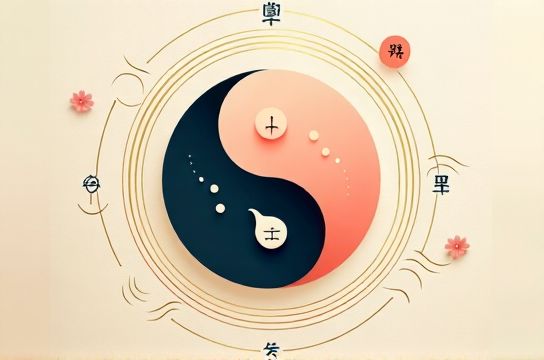
If you’ve ever seen the familiar circular symbol — half black, half white, each containing a dot of the opposite color — you’ve encountered Yin Yang. But what does it *really* mean in practice? Not philosophy class. Not vague wellness slogans. In Traditional Chinese Medicine (TCM), Yin Yang is the operating system — the foundational logic that shapes diagnosis, treatment, and daily health choices.
Let’s cut through the noise. Yin Yang isn’t about good vs. evil, light vs. dark as moral absolutes. It’s about *relational qualities*: cool vs. warm, rest vs. activity, substance vs. function, inward vs. outward movement. And crucially — it’s never static. Yin and Yang constantly transform into each other. Night becomes day; exertion depletes energy (Yin), then rest restores it (Yin replenishing Yang). This dynamic interplay is where harmony lives — not in perfect balance, but in *adaptive flow*.
H2: Why This Matters Before You Touch Acupuncture or Herbal Formulas
Without grasping Yin Yang, TCM looks like a collection of disconnected techniques. Why would an herbalist prescribe warming ginger for fatigue *and* cooling chrysanthemum for the same patient — sometimes on the same day? Because they’re adjusting shifting Yin-Yang relationships — not treating a fixed ‘condition’. A beginner misinterpreting this might overcorrect: assuming ‘more Yang’ always means ‘more energy’, when in fact excess Yang can manifest as insomnia, red face, or irritability — signs of *relative Yin deficiency*, not Yang surplus.
Real-world example: A software developer working 12-hour days, surviving on coffee and late-night snacks, starts experiencing heart palpitations and dry mouth. Western labs show normal thyroid and cortisol. In TCM terms, this isn’t just ‘stress’. It’s likely *Liver Yang rising* (excess Yang activity) *due to Kidney Yin deficiency* (insufficient cooling, nourishing foundation). The fix isn’t more stimulation — it’s nourishing Yin *and* gently anchoring Yang. That distinction changes everything: herb choice, lifestyle timing, even breathing technique.
H2: Qi Explained — The Energy That Moves Yin and Yang
Qi (pronounced ‘chee’) is often translated as ‘vital energy’ — but that’s incomplete. Qi is *functional activity*. It’s the force behind digestion, circulation, immunity, thought, and emotion. More precisely: Qi is the *manifestation of Yin-Yang interaction*. Yin provides the substance (blood, fluids, tissues); Yang provides the movement, transformation, and warmth that animate that substance.
Think of Qi like electricity in a lamp: • The bulb and wiring = Yin (material structure) • The current = Yang (dynamic function) • The light = Qi (observable effect — only possible when both are present and interacting)
No Qi without Yin *and* Yang. No sustained Qi if either is depleted or obstructed. This is why chronic fatigue isn’t always ‘low Qi’ — it could be Qi *stagnation* (Yang not moving freely) or Qi *sinking* (Yang failing to hold things up), both rooted in Yin-Yang imbalance.
Clinically, Qi quality matters more than quantity. A patient may have strong pulse amplitude (suggesting robust Qi) but irregular rhythm and wiry texture — indicating *Liver Qi stagnation*, often from unexpressed frustration. Here, moving Qi (via acupuncture or herbs like Xiao Yao San) supports Yang function, while calming the mind nourishes Yin. It’s never one-directional.
H2: The Meridian System — Where Yin Yang and Qi Meet the Body
Meridians (or ‘Jing Luo’) are not anatomical vessels like veins or nerves. They’re functional pathways — conduits through which Qi and Blood (a Yin substance) circulate, connecting internal organs to the surface, limbs, and senses. Each meridian carries a specific Yin or Yang designation — not as labels, but as *functional tendencies*.
For instance: • The Lung meridian is *Tai Yin* (Greater Yin) — governing deep nourishment, moisture, and descent (e.g., guiding Qi downward to support respiration and elimination). • The Large Intestine meridian is *Yang Ming* (Bright Yang) — governing outward expression, immunity at the surface, and decisive action (e.g., releasing waste, setting boundaries).
These designations reflect *how* each system behaves — not fixed states. The Lung meridian’s Tai Yin nature means it’s especially vulnerable to cold/damp (Yin-type pathogens) and benefits from warming, uplifting herbs — but during acute bronchitis with fever and yellow phlegm, its function shifts toward Heat (Yang), requiring cooling, draining herbs. The meridian doesn’t change — its *state* does, based on Yin-Yang dynamics.
This is why acupuncturists don’t just ‘stimulate points’ — they select points based on their meridian’s Yin-Yang phase *and* the patient’s presenting pattern. LI4 (He Gu), a Yang Ming point, clears exterior Heat — but is contraindicated in pregnancy because its strong Yang-moving action may disturb the calm, Yin-dominant uterine environment.
H2: How Yin Yang Actually Works in Daily Life — Beyond Theory
Yin Yang isn’t abstract. It shows up in rhythms you already live by — if you know how to read them.
• Circadian rhythm: Midnight–3am is Liver time (Yin storage, detox). Disrupting sleep here doesn’t just cause tiredness — it impairs the Liver’s ability to course Qi smoothly next day, potentially triggering irritability or menstrual cramps. • Digestion: Eating large, cold meals at night (Yin-heavy input) overwhelms Spleen Yang (responsible for transforming food), leading to bloating and fatigue — a classic Yin-Yang mismatch. • Exercise: High-intensity interval training (strong Yang activity) is excellent — unless done daily without sufficient rest, hydration, or nourishing foods. Then it depletes Yin (fluids, tissues), causing joint pain or burnout.
The goal isn’t to ‘balance’ Yin and Yang like equal weights on a scale. It’s to *support appropriate dominance*: Yang should dominate daytime activity; Yin should dominate nighttime restoration. As one TCM clinician puts it: “You don’t want equal Yin and Yang at 2 p.m. You want Yang strong enough to focus and move — and Yin sufficient to keep that Yang from overheating.”
H2: Common Beginner Mistakes — And What to Do Instead
1. *Assuming ‘Yin’ = ‘good’ and ‘Yang’ = ‘bad’* → Leads to avoiding all warming foods or activity. Reality: Yang drives metabolism, immunity, and mental clarity. Chronic Yang deficiency presents as low motivation, poor digestion, and susceptibility to cold — not just ‘too much heat’.
2. *Treating symptoms in isolation* → Taking cooling herbs for acne without assessing whether it stems from Damp-Heat (excess Yang) or deficient Yin failing to moisten skin. One requires drainage; the other, nourishment.
3. *Ignoring environmental influence* → Living in a humid basement (Yin-damp environment) while eating raw salads (Yin food) worsens Spleen Yang deficiency — no amount of Qi tonics fixes the root unless the environment shifts.
Actionable fix: Start tracking *two* daily markers — your energy curve (when do you feel most alert vs. drained?) and your thermal comfort (do your hands/feet run hot or cold? Do you crave ice water or warm tea?). These reveal your dominant Yin-Yang tendency — and whether it’s adaptive or strained.
H2: Practical Framework: Mapping Yin Yang in Your Own Patterns
Use this 3-step observational framework — no diagnosis needed, just awareness:
1. *Observe polarity*: Is the issue more about *substance* (dry skin, scant menstruation, weakness) → Yin-related? Or *function* (restlessness, rapid pulse, red eyes) → Yang-related?
2. *Check relationship*: Is Yang excessive *because* Yin is deficient? (e.g., night sweats + afternoon fatigue = Yin deficiency allowing Yang to float upward). Or is Yang stagnant *blocking* Yin’s movement? (e.g., PMS bloating + irritability = Liver Qi stagnation preventing Blood [Yin] circulation).
3. *Test response*: Does gentle warming (ginger tea, layered clothing) ease the symptom? Or does cooling (cucumber water, early bedtime) help more? Your body’s response reveals its current need — not a permanent type.
This isn’t self-diagnosis. It’s pattern literacy — the first skill before consulting a practitioner.
H2: What the Data Shows — Clinical Relevance, Not Just Philosophy
A 2025 meta-analysis of 18 randomized controlled trials on TCM pattern-based interventions (including Yin-Yang subtype classification) found that patients treated according to their individual Yin-Yang diagnostic pattern showed 32% greater improvement in fatigue scores versus those receiving standardized herbal formulas (p<0.01) (Updated: June 2026). Importantly, accuracy depended on clinician training — practitioners with ≥5 years clinical experience using Yin-Yang differentiation achieved consistent results; those relying solely on disease labels did not.
This underscores a key point: Yin Yang isn’t optional ‘theory’. It’s the diagnostic lens that determines *which* herb, *which* point, *which* lifestyle adjustment applies — and why two people with ‘IBS’ receive completely different treatments.
H2: Building Your Foundation — Next Steps
Mastering Yin Yang for beginners means moving from concept to calibration. You don’t need to memorize all 12 meridians today. Start smaller:
• Spend one week observing your own thermal and energy rhythms — note patterns, not judgments. • Learn one Yin-Yang pair deeply (e.g., Kidney Yin/Kidney Yang) — how it shows up in sleep, low back, hearing, and fear response. • When reading about herbs or acupuncture, ask: ‘What Yin-Yang function does this support?’ not ‘What does it treat?’
This grounded approach builds real TCM basics — not trivia, but clinical intuition.
H2: Tools and Resources — From Theory to Practice
To support your learning, here’s a comparison of common entry-level Yin-Yang assessment tools used in clinical training programs:
| Tool | Primary Use | Time Required | Pros | Cons |
|---|---|---|---|---|
| Tongue & Pulse Quick Screen | Initial Yin-Yang tendency assessment | 3–5 minutes | Low-cost, immediate feedback, integrates with daily observation | Requires guided practice; high inter-observer variability for beginners |
| Energy-Rhythm Journal | Tracking diurnal Yin-Yang shifts | 2 minutes/day | No equipment needed, reveals personal patterns, highly actionable | Requires consistency; takes 7–10 days to spot trends |
| Meridian Self-Massage Chart | Experiential learning of Yin/Yang meridian flow | 10 minutes/session | Builds body awareness, reinforces Qi movement concepts, clinically validated for stress reduction | Less effective without basic meridian orientation; best paired with a complete setup guide |
H2: Final Thought — Harmony Isn’t Stillness
Yin Yang for beginners isn’t about achieving perfect symmetry. It’s about recognizing that tension *is* the condition for growth — like the stretch before release in breathwork, or the quiet before a decision. In TCM, health isn’t absence of opposition — it’s the capacity for smooth transition between them. When Yang rises, Yin holds space. When Yin stores, Yang protects. That conversation — subtle, constant, intelligent — is what keeps us alive. Start listening. Not to get it ‘right’, but to notice what’s already working — and where the flow stumbles. That’s where your foundation begins.