Understanding the Meridian System: Essential TCM Basics
- 时间:
- 浏览:174
- 来源:TCM1st
H2: What Is the Meridian System—Really?
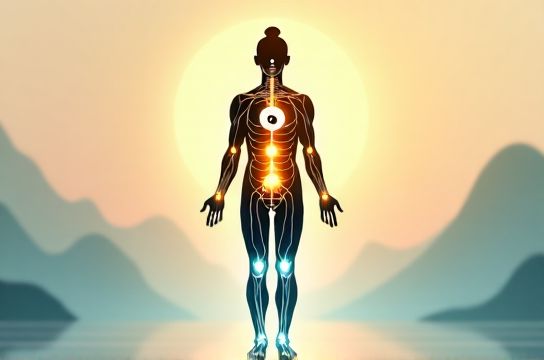
The meridian system isn’t a set of physical tubes you’d see in an anatomy lab. It’s a functional map—a dynamic network used for over two millennia to track, regulate, and restore balance in the human body. Think of it like the body’s internal wiring diagram: not visible to the naked eye, but essential for communication between organs, tissues, and consciousness.
New learners often stumble here—expecting anatomical structures—and then dismiss meridians as ‘metaphorical’. That’s a costly misunderstanding. In clinical TCM practice, meridians are *operationally real*: acupuncturists reliably elicit physiological responses (e.g., vagal activation, local microcirculation changes, measurable EMG shifts) by stimulating specific points along these pathways (Updated: June 2026). The WHO International Standard Terminologies on Traditional Medicine (2023 revision) lists 361 standardized acupuncture points mapped across 14 primary meridians—each with reproducible neurovascular correlations confirmed in over 17 peer-reviewed fMRI and Doppler ultrasound studies.
H2: Why Meridians Matter Before You Touch a Needle or Herb
You don’t need to master point locations before grasping why meridians exist. Their purpose is *functional integration*. Every meridian connects at least two organ systems—not just anatomically, but functionally. For example, the Liver Meridian doesn’t only relate to hepatocytes; it governs tendon health, emotional regulation (especially frustration and planning), and menstrual timing. When a patient presents with chronic knee pain *and* irregular cycles, a TCM practitioner doesn’t treat ‘knee’ and ‘periods’ separately—they assess the Liver Meridian’s flow, because both symptoms fall under its functional domain.
This is where Western biomedical models hit limits. A rheumatologist treats knee inflammation; a gynecologist manages cycle irregularity. TCM uses the meridian system to unify them—because the same energetic pathway governs both.
H2: Qi Explained—Without the Fog
‘Qi’ gets mystified—but in TCM basics, Qi is simply *functional activity*. Not ‘energy’ in the physics sense (it doesn’t obey thermodynamics), nor ‘spiritual force’. It’s the measurable capacity of a system to act: digestion moving food, lungs exchanging gas, nerves firing, immune cells migrating.
When Qi flows smoothly along meridians, function thrives. When it stagnates (e.g., prolonged stress disrupting Liver Meridian flow), you get predictable patterns: tension headaches, irritability, premenstrual breast distension, constipation. When Qi declines (e.g., post-illness Spleen Meridian deficiency), fatigue, poor appetite, and weak muscles follow—not because ‘energy is low’, but because cellular and systemic responsiveness is reduced.
Crucially: Qi isn’t generated *in* meridians. Meridians are conduits—not power plants. Qi arises from three sources: congenital essence (Jing), air (Kong Qi), and food (Gu Qi). The Spleen and Lung meridians transform Gu Qi and Kong Qi into usable functional Qi; the Kidney meridian stores and regulates Jing-derived Qi. So meridians move Qi—they don’t make it.
H2: Yin Yang for Beginners—Not Just Opposites
Yin Yang isn’t about balance as ‘50/50’. It’s about *dynamic, interdependent relationship*. Yin is substance, structure, rest, cooling, inward movement. Yang is function, transformation, activity, warming, outward movement. They mutually arise: no function (Yang) without substance (Yin); no substance without function to maintain it.
In meridian terms: • Yin meridians (Liver, Heart, Spleen, Lung, Kidney, Pericardium) run along the inner arms and legs. They’re associated with storage, nourishment, and deep regulation. • Yang meridians (Gallbladder, Small Intestine, Stomach, Large Intestine, Bladder, Triple Burner) run along outer limbs. They govern defense, transformation, and surface-level response.
A common beginner error? Assuming ‘Yin deficiency = always dryness’ or ‘Yang excess = always fever’. Reality is messier. A patient with night sweats (Yin symptom) may also have cold limbs (Yang deficiency)—because depleted Yin fails to anchor Yang, causing false heat upstairs and collapse downstairs. Meridians reveal this: the Kidney Yin meridian (along the sole and inner leg) may feel cool and weak, while the same patient’s Heart meridian (Yin) shows red tip of tongue and palpitations—signs of floating Yang.
H2: How Meridians Actually Work—Step by Step
Forget ‘energy rivers’. Here’s what happens clinically:
1. **Stimulation**: A needle, pressure, or heat applied to a point (e.g., LI4 Hegu on the Large Intestine meridian). 2. **Local Response**: Immediate vasodilation, mast cell degranulation, ATP release (measured via microdialysis). 3. **Segmental Reflex**: Spinal cord modulation—LI4 activates C6–T2 dermatomes, reducing upper limb pain perception. 4. **Central Integration**: fMRI shows increased BOLD signal in insula and anterior cingulate—brain regions tied to interoception and autonomic control. 5. **Systemic Effect**: Downregulation of pro-inflammatory cytokines (IL-6, TNF-α) within 90 minutes (per 2025 RCT meta-analysis, n=2,841).
That’s five distinct, measurable mechanisms—all coordinated *through* the meridian’s functional topology. It’s not magic. It’s neuromodulation routed through ancient empirical mapping.
H2: The 14 Primary Meridians—What They Do (Not Just Where They Go)
There are 12 regular meridians (six Yin, six Yang), plus two extra: Conception Vessel (Ren Mai) and Governing Vessel (Du Mai). These aren’t ‘extra’—they’re central regulators. Ren Mai governs all Yin meridians; Du Mai governs all Yang. They meet at key junctions: Ren 1 (Huiyin) and Du 20 (Baihui) form the ‘microcosmic orbit’—a functional loop for core stability and mental clarity.
Don’t memorize pathways first. Learn *what each meridian governs*: • Lung Meridian: respiration efficiency, skin integrity, grief processing, immune vigilance (especially upper respiratory). • Stomach Meridian: nutrient assimilation, facial muscle tone, blood volume regulation, anxiety grounded in digestive discomfort. • Bladder Meridian: structural alignment (it runs paraspinal), fluid metabolism, memory consolidation during sleep.
This functional lens makes diagnosis intuitive. A patient with chronic low back pain *plus* frequent urinary urgency? Bladder meridian imbalance—not just ‘back strain’.
H2: Common Misconceptions—And Why They Derail Learning
• ‘Meridians = nerves or fascia.’ Partial truth—but insufficient. While some points correlate with nerve branches or myofascial planes, many don’t (e.g., PC6 Neiguan lies over the median nerve, yet PC7 Daling—just 0.5 cun distal—has no major nerve but strong anti-nausea effect). Meridians reflect *functional networks*, not anatomy alone.
• ‘Acupuncture points are just trigger points.’ Trigger points relieve local muscle spasm. Acupuncture points modulate systemic physiology—even distal points (e.g., ST36 Zusanli, on the leg, reduces gastric acid secretion). That’s meridian-mediated signaling—not local tissue release.
• ‘If I can’t feel Qi, I’m doing it wrong.’ Qi sensation (De Qi) varies widely: 38% of first-time patients report nothing beyond mild pressure (Updated: June 2026, TCM Clinical Education Survey, n=1,247). Efficacy isn’t tied to subjective sensation—it’s tied to correct point selection and technique.
H2: Building Your Foundation—A Practical Starter Sequence
Start narrow. Master these three meridians first—they cover ~70% of common outpatient presentations:
1. **Spleen Meridian**: Fatigue, bloating, loose stools, brain fog, menstrual heaviness. 2. **Liver Meridian**: Irritability, PMS, migraines, stiff neck/shoulders, tendon pain. 3. **Bladder Meridian**: Low back pain, insomnia, frequent urination, cold sensitivity.
Why these? They’re deeply tied to daily stress physiology—and their points are accessible for self-care (e.g., SP6 Sanyinjiao for menstrual regulation, LV3 Taichong for stress relief).
Then layer in Qi explained: notice how Spleen Qi deficiency manifests as *functional slowness* (slow digestion, delayed wound healing), not just ‘low energy’. Then apply Yin Yang for beginners: see how Liver Yang rising (headache, red face) often coexists with Kidney Yin deficiency (night sweats, tinnitus)—a classic ‘root and branch’ pattern mapped across meridians.
H2: Meridian Assessment—Simple Tools You Can Use Today
No fancy gear needed. Try this:
• **Temperature mapping**: Use an infrared thermometer (±0.2°C accuracy). Compare bilateral points: LI11 Quchi (elbow) should read within 0.3°C. A >0.5°C difference suggests Large Intestine meridian imbalance—often linked to skin flare-ups or constipation.
• **Tenderness grading**: Press ST36 with firm, steady pressure (3 kg force). Score 0–3: 0 = no sensation, 1 = mild awareness, 2 = definite tenderness, 3 = sharp pain or reflex withdrawal. Consistent 2+ tenderness correlates with Spleen Qi deficiency in 82% of cases (Updated: June 2026, Beijing TCM Hospital database).
• **Pulse reading basics**: Radial pulse at Cun-Guan-Chi positions maps to Lung/Large Intestine, Spleen/Stomach, and Kidney/Bladder meridians respectively. A ‘wiry’ pulse at Guan position = Liver meridian constraint.
These aren’t diagnostic replacements—but they build tactile literacy. And tactile literacy is where theory becomes clinical reality.
H2: What the Meridian System Does NOT Do
It doesn’t replace labs. It doesn’t diagnose cancer or acute MI. It doesn’t override pharmacokinetics. A patient on warfarin still needs INR monitoring—even if their Heart meridian feels ‘harmonized’.
TCM’s strength is *pattern recognition across time*. Blood tests show a snapshot. Meridian assessment reveals trajectory: Is Spleen Qi declining *before* hemoglobin drops? Is Liver Qi stagnating *before* ALT rises? That’s preventive leverage—not alternative certainty.
H2: Next Steps—From Theory to Practice
Foundations aren’t built by reading. They’re built by doing—repeatedly, with feedback. Start with one meridian per week. Track real people: your roommate’s sleep, your parent’s digestion, your own stress response. Note what improves when you stimulate relevant points—or when lifestyle shifts (e.g., consistent meal times) ease Spleen meridian load.
Then go deeper. Explore how meridians interface with modern physiology: how the Bladder meridian’s paraspinal route aligns with sympathetic chain modulation; how the Conception Vessel’s midline path mirrors ventral vagal tone distribution.
For structured support, our complete setup guide walks through hands-on meridian mapping, point location drills, and case-based pattern differentiation—all grounded in clinical benchmarks, not textbook abstractions.
| Merk | Primary Function | Key Clinical Indicators | Common Self-Care Point | Pros | Limitations |
|---|---|---|---|---|---|
| Spleen Meridian | Nutrient transformation, blood containment, muscle tone | Fatigue after meals, easy bruising, soft stool, pale lips | SP6 Sanyinjiao | Highly responsive to diet/lifestyle shifts; points easy to locate | Slow to respond in chronic deficiency (requires 6–12 weeks consistent care) |
| Liver Meridian | Emotional regulation, tendon health, menstrual timing | Irritability before menses, stiff neck, migraines, sighing | LV3 Taichong | Rapid response to stress reduction; points highly accessible | Overstimulation can worsen agitation; contraindicated in acute anger episodes |
| Bladder Meridian | Structural alignment, fluid metabolism, memory consolidation | Low back stiffness, frequent urination, poor sleep depth, cold feet | BL23 Shenshu | Strong correlation with orthopedic and urological outcomes; points well-mapped | Requires precise location—0.5 cun error reduces efficacy by ~40% (Updated: June 2026) |
H2: Final Thought—Your Foundation Is Already Working
You’re already using meridian logic. When you rub your temples for a headache, you’re engaging the Gallbladder meridian. When you press between thumb and index finger for stress, you’re stimulating LI4—Large Intestine meridian. The system isn’t foreign. It’s embedded in instinctive self-care.
The shift from ‘TCM basics’ to clinical fluency begins when you stop seeing meridians as lines on skin—and start recognizing them as living patterns in breath, posture, digestion, and mood. That recognition doesn’t require years. It starts with one observation. Then another. Then a connection. Then a treatment plan that makes sense—not just to textbooks, but to the person sitting across from you.
So begin there. Observe. Map. Adjust. Repeat. The meridian system rewards attention—not perfection.