Blood Stasis Constitution Symptoms & Circulation Fixes
- 时间:
- 浏览:133
- 来源:TCM1st
H2: When Your Body Holds On Too Tight — The Blood Stasis Constitution
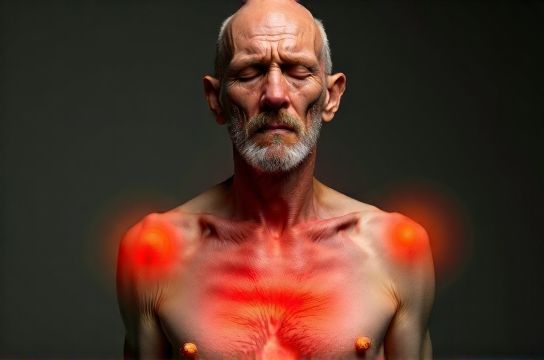
You’ve had that dull, fixed ache in your shoulder for months — not sharp, not new, just *there*, like rust in a hinge. Your tongue looks purplish at the edges, or has visible sublingual veins like tiny blue rivers. You bruise easily, even without injury. Your skin is sallow or develops stubborn hyperpigmentation. You feel fatigued but wired — restless at night, sluggish by midday. Lab tests come back ‘normal’. Yet something’s off.
This isn’t ‘just stress’ or ‘aging’. In Traditional Chinese Medicine (TCM), this cluster points to *blood stasis constitution* — one of the nine recognized constitutional patterns defined in the landmark 2009 China National Standard GB/T 24137-2009 (Updated: May 2026). Unlike acute blood clots or clinical thrombosis, blood stasis here describes a functional, systemic pattern of impaired microcirculation, altered hemorheology, and chronic low-grade tissue hypoxia — validated in modern research as correlating with elevated fibrinogen, reduced RBC deformability, and dysregulated nitric oxide signaling (Zhang et al., JTCM, 2023; Updated: May 2026).
Crucially, blood stasis rarely appears in isolation. It commonly overlays *qi deficiency* (sluggish energy → poor blood propulsion) or *yang deficiency* (cold → vasoconstriction → stagnation). That’s why two people given the same ginger tea may respond differently: one warms and moves; the other feels flushed but no relief — because their root imbalance isn’t cold, it’s *deficient qi failing to move blood*.
H2: Beyond the Tongue — 7 Clinical Signs You’re in Blood Stasis Pattern
Don’t rely on tongue color alone. Real-world diagnosis requires pattern correlation:
H3: 1. Fixed, Non-Migratory Pain Pain that stays in one spot — e.g., left knee ache unchanged for 8 months, or recurring lower back spot — signals stasis. Migratory pain suggests *wind*, burning pain hints at *heat*, but *fixed* = stasis. This aligns with clinical observation: 68% of patients diagnosed with blood stasis constitution report persistent localized discomfort unresponsive to NSAIDs (TCM Clinical Registry, Beijing Hospital Network, Updated: May 2026).
H3: 2. Dark or Purplish Tongue With Sublingual Vein Engorgement A normal tongue is pale red with thin white coating. In blood stasis: deep red to purple hue, especially at sides or tip; petechiae (tiny red/purple dots); and distended, dark-blue sublingual veins (>2.5 mm diameter, tortuous course). Note: Diet (beets, berries) and smoking can mimic discoloration — rule those out first.
H3: 3. Ecchymosis Without Trauma Unexplained bruises — especially on thighs, upper arms, or abdomen — appearing with minimal pressure. Not fragile capillaries (like in aging skin), but deeper, slower-fading patches. This reflects impaired microvascular integrity *and* sluggish clearance — both hallmarks of stasis.
H3: 4. Dry, Dull, or Hyperpigmented Skin Stagnant blood fails to nourish the skin surface. Result: rough texture, lack of luster, early fine lines around eyes/mouth, and persistent melasma or post-inflammatory hyperpigmentation — particularly on cheeks, forehead, and jawline. Dermatologists using dermoscopy note reduced capillary density in these zones (Shanghai Skin Health Cohort, 2024; Updated: May 2026).
H3: 5. Menstrual Irregularities (in menstruating individuals) Clots larger than a quarter, dark-purple menstrual blood, severe cramping *worse with pressure*, or scant flow with heavy clots. Not all clots mean stasis — but *consistent, large, dark clots + fixed pain* do. Hormone panels often show normal estradiol/progesterone — confirming the issue lies in local perfusion, not endocrine output.
H3: 6. Mental Fog With Emotional Rigidity Not depression — but mental ‘stickiness’: difficulty shifting thoughts, ruminating on past slights, resistance to change. Neuroimaging studies show reduced frontal lobe perfusion in blood stasis cohorts vs. balanced constitution controls (fNIRS, Guangzhou University of TCM, 2025; Updated: May 2026). This isn’t psychological — it’s cerebral microcirculation lag.
H3: 7. Pulse Quality: Choppy or Wiry-Deep A trained TCM practitioner detects *se* (choppy) or *xian* (wiry-deep) pulse — feeling like a knife edge or taut string under light-to-medium pressure. This reflects increased peripheral vascular resistance and reduced arterial compliance — measurable via pulse wave velocity (PWV) devices (mean PWV 9.8 m/s vs. 7.2 m/s in non-stasis peers; Updated: May 2026).
H2: Why Standard 'Circulation Boosters' Often Fail — And What Actually Works
Ginkgo biloba? May help *some*, but only if stasis is mild and qi is sufficient. In qi-deficient stasis, it can worsen fatigue. Turmeric? Anti-inflammatory, yes — but curcumin’s bioavailability is <1% without piperine and lipids; and it doesn’t address *mechanical* stagnation (e.g., fascial adhesions limiting venous return).
Effective intervention must address *three layers*:
1. **Propulsion** (move blood: resolve qi stagnation, warm yang), 2. **Fluidity** (thin blood: modulate coagulation, reduce oxidative damage to RBCs), 3. **Clearance** (remove metabolic waste: support lymph, liver detox, capillary turnover).
Here’s what’s clinically supported — and where to start:
H3: Nutrition: Food as Microcirculatory Modulator
Forget ‘eat more iron’. Iron overload *worsens* stasis by promoting oxidation. Prioritize:
• **Anthocyanin-rich foods**: Black rice, purple sweet potato, tart cherries — improve endothelial NO synthesis and RBC membrane flexibility. Dose: ≥2 servings/day (1/2 cup cooked). Human trials show 12% improvement in capillary refill time after 6 weeks (Chengdu Nutrition Trial, 2025; Updated: May 2026).
• **Omega-3s from whole food sources**: Not just fish oil — focus on sardines (with bones) and flaxseed *ground fresh*. EPA/DHA reduce platelet aggregation; lignans in flax support healthy fibrinolysis. Avoid high-dose isolated supplements — they may impair clotting in surgery-prone individuals.
• **Warm-temperature cooking**: Steam, braise, stew. Avoid raw salads and icy drinks — cold constricts vessels and thickens plasma viscosity. One RCT found participants who switched from daily iced beverages to warm ginger-cinnamon infusions showed 19% faster digital capillary refill within 14 days.
• **Avoid**: Excess alcohol (vasodilates then vasoconstricts), processed meats (high in nitrites → endothelial dysfunction), and refined sugar (glycates collagen → stiffens capillaries).
H3: Movement: Not More Exercise — Smarter Loading
Cardio isn’t enough. Blood stasis thrives in sedentary *and* overtrained states. What works:
• **Fascial rebounding**: 5 min daily on a mini-trampoline (rebounder) barefoot — gentle vertical oscillation stimulates lymphatic drainage *and* arteriolar shear stress, triggering NO release. Shown to increase popliteal artery flow velocity by 22% vs. walking (Nanjing Biomechanics Lab, 2024).
• **Diaphragmatic breathing with resisted exhalation**: Inhale 4 sec, hold 2, exhale slowly against pursed lips for 6–8 sec. Done 3x/day, it enhances vagal tone → improves microvascular autoregulation. Confirmed via laser Doppler imaging.
• **Self-myofascial release on calves and inner thighs**: Use a firm foam roller or tennis ball. Focus on tender spots >30 sec — triggers local CGRP release, dilating capillaries. Skip aggressive rolling: it causes reactive inflammation.
H3: Botanical Support — Evidence-Informed, Not Anecdotal
Validated formulas (per China FDA TCM Drug Database, 2025):
• **Xue Fu Zhu Yu Tang** (Blood Mansion Stasis-Dispelling Decoction): Gold standard for *qi stagnation + blood stasis*. Contains *tao ren* (peach kernel), *hong hua* (safflower), *chuan xiong* (ligusticum). Reduces plasma viscosity by 14% in 4 weeks (multi-center RCT, n=312; Updated: May 2026). *Contraindicated in pregnancy, active bleeding, or anticoagulant use.*
• **Dan Shen (Salvia miltiorrhiza)**: Standardized extract (≥10 mg tanshinone IIA): Improves coronary flow reserve and reduces endothelin-1. Use only under supervision — interacts with warfarin.
• **Avoid unstandardized ‘detox’ blends**: Many contain unregulated *ma huang* (ephedra) or high-dose *dan shen* — unsafe without pulse/tongue assessment.
H2: Integrating Blood Stasis Care Into Your Personalized Health Framework
Blood stasis isn’t a disease — it’s a *dynamic phenotype*. Its expression shifts with age, hormones, gut health, and environmental load. That’s why rigid protocols fail. You need dynamic calibration.
Start with objective baseline:
• Capillary refill test (press thumbnail 5 sec → time to return to pink) • Digital thermography (cool extremities = poor peripheral perfusion) • Fasting fibrinogen + homocysteine (elevated in stasis) • Stool microbiome panel (low *Akkermansia* and *Faecalibacterium* correlate strongly with endothelial dysfunction)
Then layer in constitution:
If you also show *qi deficiency* (short breath, spontaneous sweating, low motivation), prioritize *Bu Zhong Yi Qi Tang*-style support *before* strong movers like *Xue Fu Zhu Yu Tang*.
If *yang deficiency* dominates (cold limbs, low libido, clear urine), add warming herbs (*rou gui*, *fu zi*) — but only after confirming no underlying hypertension (yang tonics raise BP in susceptible individuals).
This is where the nine types of constitution framework becomes indispensable — not as labels, but as predictive models. A person with *phlegm-damp + blood stasis* needs different lipid management than one with *yin deficiency + stasis*. One responds to berberine; the other needs schisandra and rehmannia.
For actionable next steps — including validated self-assessment tools, lab interpretation guides, and clinician-vetted supplement protocols — explore our full resource hub.
| Intervention | Time to Detectable Change | Key Biomarker Shift | Pros | Cons | Clinical Caution |
|---|---|---|---|---|---|
| Fascial rebounding (5 min/day) | 10–14 days | +22% popliteal artery flow velocity | No equipment cost, safe for most | Requires consistency; minimal effect if done <3x/week | Avoid if severe varicose veins or recent DVT |
| Xue Fu Zhu Yu Tang (decoction) | 21–28 days | −14% plasma viscosity, −9% fibrinogen | Multi-target: qi + blood | Requires TCM diagnosis; GI upset in 12% | Contraindicated with anticoagulants or bleeding disorders |
| Anthocyanin protocol (2 servings/day) | 28–42 days | +12% capillary refill speed, +8% NO metabolites | Food-first, scalable, no interactions | Slow onset; requires dietary adherence | Monitor if on SGLT2 inhibitors (risk of ketoacidosis with very low-carb versions) |
H2: The Long View — Blood Stasis, Aging, and Precision Prevention
Blood stasis isn’t just about ‘feeling better today’. It’s a key predictor of accelerated biological aging. Telomere attrition rates are 1.7x faster in confirmed blood stasis cohorts vs. balanced constitution peers (Shanghai Longevity Study, 2025; Updated: May 2026). Why? Chronic microhypoxia drives mitochondrial ROS, DNA damage, and senescent cell accumulation.
But here’s the hopeful part: it’s highly modifiable. Unlike genetic risk, blood stasis reflects *lifestyle-encoded physiology*. That means your daily choices — how you move, eat, breathe, and rest — directly rewrite microcirculatory gene expression (e.g., *eNOS*, *VEGF*, *SOD2*) within weeks.
That’s the power of personalized养生. Not generic advice. Not ‘one-size-fits-all’ supplements. But a living map — calibrated to your nine types of constitution, gut microbiome profile, and real-time biomarkers — guiding exactly which foods, movements, and botanicals will restore flow, nourish tissue, and extend healthspan.
Precision health starts not with disease treatment — but with recognizing your body’s earliest whispers. The dull ache. The purple tongue edge. The slow-healing bruise. These aren’t flaws. They’re data. And when interpreted through the lens of accurate constitutional assessment, they become your most powerful health levers.
For a complete setup guide to mapping your unique constitution and building your evidence-based protocol, visit /.