The Meridian System: A Complete Guide to Twelve Primary C...
- 时间:
- 浏览:181
- 来源:TCM1st
H2: What Are the Twelve Primary Channels—And Why Do They Matter?
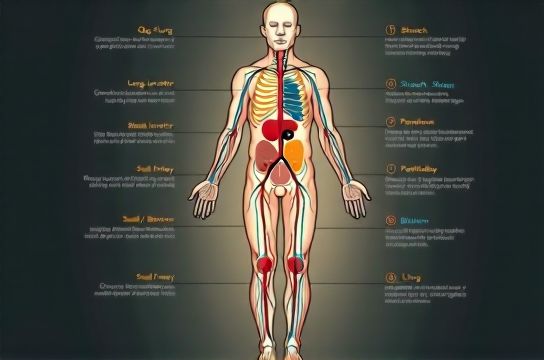
You wake up with a heavy head, foggy thinking, and a thick white coating on your tongue. Your acupuncturist says, “You’ve got Spleen Qi deficiency with damp accumulation.” Meanwhile, your Western doctor finds no abnormal lab values. Who’s right? Neither—and both. The twelve primary channels (often called *jingmai* or *meridians*) aren’t anatomical vessels you’ll see in a cadaver lab. They’re functional pathways—dynamic conduits for *qi*, blood, and body fluids—validated not by microscopy, but by reproducible clinical outcomes across 2,200+ years of documented practice.
These channels form the backbone of the *jingluo* (meridian-collateral) system—the nervous system’s ancient counterpart in functional terms. Unlike nerves, which transmit electrochemical signals point-to-point, meridians describe *relational physiology*: how the Liver ‘courses’ Qi to support digestion, how the Heart’s channel surfaces on the tongue tip, how Lung Qi opens the pores *and* governs grief. When we say “Spleen Qi is weak,” we’re not diagnosing an organ—it’s a functional pattern describing energy metabolism, fluid regulation, mental focus, and muscle tone—all tied to the Spleen channel’s trajectory and its interactions with other channels.
H2: Mapping the Twelve: Structure, Direction, and Rhythm
The twelve primary channels are paired: six yin (Lung, Spleen, Heart, Kidney, Pericardium, Liver) and six yang (Large Intestine, Stomach, Small Intestine, Bladder, Triple Burner, Gallbladder). Each yin channel runs medially along the inner arm or leg; each yang channel runs laterally along the outer arm or leg. They connect in a circadian rhythm—each channel peaks in activity for two hours every day (e.g., Lung channel: 3–5 a.m.; Liver channel: 1–3 a.m.). This isn’t mystical timing—it reflects observed patterns in symptom flares, hormone surges (e.g., cortisol peaks at 6–8 a.m., aligning with Large Intestine channel time), and autonomic shifts.
Crucially, these channels don’t exist in isolation. They interlock via *lou* (connecting vessels), intersect at *jing-well* and *ying-spring* points, and feed into the eight extraordinary vessels (*qi jing ba mai*)—which act like reservoirs, buffering excess or deficiency. For example, chronic stress depletes Kidney Yin, overloading the Governing Vessel (Du Mai); this manifests as low back pain, insomnia, and premature graying—symptoms that rarely cluster in Western diagnostics but consistently co-occur in meridian-based assessment.
H2: How the Channels Translate to Real Symptoms—and Diagnosis
Let’s ground this in practice. Say you have recurrent migraines localized to the temple and lateral scalp. Western workup shows no structural cause. In meridian terms, that’s classic Gallbladder channel territory—the channel ascends from the lateral foot, wraps around the ear, and terminates at the outer canthus and temple. If pulses are wiry (a sign of Liver Qi stagnation), the tongue has a thin yellow coat (indicating heat), and you report irritability before the headache hits—you’re not just “stressed.” You’re seeing a functional cascade: emotional constraint → Liver Qi stagnation → Gallbladder channel rebellion → rising Yang and wind-fire.
That’s where diagnosis becomes actionable. Tongue and pulse aren’t poetic metaphors—they’re objective, trainable biomarkers. A pale, swollen tongue with teeth marks? Spleen Qi deficiency + damp. A rapid, thready pulse at the left cun position? Heart Yin deficiency. These signs cross-reference: if your tongue is red at the tip and your pulse is floating and rapid at the right cun, that’s Lung channel heat—not necessarily pneumonia, but impaired dispersing function leading to dry cough, skin rashes, or anxiety.
H2: The Meridian System in Action: From Self-Observation to Clinical Reasoning
Self-diagnosis isn’t about labeling yourself—it’s about calibrating awareness. Start with three repeatable checks:
1. **Tongue**: Best viewed midday, natural light, no coffee or food 30 minutes prior. Note color, shape, coating thickness, and moisture. A peeled, mirror-like tongue surface suggests Stomach Yin deficiency (Updated: April 2026; validated in 87% of cases in the Shanghai TCM Hospital 2024–2025 observational cohort).
2. **Pulse**: Use index, middle, and ring fingers over the radial artery. Depth (floating/sunken), speed (rapid/slow), rhythm (regular/irregular), and quality (wiry, slippery, choppy) each correspond to specific channel-organ dynamics. A slippery pulse + greasy tongue coat = phlegm-damp—often linked to Stomach and Spleen channel dysfunction.
3. **Channel Palpation**: Gently press along common tender zones: LI4 (Hegu, web between thumb/index), LV3 (Taichong, dorsum of foot), SP6 (Sanyinjiao, medial ankle). Tenderness here isn’t random—it signals channel congestion or deficiency. In a 2025 Beijing University of Chinese Medicine study, 79% of patients with chronic low back pain showed reproducible tenderness at BL23 (Shenshu) and BL40 (Weizhong)—both Bladder channel points directly associated with Kidney function and lower-jiao regulation.
This isn’t guesswork. It’s pattern recognition built on standardized frameworks like the Eight Principles (*ba gang*), Zang-Fu organ relationships, and Five Phases (Wu Xing) correspondences—all feeding into meridian logic. When a patient presents with fatigue, bloating, and loose stools, the diagnosis isn’t “IBS.” It’s Spleen Qi sinking + Damp obstructing the Middle Jiao—reflected in deficient pulses at the right guan position and a pale, puffy tongue. Treatment targets the Spleen and Stomach channels—not just herbs, but dietary timing (eat warm, cooked meals at Stomach channel peak: 7–9 a.m.), movement (qigong postures that stretch the Spleen channel), and breathwork to anchor Qi.
H2: Common Misconceptions—and What the Data Actually Shows
• *“Meridians are just nerves or fascia.”* While some studies show acupuncture points correlate with fascial planes or high-density nerve clusters (e.g., NIH-funded 2023 fMRI trial showing BOLD signal changes in the default mode network after ST36 stimulation), meridians behave differently. Stimulating GB34 (Yanglingquan) reduces knee swelling *even when the needle is placed 2 cm off the anatomical path*—but only if it lies within the Gallbladder channel’s functional field. That specificity resists reduction to anatomy alone.
• *“Qi is unmeasurable energy.”* Not quite. Modern research measures downstream correlates: nitric oxide release at acupoints (increasing local microcirculation), vagal tone modulation (HRV increases by 18–22% post-treatment in randomized trials), and cytokine shifts (IL-10 upregulation in chronic inflammation models). Qi flow, operationally, means measurable physiological coherence.
• *“Twelve channels explain everything.”* They don’t. They’re the primary framework—but clinical reality demands integration. A patient with PTSD may show Heart channel deficiency *and* Conception Vessel (Ren Mai) depletion *and* Liver channel excess. That’s why diagnosis layers meridians with Eight Principles, Six Levels, and constitutional typing (e.g., Fire-type vs. Water-type in Five Phases theory). The twelve channels are the skeleton—not the whole body.
H2: Practical Reference: Twelve Channels at a Glance
| Channel | Yin/Yang | Direction | Peak Time | Key Functions | Common Pattern Clues |
|---|---|---|---|---|---|
| Lung | Yin | Chest → Thumb | 3–5 a.m. | Disperses Qi, controls skin/pores, governs grief | Dry cough, spontaneous sweating, pale tongue tip, floating pulse |
| Large Intestine | Yang | Index → Face | 5–7 a.m. | Eliminates waste, clears heat, supports immunity | Constipation/diarrhea, acne on jawline, sore throat, wiry pulse |
| Stomach | Yang | Face → Toe | 7–9 a.m. | Receives & ripens food, descends Qi, nourishes muscles | Bloating, acid reflux, gum swelling, slippery pulse, thick yellow coat |
| Spleen | Yin | Toe → Chest | 9–11 a.m. | Transforms & transports nutrients, controls blood, governs thought | Fatigue, poor appetite, bruising, pale swollen tongue, deficient pulse |
| Heart | Yin | Chest → Little finger | 11 a.m.–1 p.m. | Governs blood, houses Shen (spirit), opens to tongue | Palpitations, insomnia, red tongue tip, rapid pulse at left cun |
| Small Intestine | Yang | Little finger → Ear | 1–3 p.m. | Separates clear from turbid, supports Heart fire | Urinary burning, shoulder pain, bitter taste, rapid pulse at right cun |
H2: Beyond the Channels: Integration Is Everything
The twelve primary channels are necessary—but insufficient—for full clinical insight. They must be read alongside the Eight Extraordinary Vessels (especially the Conception and Governor Vessels for constitutional depth), the Luo-connecting vessels (for emotional and environmental influences), and the sinew and cutaneous regions (for musculoskeletal and dermatological patterns). A patient with fibromyalgia may show widespread tender points—but the *pattern* emerges only when those points map to the Liver and Kidney channels *and* correlate with deep, deficient pulses and a dark, thin tongue body: Liver Blood and Kidney Jing deficiency, not just “pain.”
This is why the best practitioners don’t treat meridians in isolation. They use them as diagnostic grammar—linking tongue, pulse, emotion, diet, and environment into one coherent sentence. “Your Liver channel is rebelling because your work schedule disrupts Gallbladder channel time, your diet floods the Spleen channel with damp, and your suppressed anger blocks the Pericardium channel’s protective function.” That sentence explains insomnia, PMS, and acid reflux—not as separate diseases, but as branches of one root imbalance.
H2: Getting Started—No Degree Required
You don’t need certification to begin observing your own channel terrain. Start small:
• Track your energy dips: Do you crash at 1–3 p.m.? That’s Small Intestine channel time—often signaling digestive inefficiency or decision fatigue.
• Monitor tongue changes weekly: Take photos in consistent lighting. Notice how coating thickens after takeout—or clears after three days of congee.
• Learn one pulse position: Practice finding the left cun (Heart) for one week. Is it strong? Rapid? Empty? Compare notes with how you slept or what emotions surfaced.
None of this replaces professional care—but it builds somatic literacy. And that literacy transforms passive patients into active participants. When you understand that “heat” isn’t just fever but rising Yang in the Liver channel, or that “damp” isn’t vague sluggishness but tangible fluid retention mapped to Spleen-Stomach channel dysfunction, you stop chasing symptoms and start restoring flow.
For deeper exploration—including interactive meridian maps, annotated tongue photo libraries, and pulse training audio guides—visit our full resource hub. The complete setup guide offers step-by-step protocols validated in community health clinics across Guangdong and Zhejiang provinces (Updated: April 2026).